Dushanbe, August 10, 2026 – The Europe Today: Tajikistan is strengthening its position as a major producer and exporter of dried fruits in Central Asia, with dried apricots emerging as one of the country’s prominent agricultural export products.
According to Tajik media reports, apricots are considered a national product of Tajikistan, with specialized enterprises processing fresh fruit into dried products for domestic consumption and export. The country has also developed an established production and processing infrastructure around apricot cultivation and dried-fruit production.
Apricots are widely cultivated across Tajikistan, where favorable climatic conditions provide suitable opportunities for the development of the industry. Major industrial apricot-growing areas are located in the northern regions, including Isfara, Konibodom, Khujand, Ayni and Asht, as well as parts of Kuhistoni Mastchoh.
The country currently cultivates around 200 varieties of apricots, including Kandaki, Khunandi, Mirsankali, Subhoni, Ahmadi, Khurmo, Shifo, Niyozi, Serhosil, Gulguni, Kadukhurmo, Tokiboy, Lola, Bobo Gelon, Safedak, Shogi, Shohshikan, Arazmi Kalon, Nishoni, Koshifi, Khurmo Luchak and Ahorori. Many of these varieties have also spread to neighboring countries, where they are being used for orchard development.
Tajikistan’s tradition of apricot cultivation and harvesting dates back approximately 5,000 to 6,000 years. Over the centuries, farmers and agricultural scientists have developed and preserved a number of local varieties adapted to the country’s environment. Experts say apricots grown under Tajikistan’s climatic conditions are distinguished by their quality and taste.
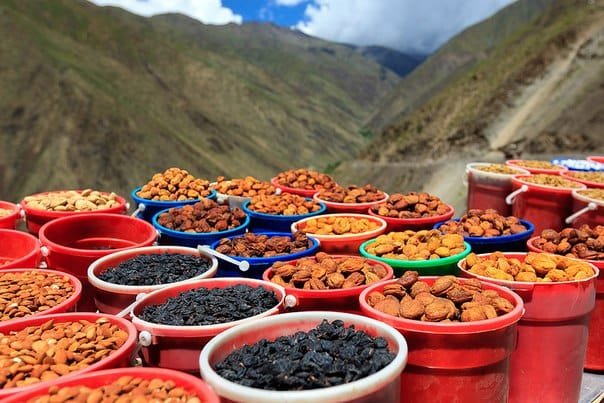
Dried apricots are produced through both natural and industrial methods. Traditionally, fresh apricots are dried under sunlight, while some processing facilities use sulfur-based treatment to preserve the fruit’s color and extend its storage life. Experts note that naturally sun-dried apricots may have a darker appearance but retain characteristics that make them particularly attractive from a natural-food perspective.
Apricots can be consumed fresh or dried and are also used to prepare jams, juices and other food products. After drying, the stones are removed and the kernels can also be processed or added to various products.
The dried-fruit sector is also important from a nutritional perspective. Dried fruits contain vitamins and minerals, including vitamins A and B-group vitamins, as well as iron, calcium, magnesium, phosphorus, potassium and sodium. Apricots are particularly rich in potassium and are widely regarded as a nutritious food that can contribute to a balanced diet.
The consumption of dried fruit has a long history in the region. In ancient times, travelers commonly carried dried fruits as provisions because they could be stored for long periods and provided a convenient source of energy and nutrients during journeys. Traditional medicine also regarded dried fruits as valuable dietary products.
In recent years, Tajikistan has expanded its apricot orchards, while farmers have adopted improved agricultural techniques to increase yields. Authorities and agricultural producers are seeking not only to increase exports of fresh apricots but also to expand dried-fruit production, which can generate greater added value for the agricultural sector.
The expansion of apricot cultivation and processing is therefore contributing to Tajikistan’s agricultural development, strengthening rural livelihoods and creating opportunities to increase the country’s presence in regional and international dried-fruit markets.