Statement from Emine Erdoğan, Chair of the United Nations High-Level Advisory Board on Zero Waste and Honorary President of the Zero Waste Foundation:
“With the hope of a future where raindrops remain clear and the waters of the earth stay deep blue, I greet you all with love and respect. COP31 in Antalya represents not merely a conference, but a transformative moment in our collective commitment to planetary stewardship. Türkiye’s hosting of this critical summit reflects our unwavering dedication to zero-waste principles and circular economy solutions that will shape the world’s sustainable future for generations to come.”
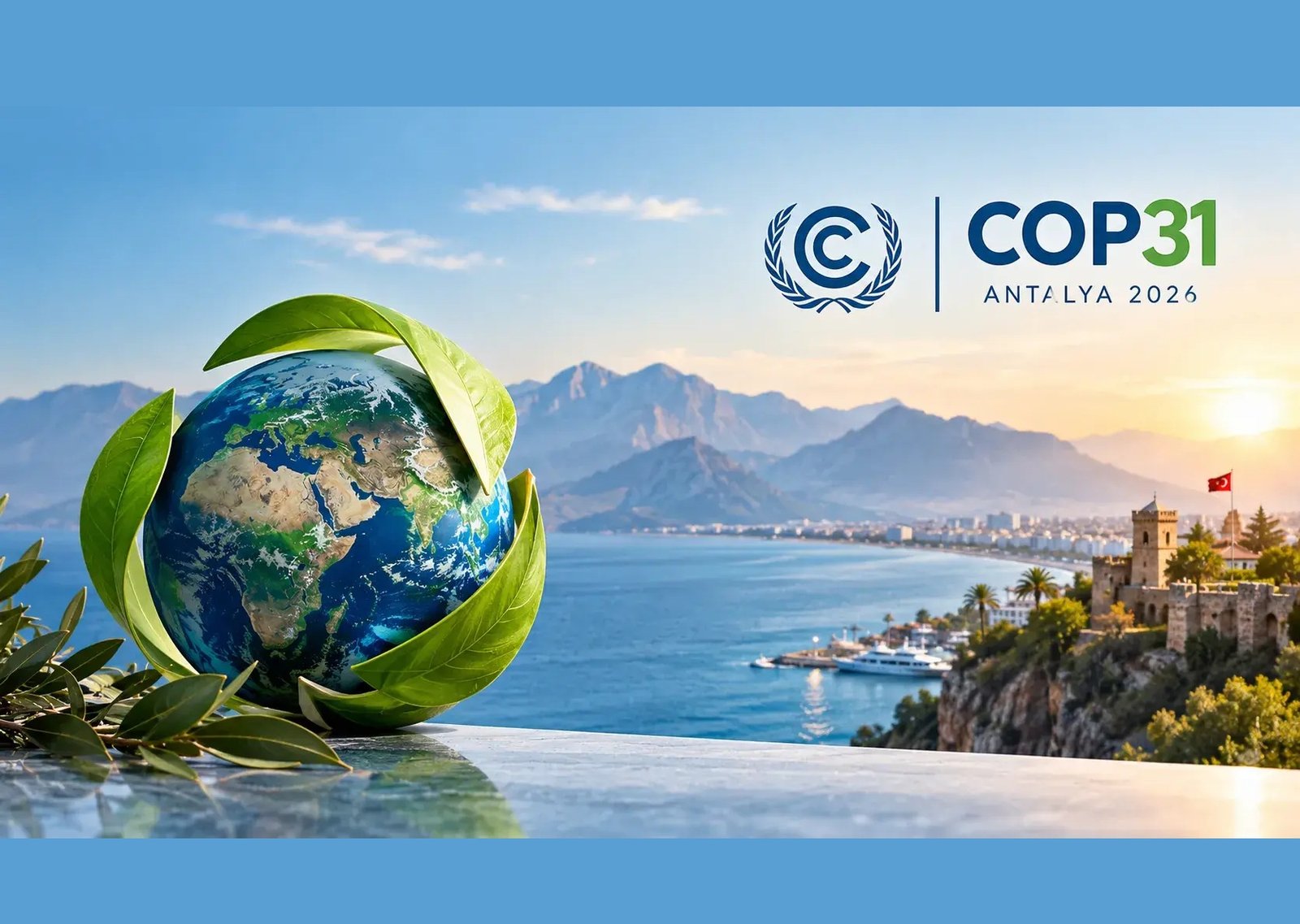
The 31st Conference of the Parties to the United Nations Framework Convention on Climate Change (COP31), which will take place in Antalya in November 2026, will represent one of the most critical turning points in global climate policy. Since 1995, these annual summits have constituted the most important international decision-making mechanism for determining global action plans against the climate crisis. Türkiye’s hosting of this platform means far more than a mere geographical location — it represents the formal recognition of the country’s global leadership in zero-waste and circular economy initiatives.
Türkiye’s Historic Hosting: Strengthening Climate Diplomacy
Türkiye’s hosting of COP31 is no coincidence. Under the UNFCCC (United Nations Framework Convention on Climate Change), the country demonstrates high sensitivity to climate risks while simultaneously achieving a leading global position through its zero-waste initiative. This situation strengthens Türkiye’s leadership in climate diplomacy while solidifying its position as a global zero-waste pioneer.
Under the leadership of Emine Erdoğan, the United Nations High-Level Advisory Board on Zero Waste has developed a transformative sustainability model by combining national policies with international advocacy. This Board, announced by the UN Secretary-General on March 30, 2023, and established through General Assembly Resolution 77/161, consists of 12 members serving a three-year term. The Board’s fundamental objectives include supporting the implementation of zero-waste approaches, promoting zero-waste initiatives at local and national levels, and disseminating best practices on a global scale.
Türkiye’s Waste Management Reality and 2025 Targets
Approximately 36 million tons of solid waste are generated annually in Türkiye Managing this enormous amount of waste ranks among the country’s most significant environmental and sustainability challenges. Under projects conducted by the Zero Waste Foundation, it is planned to increase the recovery rate to 35 percent by 2025. This target symbolizes not merely a numerical increase but Türkiye’s transition to a circular economy structure.
This increase in recovery rates is particularly critical in plastic management. On a global scale, millions of tons of plastic waste are generated annually from the start of the year and continue to accumulate primarily in landfills or oceans. Türkiye’s achievement of this target will create significant ripple effects for countries in the Middle East and Balkans regions.
COP31’s Global Impact: From the Paris Agreement to Next-Generation Policies
The decisions to be made within COP31 will directly influence laws and economic transformation on a global scale, much like the decisions taken following the Paris Agreement. Understanding what COP31 is, how it operates, and how decisions made create effects on a global scale is critical for all stakeholders.
The decisions to be made at COP31 will have a broad scope of impact:
- Carbon Emission Targets: Countries’ 2030 and 2050 targets will be renegotiated at the conference.
- Energy Policies: Steps toward increasing renewable energy capacity and moving away from fossil fuels.
- Sustainable Development Strategies: Balancing economic growth with environmental protection.
- Green Finance: Increasing the funds transferred to countries’ climate actions.
- Circular Economy: Establishing global standards on waste reduction and resource efficiency.
- Water and Food Security: Addressing climate change’s impacts on water resources and agriculture.
- Youth and Cities: Participation of local governments and young populations in decision-making processes.
The Zero Waste Forum: Global Leadership Platform
The Zero Waste Forum, which forms the foundation of COP31, constitutes the most important platform advancing waste prevention and circular economy solutions. This forum brings ministers and leaders together around the concept of “People. Place. Transformation.”
The achievements of the Zero Waste Forum are truly impressive:
- Over 5,000 participants have gathered
- 134 ministerial-level and high-level delegates have been represented
- 183+ countries have been represented
- 500+ institutions and partners have participated
- 26 panels have been organized with 30 hours of discussions
- 250+ speakers have participated
As a result of this forum, the Istanbul Declaration was adopted and commitments aligned with the UN 2030 goals were reaffirmed.
High-Level Sessions and Specific Agendas
The high-level sessions to be held at COP31 will subject specific thematic areas to in-depth discussion:
Environment Ministers Session — Zero Waste and Climate Resilience:
16 Environment Ministers, 3 Vice Ministers, high-level representatives from UN-Habitat and the Organization of Turkic States (OTS), and representatives from 24 countries participated in this session. The findings discussed here will contribute to the 2026 UN Secretary-General’s Zero Waste Report.
UN High-Level Advisory Board on Zero Waste Meeting:
Under the chairmanship of Emine Erdoğan, high-level advisors and international organizations will convene to discuss governance models and national implementation experiences.
Agriculture and Forestry Ministers Panel — Preventing Food and Water Waste:
16 Environment/Agriculture Ministers, 3 Vice Ministers, and representatives from 24 countries will develop strategies to reduce the wasteful use of food and water resources.
Türkiye’s Nationally Determined Contribution (NDC): Concrete Commitments
Türkiye’s Nationally Determined Contribution (NDC) demonstrates concrete results of the country’s determination to combat climate change:
- Renewable Energy Capacity by 2035: Projected installed capacity targets have been established, with a radical transformation of the energy sector envisioned.
- Recovery Rate: Achieving the 35 percent target within Zero Waste project goals.
- Afforestation: Increasing forest areas by an annual average of 25,000 hectares.
These targets represent steps toward Türkiye’s 2050 carbon neutrality vision. The NDC serves as a reference not only for Türkiye but also for countries in the region.
Türkiye’s Zero Waste Ecosystem: Network of Organizations
The network of organizations supporting Türkiye’s COP31 process creates a unique structure worldwide:
- Zero Waste Foundation: The primary organization conducting zero-waste research, education, and advocacy globally.
- Global Zero Waste Forum: A high-level platform advancing waste prevention and circular economy solutions.
- Zero Waste Awards: A mechanism honoring individuals, cities, and institutions leading the zero-waste movement.
- Zero Waste Festival: An event celebrating sustainable living, circular design, and zero-waste culture.
- Zero Waste Week: A nationwide event week drawing attention to zero-waste practices.
- International Zero Waste Day: A day marked by global actions and activities.
- Zero Waste Encyclopedia: A reference source for zero-waste, circular economy, and sustainability concepts.
- Zero Waste Commitment Platform: Digital tools enabling institutions and cities to share and track concrete commitments.
Global Data: Facts Changing Every Second
The live global data published by the COP31 portal brings the urgency of the situation into sharp focus:
- The amount of recycled waste generated since the start of the year has reached millions of tons.
- Plastic waste production continues to increase second by second.
- CO₂ emission levels continue to rise at alarming rates.
- The amount of water withdrawn has reached critical levels in water-scarce regions.
- Energy consumption has not adequately shifted to renewable sources.
These figures demonstrate just how urgent and necessary COP31 is.
The Significance of Hosting COP31 in Antalya
Antalya, being an important center in the Mediterranean region, possessing strong tourism infrastructure, and being one of the world’s most beautiful natural areas, is symbolically significant for COP31. Antalya ranks among the regions most affected by climate change — the tourism sector, agriculture, fisheries, and coastal ecosystems are all directly harmed by climate change. For this reason, hosting a climate conference in Antalya carries particularly powerful symbolism.
Aftermath and Expectations
COP31 will review decisions taken since the Paris Agreement and will set the direction for next-generation climate policies. The decisions emerging from the conference will represent the most important turning point in countries’ pathways toward their 2030 targets. Türkiye’s bearing this responsibility represents an opportunity to disseminate zero-waste and circular economy approaches on a global scale. COP31 will demonstrate the power of global cooperation and multilateral diplomacy not only on climate and waste issues but across all spheres. The conference’s success will depend on the quality of decisions made that shape the planet’s future and the extent to which these decisions will be implemented.