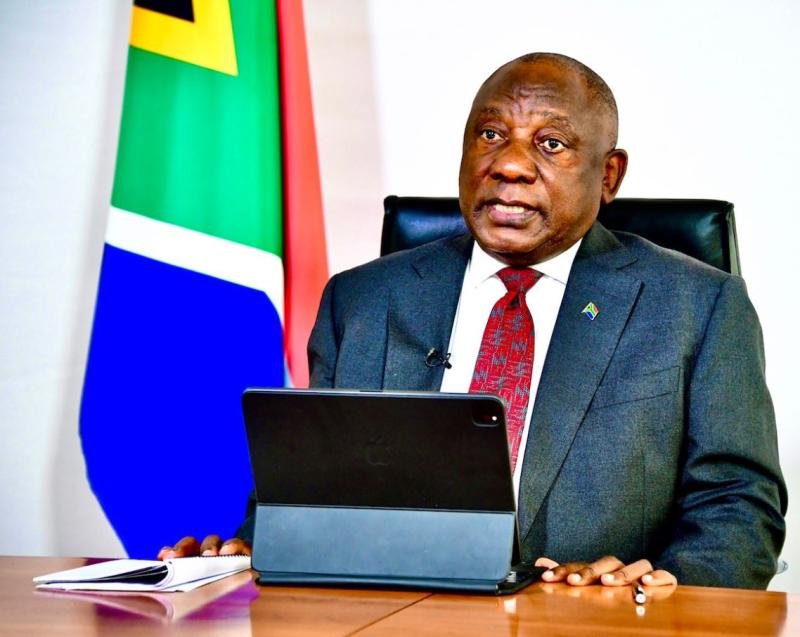
Pretoria, The Europe Today: President Cyril Ramaphosa will lead a high-level South African delegation to Silicon Valley in the United States next week. The visit aims to build up the country’s artificial intelligence (AI) capabilities, attract investment and help South Africa play a real part in the fast-changing global technology landscape.
The working visit to California runs from 15 to 21 November 2026. The delegation includes representatives from government, academia, business, research institutions, technical experts and university students. They will meet leading technology companies, investors, researchers and AI specialists.
The visit is part of South Africa’s effort to understand the latest developments in AI and to use international experience in shaping how the country develops, regulates and adopts the technology.
“The visit will provide an opportunity to learn from countries and institutions at the forefront of AI development, understand the associated risks and challenges, and consider how South Africa can develop an enabling policy, regulatory and skills environment to support responsible AI adoption,” Presidential Spokesperson Vincent Magwenya said at a media briefing at the Union Buildings in Pretoria on Thursday.
Five Days of High-Level Engagements
The main programme runs from 16 to 20 November and takes the delegation to several places across Silicon Valley. It opens with the Semafor: Silicon Valley and the World event on 16 November, where leaders and experts will discuss new technology and the changing global AI landscape.
On 17 November, the delegation will visit Stanford University to meet venture capital investors and AI faculty. The day includes a Presidential fireside chat and a visit to a robotics laboratory. Discussions will cover how AI moves from research to commercial use and how venture capital supports innovation.
On 18 November, the delegation will hold a workshop in San Jose titled “South Africa and the Future of AI”. It will look at infrastructure, AI in government, AI safety and the future of work, and at what it would take to build an African AI economy.
On 19 November, the delegation will be in Mountain View to visit Alphabet, Google and Cisco, focusing on AI in digital commerce, small business and government. On 20 November, it will visit Palo Alto Networks and the Microsoft Experiential Centre in Santa Clara, where the focus will be cyber resilience and digital sovereignty in the AI era.
Across the programme, the delegation will also see technology demonstrations and take part in knowledge exchanges on frontier AI, robotics, data infrastructure, cloud computing and digital innovation.
Building the African AI Economy
A central part of the visit is the South Africa AI Opportunity gathering, under the theme “Building the African AI Economy: Infrastructure, Investment and Innovation”. It will look at the infrastructure and investment AI needs, including data centres, computing capacity and reliable energy supply.
According to the Presidency, leading hyperscalers plan to spend about US$650 billion on AI in 2026. Venture capital investment in AI reached US$259 billion in 2025, with three-quarters of it in the United States.
With these figures in mind, the delegation will meet investors, asset managers and development finance institutions. They will discuss how digital infrastructure projects are financed, how investment risks are shared and what makes a country attractive to investors. They will also look at how to finance and build the energy supply that AI data centres need.
South Africa will use these meetings to seek investment in its digital infrastructure and to strengthen its position as a competitive AI hub in Africa. The visit will also showcase the country’s reform programme, including Operation Vulindlela, along with its digital economy and its research and innovation ecosystem.
AI in Government and the Economy
The programme will consider how AI can be used across the economy and government. Possible areas include health, education, criminal justice, public administration and public procurement, where AI could raise productivity and improve public services. The delegation will also look at what AI means for law enforcement and public safety, and for businesses, the labour market and the future of work.
There will be dedicated sessions on higher education and skills, where students and academics will meet leading universities on AI research. Small and medium-sized enterprises, start-up founders and technical specialists will be connected with accelerators and the wider innovation ecosystem. South African officials, researchers and leaders of science entities will also meet leading research institutions.
The programme will be delivered through eight tracks:
high-level engagements
business, trade and investment
financing digital infrastructure
energy and electricity
higher education and skills
small business and innovation
science, technology and research
legal and governance matters
The delegation will include the Ministers responsible for Finance; International Relations and Cooperation; Science, Technology and Innovation; Trade, Industry and Competition; Communications and Digital Technologies; Electricity and Energy; Small Business Development; and the Presidency. They will be joined by senior officials, business leaders, entrepreneurs, academics, researchers, scientists, and legal and regulatory experts.
Balancing Innovation with Digital Sovereignty
While pursuing the opportunities AI offers, South Africa will also consider how to protect its digital sovereignty, policy independence and data. Sessions on AI governance will look at different approaches to regulation, responsible AI frameworks and the relationship between governments, technology companies and international experts.
“South Africa seeks to harness the transformative potential of AI while safeguarding digital sovereignty, policy autonomy, data protection and responsible AI governance, ensuring that technological advancement contributes meaningfully to inclusive economic growth and development,” Magwenya said.
The visit is expected to show where South Africa can fit in the global AI value chain, from research and innovation to infrastructure, investment and the use of AI in the public and private sectors. It will also inform the policy, regulatory, energy and skills decisions needed for responsible AI adoption.