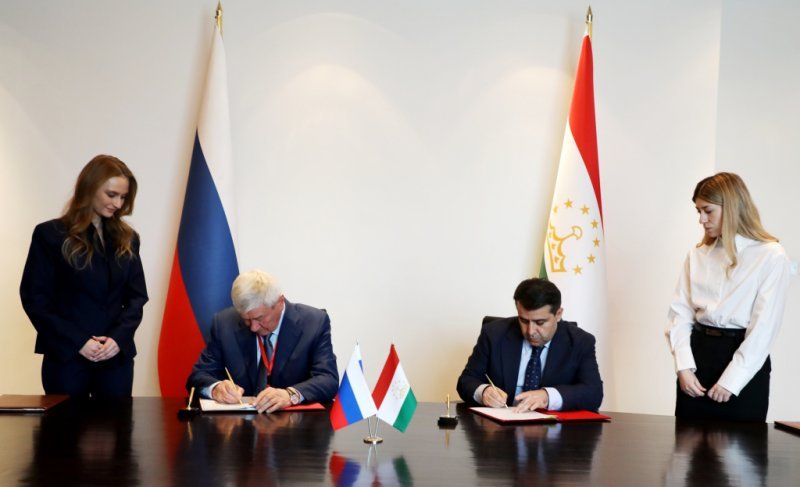
Dushanbe, November 21, 2026 -The Europe Today: Tajikistan has stepped forward to lead the fight against drug trafficking across the Collective Security Treaty Organization. At the 28th meeting of the CSTO Anti-Drug Council in Kazan, the country set out a frontline strategy for 2027 that puts border security, interception of drug shipments and fast joint operations at the centre of the region’s response.
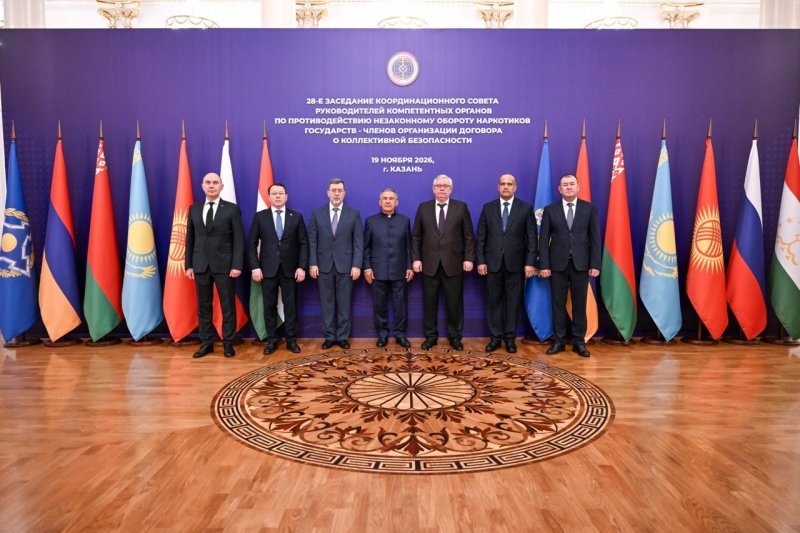
The Coordination Council of Heads of Competent Authorities on Combating Drug Trafficking of the CSTO Member States met on November 19 in Kazan, Russian Federation. Zafar Samad, Director of the Drug Control Agency under the President of the Republic of Tajikistan, attended and set out his country’s priorities ahead of its presidency of the Council next year.
CSTO Anti-Drug Council Reviews 2026 Operations and Approves the 2027 Roadmap
The heads of the member states’ anti-drug agencies discussed practical ways to deepen cooperation against illicit drug trafficking, a threat that crosses borders and tests every security system in the region.
The participants reviewed the results of the joint anti-drug operations carried out in 2026. They then approved the Council’s main action plan for 2027, which sets the direction for the bloc’s coordinated work over the coming year.
The meeting comes as drug networks keep adapting their routes, methods and products. Officials said this pressure is why closer coordination among the CSTO’s national agencies matters more than ever.
Synthetic Drugs Emerge as the New Frontline Threat
One of the strongest messages from Kazan concerned new synthetic drugs. In his address, Zafar Samad described the drug control situation in Tajikistan and the wider region. He warned about the emerging threats and challenges linked to the illicit trafficking of new synthetic substances.
Unlike traditional plant-based narcotics, synthetic drugs can be produced quickly and changed chemically, and they are hard to detect. Enforcement agencies across Eurasia increasingly see them as one of the most serious challenges to public health and security.
Tajikistan’s Frontline Role at the Heart of Its CSTO Presidency
Tajikistan sits at a key point on the drug trafficking map and has long described itself as a frontline state in this fight. That position shaped the priorities Zafar Samad presented for the country’s 2027 presidency of the CSTO Anti-Drug Council.
“While expressing its readiness to comprehensively fulfil its responsibilities as the presiding body in 2027, the Drug Control Agency under the President of the Republic of Tajikistan, taking into account Tajikistan’s key position on the frontline of combating drug trafficking, intends to focus primarily on strengthening state border protection, preventing the illegal transportation of narcotic drugs, and expanding urgent joint operations with the anti-drug agencies of the member states,” Zafar Samad emphasized.
His statement points to three priorities for Dushanbe’s leadership year:
Stronger state border protection to stop drugs at the point of entry.
Prevention of illegal drug transportation along regional transit routes.
More urgent joint operations with partner anti-drug agencies across the CSTO.
Why Tajikistan’s Leadership Matters for Regional Security
Tajikistan’s turn at the head of the CSTO Anti-Drug Council gives the bloc a chair with direct, on-the-ground experience of trafficking pressure. Its focus on borders and rapid joint action reflects lessons learned on the frontline, and it could shape how member states coordinate intelligence, operations and responses to new drug trends in 2027.
As synthetic drugs change the threat, the Kazan meeting showed that the CSTO’s anti-drug agencies intend to act together. With the 2027 action plan approved and Tajikistan ready to lead, the coming year will test how well the region can turn cooperation into results against one of its most persistent security challenges.