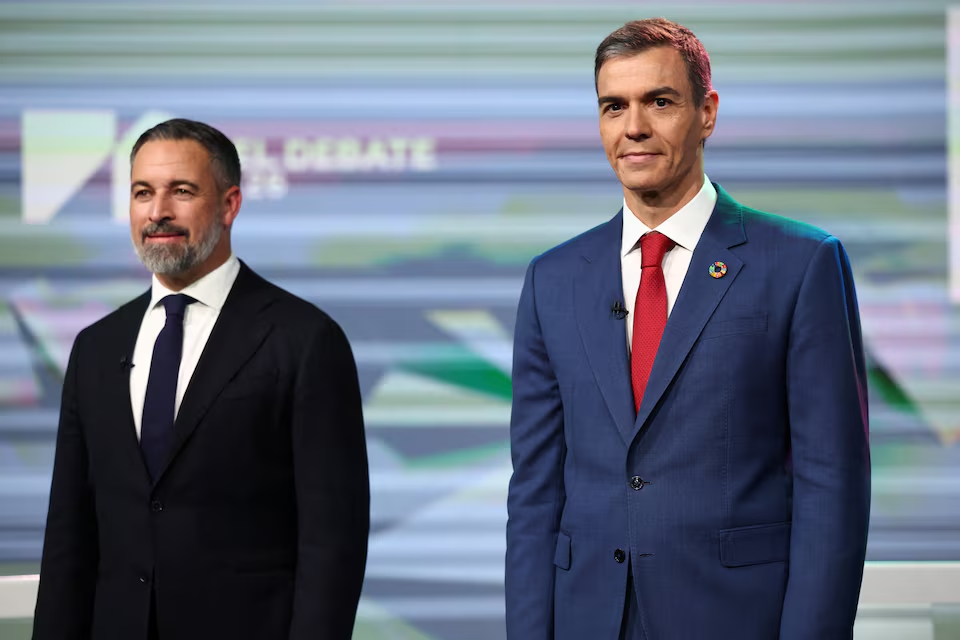
Madrid, The Europe Today: Spaniards go to the polls on Sunday to decide whether to give Socialist Prime Minister Pedro Sanchez, one of Europe’s last leftist leaders, another term, or to bring in conservative opponents who may need to govern in coalition with the far right.
A defeat for Sanchez could put a far-right party in national government for the first time since the death of Francisco Franco in 1975, which opened the way for the restoration of democracy three years later. It would also reflect the wider rise of the far right across Europe amid concerns over immigration.
Vox advocates tougher immigration controls, recentralising state powers, lower taxes and reversing many progressive social policies.
How the Vote Works
Polling stations open at 9 a.m. (0800 GMT) and close at 8 p.m. (1900 GMT), when polls taken in the final week of the campaign will be released. The first results are expected about an hour later. A party needs 176 seats in the 350-seat parliament for a majority.
Snap Poll Called Amid Housing Crisis
Sanchez has governed with fragile minority coalitions since 2018. He called the early election saying he needed a majority after parliament rejected decrees he had proposed to tackle a growing housing crisis. The campaign has been dominated by a debate over sharply different ways to deal with rising rents and evictions.
On Friday, Sanchez, nicknamed "El Guapo" (Mr Handsome), insisted that internal data showed he could win a majority together with smaller left-wing parties. Most polls, however, point to a victory for the centre-right People’s Party (PP) when combined with the far-right Vox.
Some polls showed the Socialist Party (PSOE) catching up with the PP, but at the expense of a disillusioned far left whose support Sanchez would again need to form a government.
PP-Vox Coalition Seen as Most Likely Outcome
Analysts see a coalition between the PP and Vox as the most likely result, although it would involve tough bargaining over how many ministries Vox would get. Depending on its seat count, Vox could choose to support the PP from outside government. The two parties already govern together in four regions. Sanchez has called the prospect of a PP-Vox coalition a "regression."
Coalition talks have no formal deadline before the first investiture vote. However, if no candidate wins parliament’s confidence within two months of that vote, fresh elections are triggered automatically.
Booming Economy, Squeezed Wallets
Sanchez has pointed to his record of running one of the fastest-growing economies in the European Union. He credits a higher minimum wage and a labour reform that brought unemployment to its lowest level in almost two decades. Some Spaniards, however, say they are not feeling those gains because of rising prices for housing, energy and consumer goods.
Immigration at the Heart of the Battle
Migrants have helped drive Spain’s economic boom, and economists fear that the anti-immigration policies of a possible right-wing government could slow growth. Sanchez has gone against the European tide by promoting immigration as an economic benefit, even as most of the continent moves to tighten its borders.
The PP says it would ban mass amnesties, allow returns to third countries and introduce a points system for legal immigrants. Vox wants to deport convicted foreigners and give Spaniards priority in the queue for housing.
Europe’s Centre-Left on the Line
If Sanchez loses, only three EU countries would be left with centre-left leaders: Denmark, Lithuania and Malta.
Scandals and Crises Weigh on Sanchez
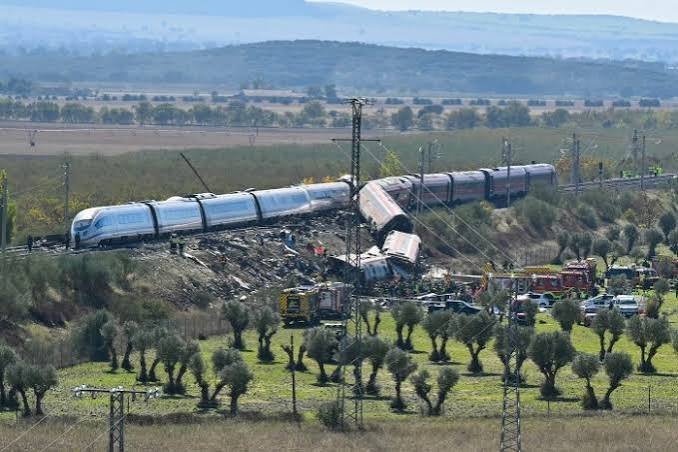
Sanchez’s image has been damaged by a string of corruption scandals involving his inner circle and family. His government has also faced a series of crises, including two deadly train crashes, a migrant crisis in the North African enclave of Ceuta and a nationwide power outage.
His main rival, the PP’s Alberto Nunez Feijoo, has presented himself as a detail-focused technocrat in contrast to the accusations of poor management aimed at Sanchez.
Sanchez also faces criticism for granting an amnesty to leaders of the attempt to separate Catalonia from Spain. That amnesty was given in exchange for their support in his re-election as prime minister after the 2023 election, when the PP won the most votes but fell short of a majority.