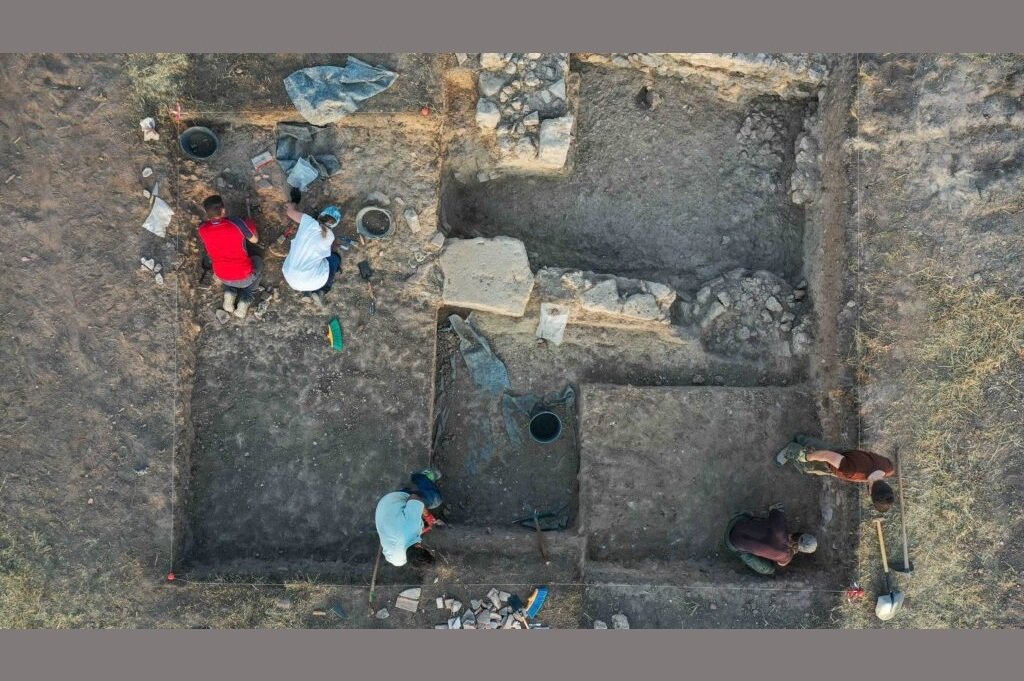
Burgos, September 20, 2026 – The Europe Today: Archaeologists have uncovered a 2,000-year-old domestic kitchen at the ancient Roman city of Segisamo in Sasamón, Burgos province, shedding light on the everyday lives and culinary practices of people living in the region during the early Roman period.
The kitchen was discovered at the La Era archaeological site near the Church of Santa María la Real during excavations conducted as part of a long-term research project by the Institute of Archaeology of Mérida and the University of Salamanca. The remains date from the late first century BC to the early first century AD, corresponding to the reigns of Roman emperors Augustus and Tiberius.
Researchers identified remains of a possible oven, ash and charcoal deposits, as well as a range of objects associated with food preparation and storage. The finds include large storage vessels, jugs, bowls, mortars, cooking pots and fragments of a clibanus, a small portable oven used for baking bread.
The modest construction consisted of adobe walls built on stone foundations and a compacted clay floor, highlighting the practical nature of domestic spaces that often receive less archaeological attention than monumental Roman buildings.
The discovery also provides evidence of cultural interaction following the incorporation of the region into the Roman world. Alongside imported or Italian-inspired pottery, archaeologists found locally produced vessels reflecting older traditions of the indigenous Turmogi population.
According to the researchers, the combination indicates that Roman culinary practices were adopted by local communities without completely replacing established traditions. The mixture of cookware therefore offers insight into the gradual social and cultural transformation of Segisamo during the early Roman period.
Archaeologists are continuing to examine animal bones and other remains recovered from the site, which could provide further information about the foods consumed by the inhabitants and their everyday dietary practices.
The wider excavation has also revealed evidence from several later periods, including possible Iron Age occupation beneath the Roman levels and remains dating from the medieval, early modern and contemporary eras, demonstrating the site’s long history of human occupation.