Hanoi, July 8, 2026 – The Europe Today: Hanoi has reaffirmed its commitment to achieving its ambitious 2026 development targets, with city leaders calling for accelerated reforms, stronger governance, and greater investment to sustain economic growth and improve public services during the second half of the year.
Secretary of the Hanoi Party Committee Trần Đức Thắng said the capital must pursue its development agenda with “a spirit of innovation and ambition” to successfully achieve all 26 socio-economic targets set for 2026.
Among the key objectives are gross regional domestic product (GRDP) growth of 11 percent, a 12 percent increase in exports, inflation below 4.5 percent, urban unemployment under 3 percent, raising the proportion of trained workers to 75.8 percent, and ensuring every resident receives at least one free routine health check-up or disease screening each year.
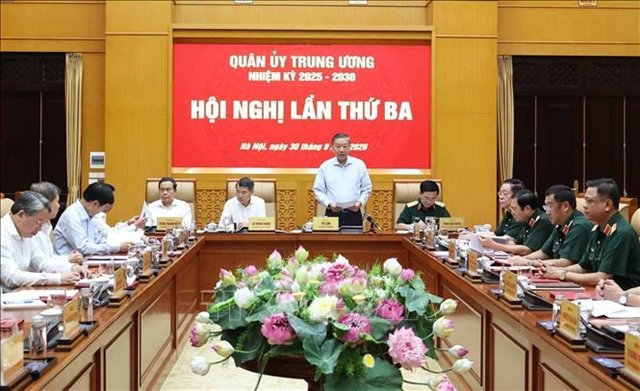
Thắng urged Party committees at all levels to strengthen leadership and accountability, stressing that responsibility for implementing political and development priorities must be shared between Party organizations and government agencies. He said Party secretaries across the city would be held accountable for the performance of their respective localities and institutions.
He also instructed the municipal People’s Committee and relevant departments to review economic growth scenarios and accelerate the implementation of major projects needed to achieve the city’s 11 percent GRDP growth target while identifying flagship initiatives capable of supporting sustained double-digit growth beyond 2027.
The Party secretary emphasized the need to accelerate industrial development, expand the digital and green economies, promote innovation, science and technology, improve the investment climate, and eliminate bureaucratic obstacles that could discourage investors.
Calling for higher standards of public administration, Thắng said officials who avoid responsibility, hesitate to make decisions, or fail to address challenges should be replaced promptly, while those demonstrating initiative, innovation, and accountability should be encouraged and protected.
He added that performance evaluations would be based on measurable results, practical effectiveness, public satisfaction, and professional credibility.
Chairman of the Hanoi People’s Committee Vũ Đại Thắng reaffirmed the city’s determination to achieve at least 11 percent GRDP growth this year, stating that authorities would mobilize all available resources to deliver accelerated progress and major breakthroughs during the remainder of 2026.
According to city officials, Hanoi’s economy expanded by 8.22 percent during the first half of the year, while state budget revenue reached approximately VNĐ410 trillion (US$15.6 billion), exceeding 62 percent of the annual target.
Public investment disbursement totaled around VNĐ64 trillion (US$2.5 billion), representing more than 53 percent of the plan assigned by the Prime Minister. Industry, trade, services, and tourism continued their recovery, supported by improvements in the investment environment.
Officials also highlighted continued progress in education, healthcare, culture, and social welfare, while national defence, public security, and social stability remained strong.
The city completed the restructuring of its political system following elections for the 2026–2031 National Assembly and People’s Councils, while administrative reforms reduced the number of villages and residential groups from 5,473 to 2,729.
Hanoi also began implementing the 2026 Capital Law through a comprehensive package of resolutions and decisions that took effect on July 1 and unveiled its 100-year Master Plan, providing a long-term institutional and spatial framework for the city’s future development.
Despite these achievements, city leaders acknowledged that economic performance has yet to fully reflect Hanoi’s development potential and competitive advantages. They noted that while progress has been made in addressing structural challenges, implementation remains uneven, with delays in responding to concerns raised by businesses and residents continuing to place pressure on achieving the city’s ambitious targets.