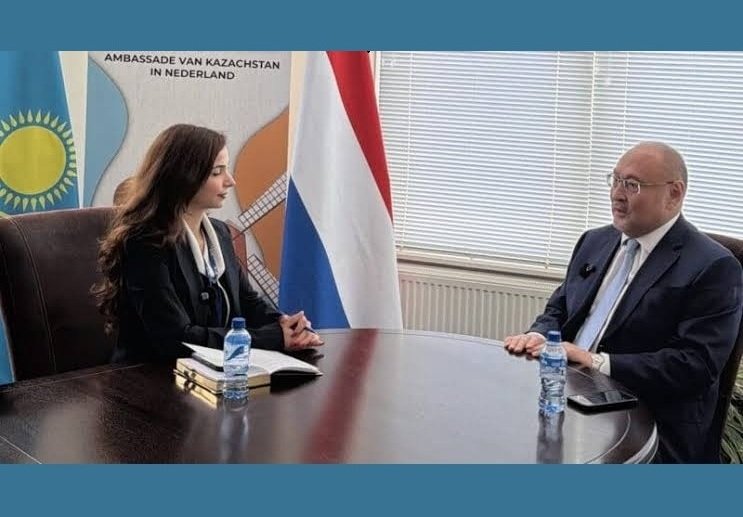
Derya Soysal, Kazakh Tourism Ambassador:
Your Excellency, Kazakhstan is increasingly attracting international visitors thanks to its rich cultural heritage and breathtaking landscapes. In your view, what makes Kazakhstan a truly unique destination? Why would you encourage travelers from around the world to visit Kazakhstan, and what experiences can they find there that they might not discover elsewhere?
Ambassador Akan Rakhmetullin: There are really many different reasons to visit Kazakhstan because Kazakhstan is part of the larger region of Central Asia and is the biggest Central Asian country. It has a very unique historical background and a very interesting historical development.
We share many common values and historical backgrounds with other Central Asian countries. Responding to your question, every ambassador would say that his or her country is the most important and the most unique to visit. It is really, really difficult to compete with many other destinations because many countries are equally important, interesting, and unique to visit.
But what I may say about my country is that the first and biggest reason is our history. It is a unique history.
We were nomads. We traveled from place to place, and we managed to preserve this huge territory that we have today. This vast territory also means that we are a very diverse nation.
We have a very diverse population and a very diverse geographic landscape, ranging from deserts to mountains, from lakes to seas, and from forests to plains.
The second reason is our nature. Again, because of our country’s vast territory and diverse geography, we have very unique natural zones.
There are forests, mountains, and even landscapes that are used as filming locations for movies about extraterrestrial worlds—places that seem almost otherworldly. Tourists come there to enjoy nature and appreciate its extraordinary diversity.
For example, visitors can travel from Eastern Kazakhstan, with its forests, mountains, and crystal-clear rivers, all the way across the country to Western Kazakhstan, where they encounter deserts, canyons, and the Caspian Sea. It is a fascinating combination of landscapes that often look almost extraterrestrial.
If you travel to the north, you will mainly see vast plains. You can drive for hours, even days, or travel by train across the country while looking out over endless stretches of great plains. In the south, nature is equally diverse. So, nature is certainly one of Kazakhstan’s greatest attractions.
The second important aspect is history. As I mentioned earlier, we were nomads, and that shaped the way our nation developed. Historically, we were part of the great Golden Horde.
Derya Soysal: You organized the major Golden Horde Conference this year.
Ambassador Akan Rakhmetullin: Yes. This conference was devoted to identifying and better understanding our historical background. For many reasons, whether political or ideological, history has sometimes not been presented in a fully objective and accurate way.
This conference, together with the work of our historians, scientists, and academics, is about understanding our past so that we can better understand our future—where we come from, where we are today, and where we should go.
Kazakhstan has always been a crossroads of civilizations and trade routes. People traveled across the Eurasian continent—from China to Europe, and from South Asia to Russia in the north—and Kazakhstan served as a natural crossroads.
This is another unique and fascinating feature of my country: our rich history as a nomadic civilization and as a meeting point for peoples, cultures, and civilizations moving across the continent.
This history is even reflected in the way we look. You have visited Kazakhstan many times, as well as other Central Asian countries, and you can easily recognize when someone comes from Central Asia rather than South Asia or another region.
This is because of the fusion of numerous peoples and tribes that migrated centuries ago, settled there, mixed with the local population, and contributed to our genetic heritage, our appearance, and our identity.
This is part of Kazakhstan’s uniqueness.
The third interesting feature of Kazakhstan is the fusion of its natural environment—its landscapes and geographic diversity—with its modern development.
We have rapidly growing cities, developed industries, and endless plains where enormous quantities of wheat are grown. Once again, it is this remarkable fusion.
You can spend time in natural resorts, enjoying mountains, deserts, canyons, or forests, and then arrive in a modern city with skyscrapers, museums, theatres, opera houses, ballet performances, and many other cultural attractions. Kazakhstan is a modern and developed state.
The only challenge is that Kazakhstan is so large that one week is simply not enough. I would recommend that tourists spend at least two weeks in Kazakhstan—10 to 15 days—so that they can travel across the country and enjoy its unique geographic diversity, its cities, its countryside, and its national parks. So, do enjoy it.
Unfortunately, there is currently no direct flight. Most travelers fly from Amsterdam via Frankfurt or Istanbul before continuing to Kazakhstan. We are working together with the Dutch government and the Dutch authorities to restore direct flights. I believe this is partly connected to broader transport policies.
If passenger numbers continue to increase, I am confident that direct flights will eventually return because interest in Kazakhstan among Europeans is growing significantly.
Many people do not realize that part of Kazakhstan is geographically located in Europe.
Derya Soysal: In fact, Kazakhstan’s European territory is larger than several European countries, including Hungary, Portugal, Austria, and Greece. Kazakhstan is also a member of UEFA, and the national football team played against Belgium last year.
Ambassador Akan Rakhmetullin: Sport is another interesting feature of Kazakhstan. We offer many different opportunities for sports. We play football and ice hockey. Although we are not among the world’s leading ice hockey nations, we are perhaps among the top ten. We have mountains, skating facilities, and excellent conditions for winter sports.
We also have strong traditions in martial arts such as boxing, karate, taekwondo, as well as powerlifting, gymnastics, and many other disciplines.
Kazakhstan is a modern country built upon a rich historical foundation, with ambitious goals and a clear vision for the future.
Finally, speaking to my Dutch friends, I would like to say that I am very pleased to have this interview because many people in Europe have heard of Kazakhstan but know very little about it. They often have stereotypes.
When I meet students here, I always ask them: “What do you know about Kazakhstan? What stereotypes do you have?” Some immediately mention Borat. Others mention different things, or simply think of countries ending in “-stan.”
Derya Soysal: They confuse Kazakhstan with Afghanistan or Pakistan. That’s why it can be confusing. Perhaps we should also say Kazak Eli.
Ambassador Akan Rakhmetullin: Yes. Again, when people come to Kazakhstan, they immediately realize how different the country is from what they expected.
Some of my friends who visited Kazakhstan—even well-educated people—asked me what gifts they should bring to thank the families who would host them or provide them with food.
I asked them, “Why would you need to bring anything?” Kazakhstan has modern roads, transportation, hotels, and a full hospitality industry. Everything visitors need is available.
What we need now is more tourists and more information so that people can truly discover my country.
Derya Soysal: I also think we should mention that, thanks to Kazakh music and its growing international audience, many people have discovered Kazakhstan through singers who have become very famous.
Ambassador Akan Rakhmetullin: Yes. You may have heard of Dimash, for example. He is extremely popular not only in Kazakhstan, but also in China.
In the 21st century, I think Dimash is one of the most important singers in the world. He is a very interesting phenomenon. Just as Korea has K-pop, Kazakhstan also has an artist who has attracted worldwide attention.
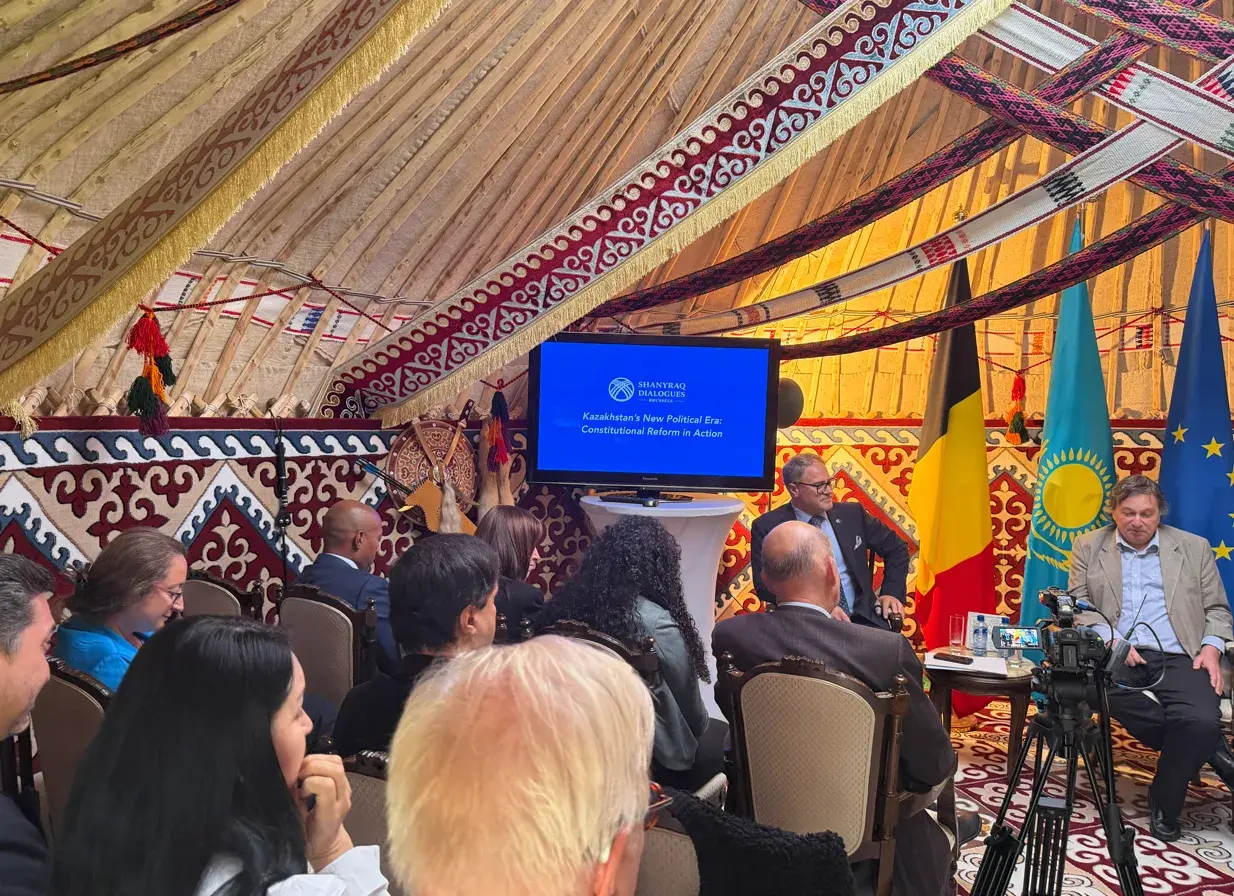
Derya Soysal: Mr. Ambassador, Kazakhstan has recently undertaken important constitutional reforms, and I had the opportunity to be in the country during the referendum held on March 15. Could you share with us the main changes introduced by the new Constitution and explain how these reforms will shape Kazakhstan’s future?
In particular, the reforms include new institutional developments, such as the strengthening of representative mechanisms and the revival of the Qurultay, a concept deeply rooted in the history and traditions of the Turkic peoples. Could you elaborate on the significance of the Qurultay and explain how these constitutional changes will contribute to greater transparency, public participation, and more effective governance in Kazakhstan?
Ambassador Akan Rakhmetullin: Yes, it is a very important question because it concerns our future.
You are absolutely right. On March 15, there was a national referendum, and the people expressed their will to amend the Constitution and adopt a new constitutional framework. As of July 1, the new Constitution entered into force.
Accordingly, the previous Parliament has completed its mandate, and new parliamentary elections will be held on August 23. We are currently preparing for those elections.
This reform is extremely important for the further development of our statehood, our democratic institutions, and the protection of human rights, fundamental freedoms, the rule of law, freedom of expression, freedom of movement, and other fundamental rights.
The constitutional reform was designed to accelerate these processes.
With all due respect to the previous Parliament, which ceased its activities only a few weeks ago, the reform is intended to modernize our political system, reduce bureaucracy, and make political decision-making more effective.
Kazakhstan is increasingly embracing the concept of a “Listening State”—a state that listens to its citizens and places people at the center of public policy and national development.
We are working to strengthen individual rights and freedoms while also ensuring strong social protection. We place great emphasis on social inclusion, support for persons with disabilities, improving gender balance, and implementing many other democratic and political reforms.
The idea is that the new unicameral parliamentary system will be more flexible, dynamic, and capable of responding more efficiently to the country’s evolving needs.
Previously, the Senate represented Kazakhstan’s regions and defended their interests. Kazakhstan remains a unitary state with a professional Parliament based on the separation of powers: the executive, the legislative, and the judiciary. Each of these branches is currently undergoing its own reforms.
As a result, Parliament will become more dynamic, more professional, and more results-oriented, further strengthening democratic legislative work.
Another important constitutional innovation is the introduction of the office of Vice President. Its purpose is to ensure institutional continuity within the executive branch.
The Vice President will provide strong support to the President in carrying out his or her duties, particularly by representing Kazakhstan at important international events, conferences, and multilateral organizations such as the United Nations.
The office also guarantees continuity of state authority. If the President is temporarily unable to perform his or her duties, authority will pass to the Vice President before continuing according to the constitutional order.
The Constitution also clarifies a number of other issues, including dual citizenship. The constitutional provisions clearly reaffirm Kazakhstan’s position regarding citizenship and establish the relevant legal framework.
There are many additional amendments, all aimed at improving our constitutional system. Our previous Constitution was adopted in 1995 and served the country well for nearly thirty years. Today, however, Kazakhstan has reached a new stage of development and requires more modern instruments to achieve its strategic objectives in state-building and nation-building.
Derya Soysal: Mr. Ambassador, the Netherlands is one of Kazakhstan’s most important economic partners. Why should Dutch investors choose Kazakhstan, and what opportunities does your country offer for businesses looking to invest and grow in Kazakhstan?
Ambassador Akan Rakhmetullin: That is a very important question.
It is quite remarkable that the Netherlands are Kazakhstan’s largest foreign investors.
I often meet with my Dutch colleagues from the business community, entrepreneurs, and representatives of different industries. I tell them that although the Netherlands is more than sixty times smaller than Kazakhstan in terms of territory, the populations of our countries are relatively similar: around 20.5 million in the Netherlands and approximately 20 million in Kazakhstan.
So why has the Netherlands become one of Kazakhstan’s leading investors?
It is because of the Dutch way of thinking, their entrepreneurial spirit, and their very effective approach to doing business internationally.
Our objective is to create the best possible investment environment for Dutch companies and encourage more businesses to establish themselves in Kazakhstan.
Trade, economic cooperation, and investment are at the heart of our partnership.
Many Dutch companies already export products to Kazakhstan, whether beer, industrial equipment, or technologies for the poultry and dairy industries.
However, we encourage them not only to export but also to establish production facilities directly in Kazakhstan. Instead of shipping spare parts or finished products, they can build factories, localize production, and manufacture locally. This strategy has already proven successful.
A good example is shipbuilding on the Caspian Sea, where companies can establish shipyards to build vessels for emergency services, the oil industry, passenger transport, and other multipurpose uses instead of importing every vessel from abroad.
Dutch entrepreneurs who invest in Kazakhstan receive comprehensive support from the moment they express interest until the day they begin operating.
They benefit from legal assistance, logistical support, preferential tax regimes, special economic zones, modern infrastructure, utilities, and many other government services designed to facilitate investment.
As a result, investors can feel secure, welcome, and confident that Kazakhstan is a reliable long-term partner.
I believe this creates a genuine win-win situation for both Dutch companies and the people of Kazakhstan.
Let us continue bringing Kazakhstan and Europe closer together and welcome more Dutch investment in education, science, medicine, and many other sectors.
Since the President of Kazakhstan visited Brussels, Kazakhstan has clearly demonstrated its desire to strengthen cooperation with the European Union and with all EU Member States, including the Netherlands.
I am confident that, in the future, we will see even stronger partnerships that will build lasting bridges between our countries.
Derya Soysal: Kazakhstan will definitely become the bridge between Asia and Europe.
Historian and environmental management expert on Central Asia and researcher on Central Asia post-Soviet period. Journalist for EuReporter and EuReflect and Special Director of “The Gulf Observer” for Europe and Central Asia.