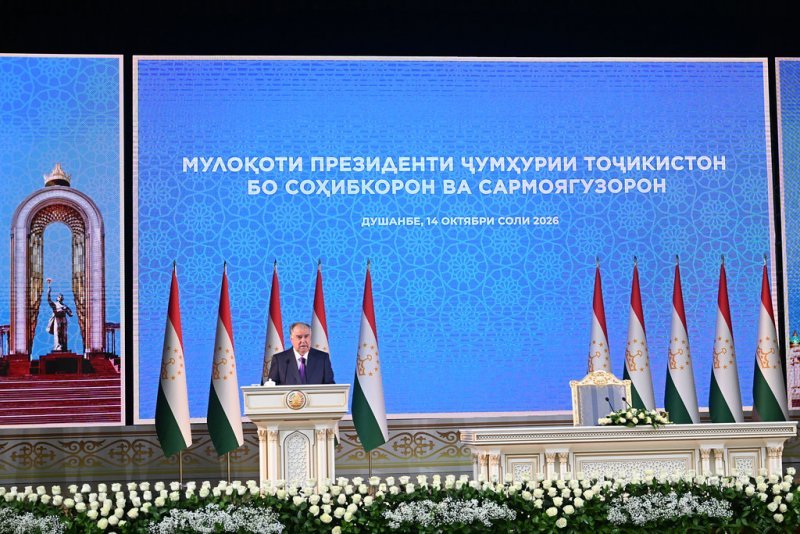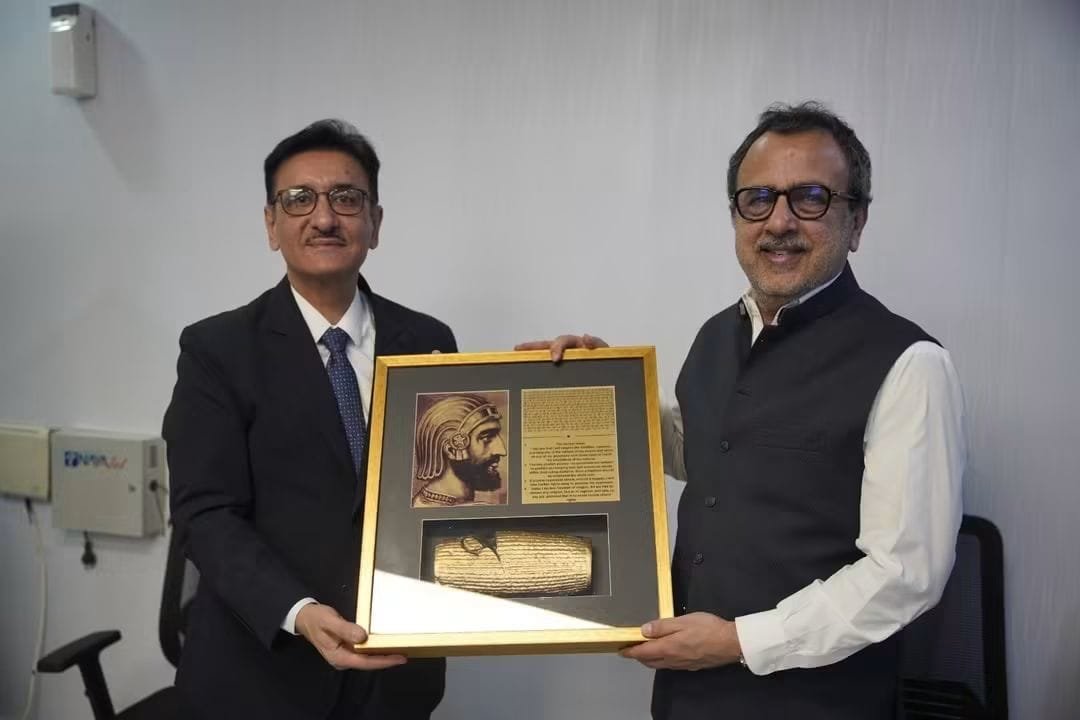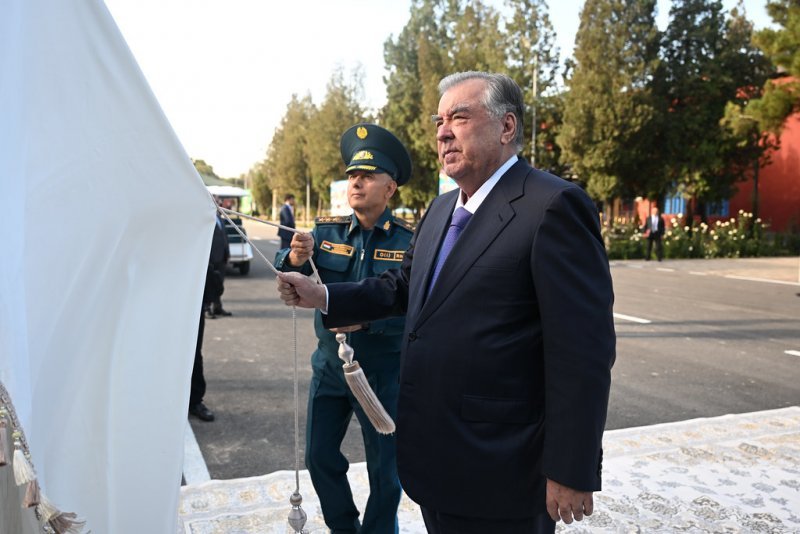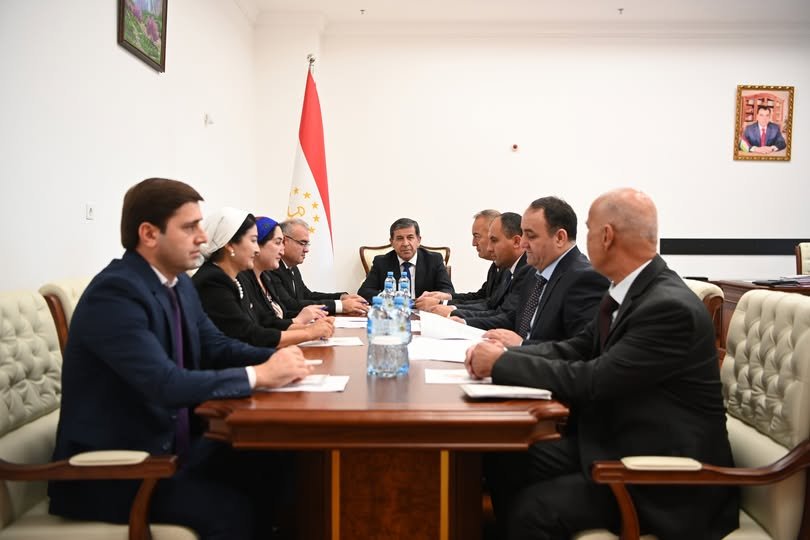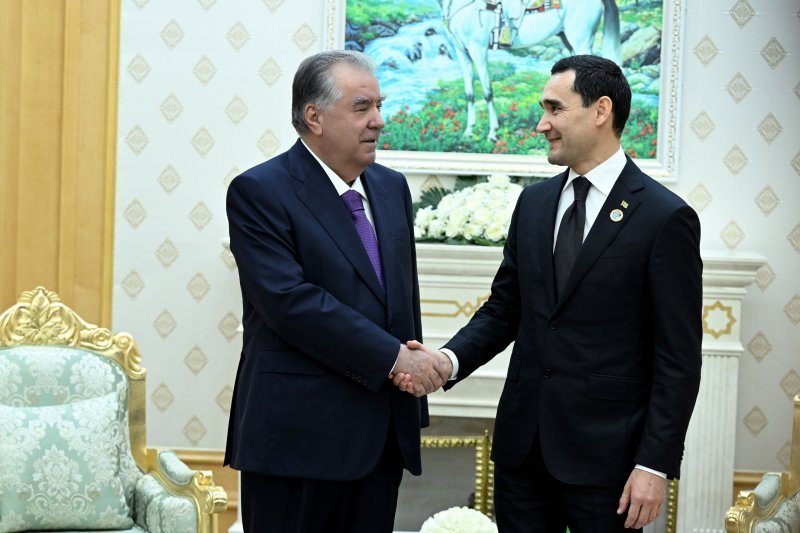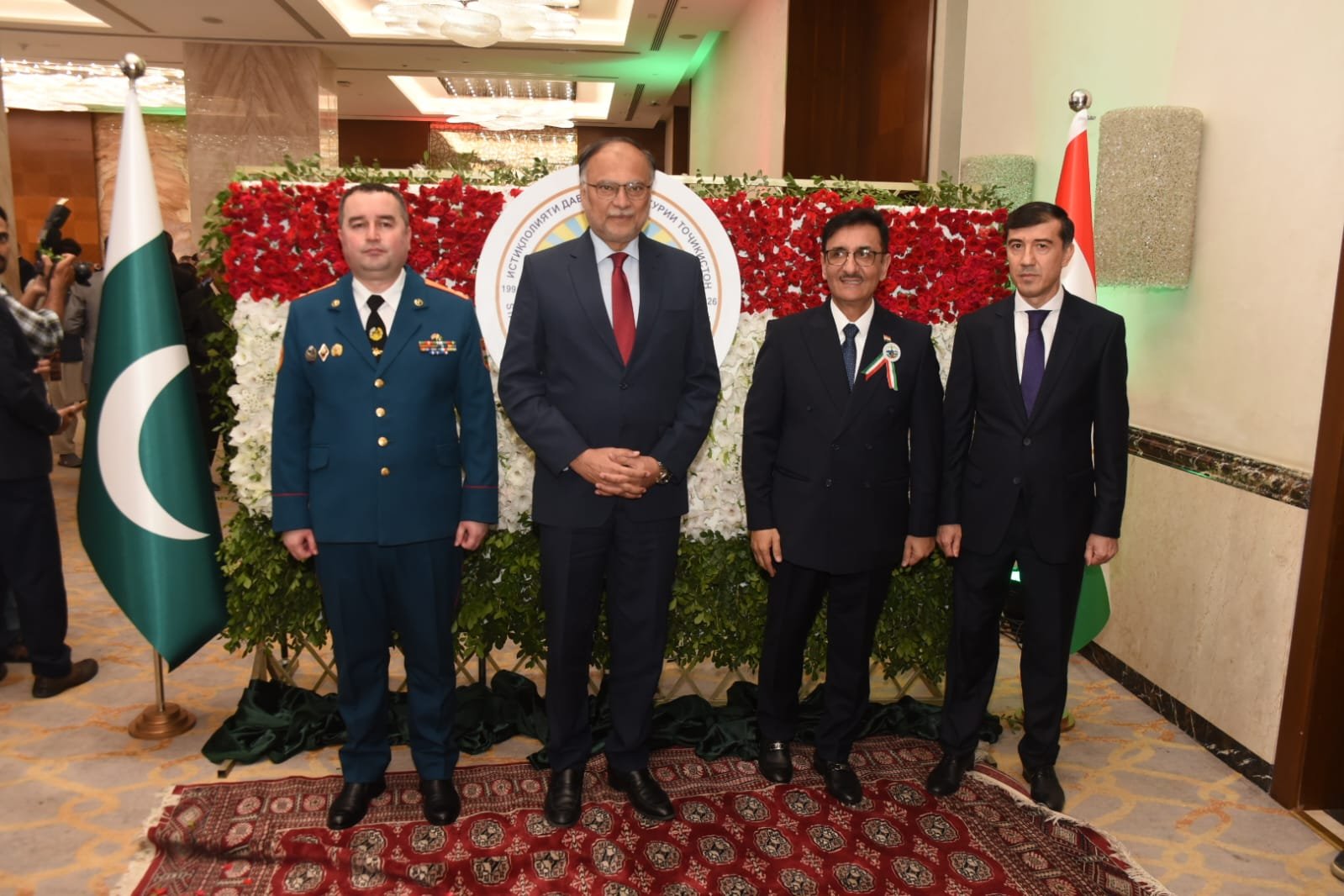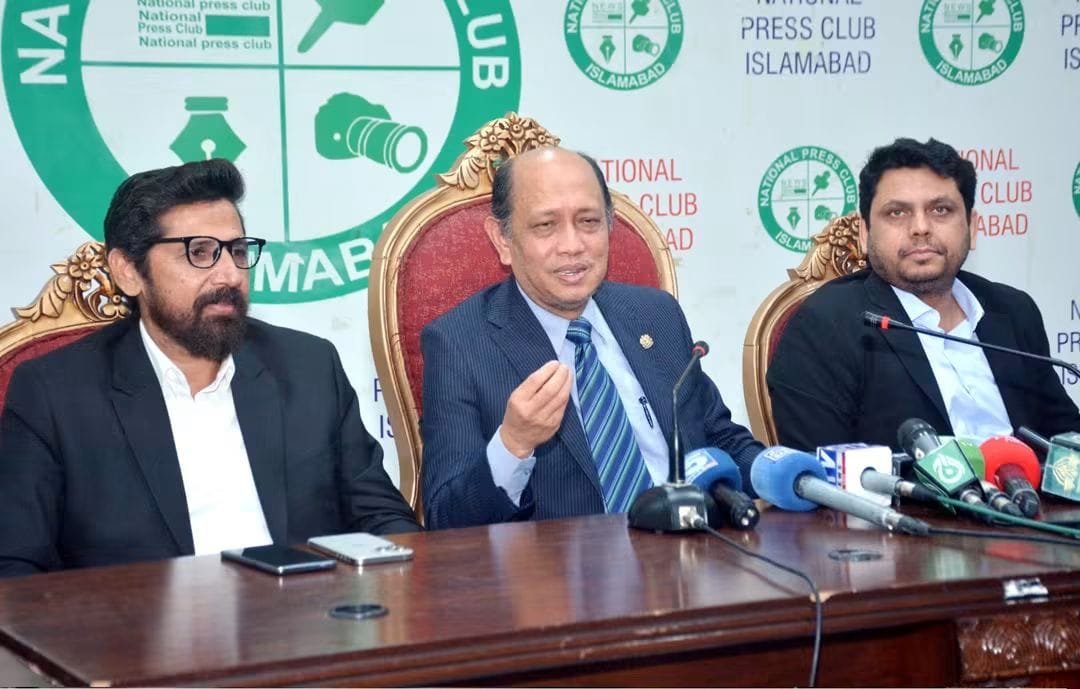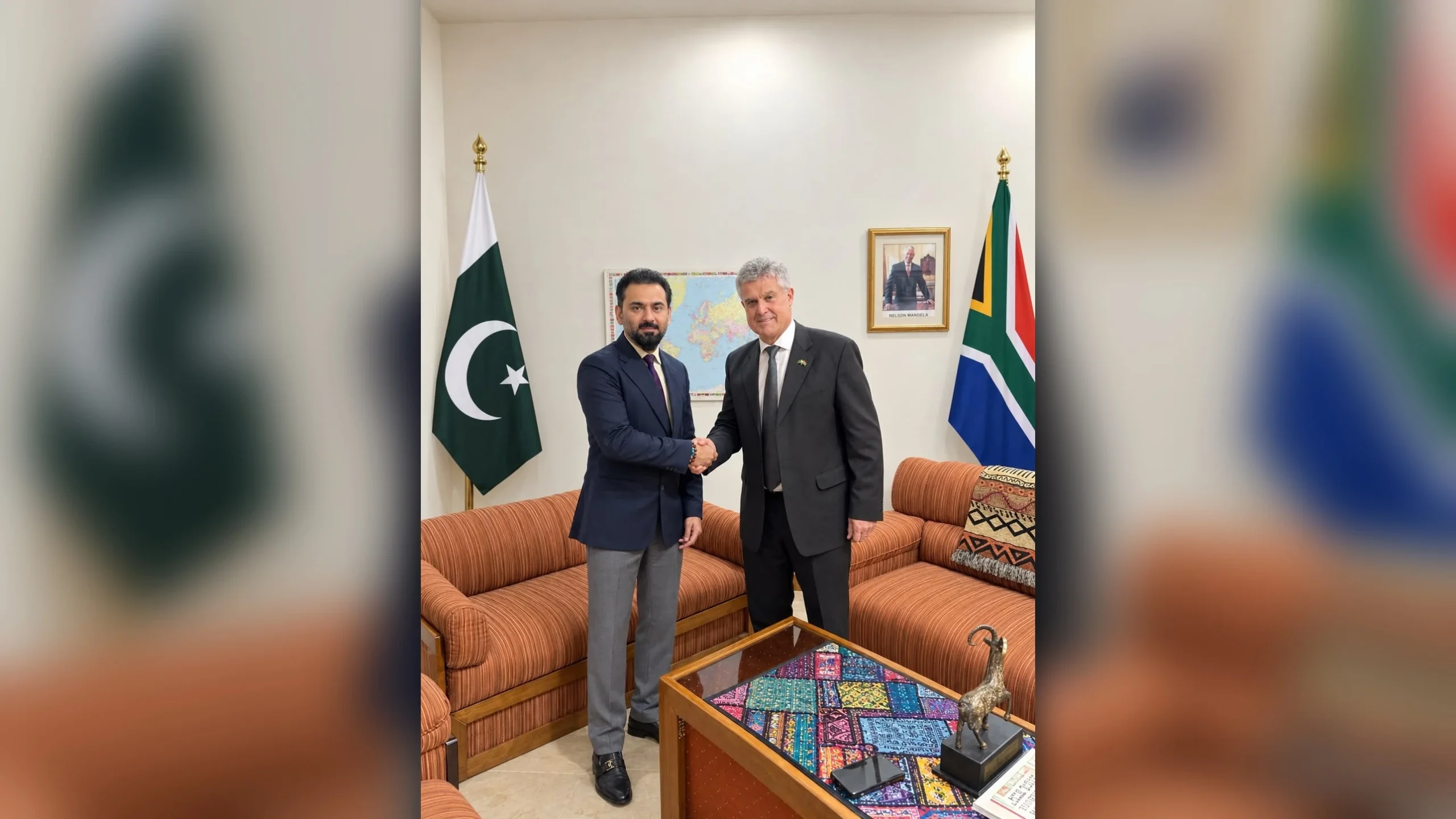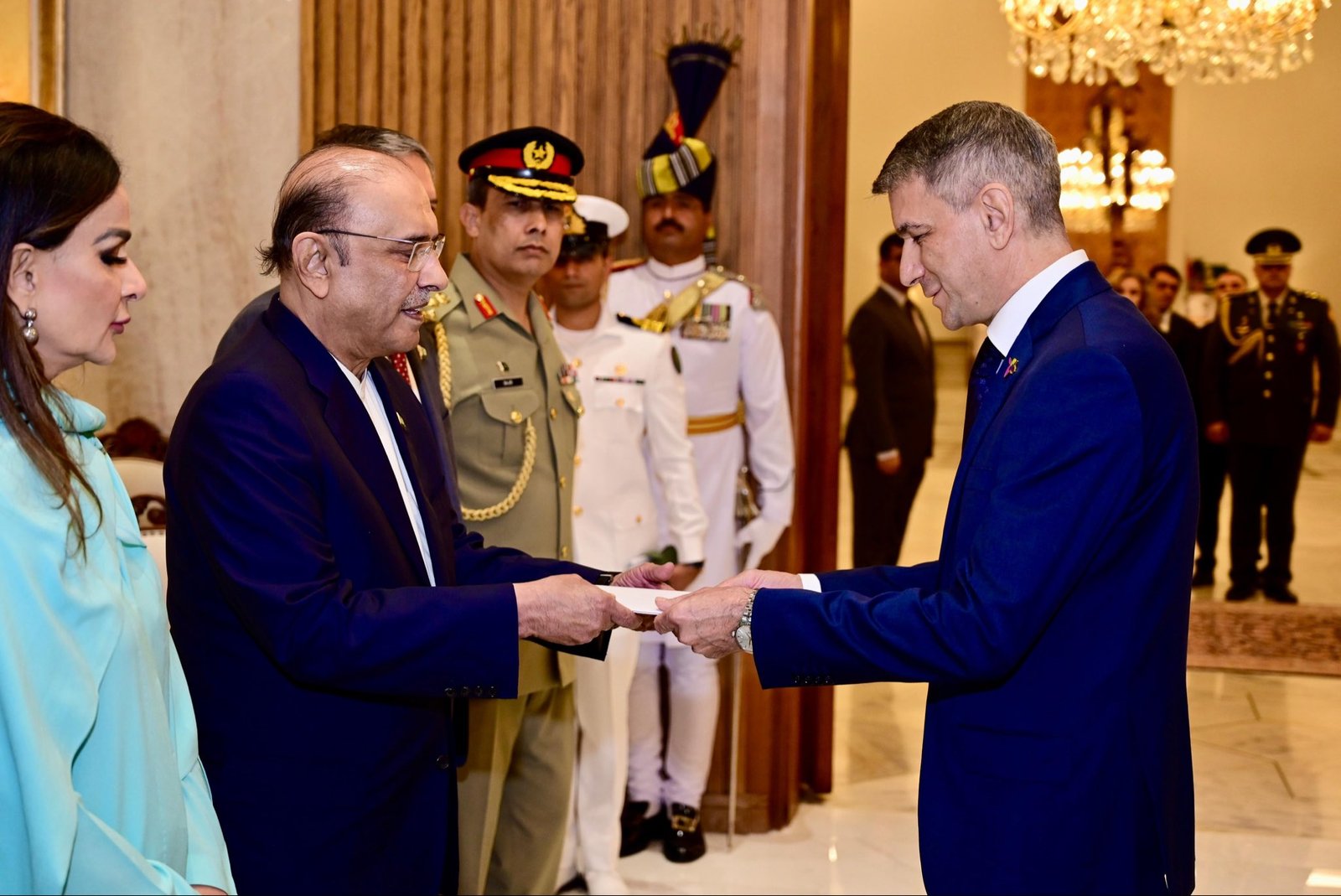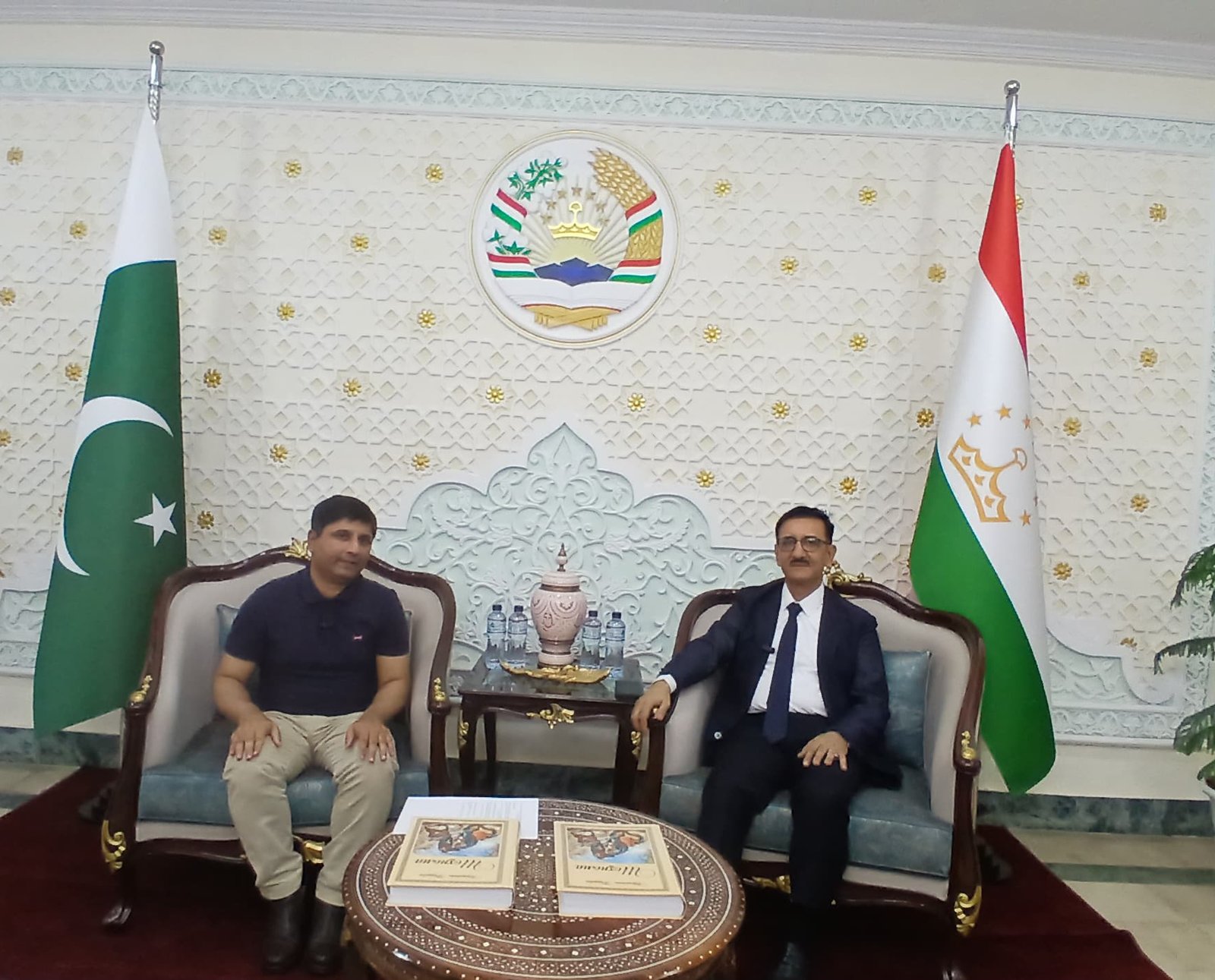
In an exclusive interview with Mr. Muhammad Ali Pasha, Ambassador of Tajikistan to Pakistan His Excellency Sharifzoda Yusuf Toir shared his views on the growing partnership between Tajikistan and Pakistan, expanding trade and tourism, deep-rooted cultural and linguistic ties, the leadership of President Emomali Rahmon and H.E. Rustam Emomali, digital transformation, and the future of bilateral relations.
Muhammad Ali Pasha: Excellency, what is your assessment of the current state of relations between Tajikistan and Pakistan?
Excellency: Relations between Tajikistan and Pakistan are improving with each passing day. We are expanding cooperation across a wide range of sectors, and the momentum is clearly positive.
Pakistan serves as a gateway for all Central Asian states, and we are working diligently to ensure that every country in the region can benefit from this strategic access. Bilateral trade is expected to grow significantly, and the leadership of both countries is committed to increasing trade volume to US$500 million or even more within the next one to two years.
Muhammad Ali Pasha: What is the current level of bilateral trade between the two brotherly countries?
Excellency: Despite the prevailing regional challenges, bilateral trade between Pakistan and Tajikistan has already reached approximately US$65–70 million by the middle of this year.
We remain optimistic about the future. As peace and stability continue to improve across the region, trade will increase not only between Pakistan and Tajikistan but also between Pakistan and the entire Central Asian region.
Muhammad Ali Pasha: What are the benefits of cultural collaboration between the two countries?
Excellency: I would like to say that over the past century, we lost many of the cultural links that once connected our peoples.
If you look at Tajikistan, Pakistan, and Afghanistan, they are like one picture that has been divided into three pieces. Until these three pieces come together again, we cannot fully appreciate the richness of our shared culture.
We must work hard to restore these historical and cultural connections because doing so will benefit all three nations.
Muhammad Ali Pasha: What are your views on the Persian language and its connection with Urdu?
Excellency: It is very easy for us to communicate in Urdu because nearly 80 percent of Urdu has its roots in Persian. Even many Arabic words used in Urdu entered the language through Persian.
The meanings of many Urdu words are immediately familiar to me because we use the same vocabulary in Tajik. Even the pronunciation of Tajik Persian closely resembles Urdu.
Pakistan’s music also shares remarkable similarities with Tajik music, as well as the traditional music of Samarkand, Bukhara, and Afghanistan. Taking all these historical and cultural links into account, I believe that we are one people. In many ways, even our cultural DNA is the same.
Muhammad Ali Pasha: Excellency, President Emomali Rahmon is widely regarded as a great friend of Pakistan. How would you describe his leadership?
Excellency: My nation and I consider ourselves fortunate to have such a leader. Under President Emomali Rahmon’s leadership, the Tajik people have regained their national identity and cultural pride, earning respect and recognition around the world.
His vision led to the establishment of global initiatives on water issues. More than 30 years ago, he warned the international community that the world would eventually face water scarcity.
He also introduced a ten-year initiative focused on glacier preservation. Today, countries around the world are increasingly recognizing the significance and foresight of these initiatives.
Muhammad Ali Pasha: What is your assessment of the role of H.E. Rustam Emomali in transforming Dushanbe?
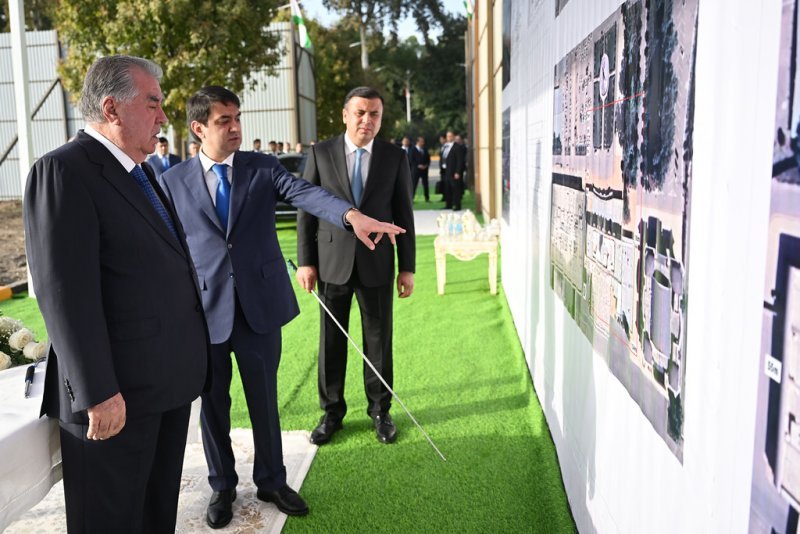
Excellency: Under his leadership, Dushanbe has become one of the most beautiful capitals in the world. If you compare the city today with what it looked like fifteen years ago, the transformation is extraordinary.
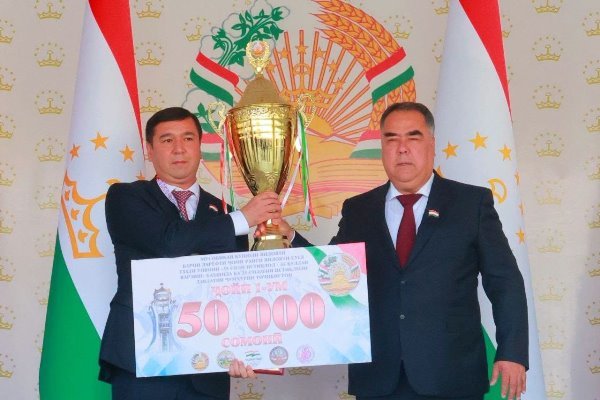
His initiatives have particularly focused on young people, especially through the promotion of football. His contributions helped elevate the importance of the sport internationally, culminating in the United Nations proclaiming 25 May as World Football Day.
Rustam Emomali serves as a true inspiration for the younger generation.
Muhammad Ali Pasha: What role can tourism play in strengthening relations between Pakistan and Tajikistan?
Excellency: I am delighted to say that Pakistani interest in visiting Central Asia has grown tremendously.
Several neighboring countries have already launched direct flights from Pakistan, and we are also taking steps in that direction. Today, approximately 1,300 to 1,600 Pakistani tourists visit Tajikistan every month, reflecting the growing people-to-people connection between our countries.
Muhammad Ali Pasha: How do you view President Emomali Rahmon’s efforts in digitalization and artificial intelligence?
Excellency: The initiatives undertaken by President Emomali Rahmon benefit not only the people of Tajikistan but also the broader region.
On digitalization and artificial intelligence, President Rahmon presented an ambitious agenda at the United Nations, which received international appreciation and endorsement.
Tajikistan is making significant progress in AI and digital transformation under his leadership. At the same time, I am pleased to see Pakistan also expanding its investments in artificial intelligence and digitalization, creating new opportunities for cooperation.
Muhammad Ali Pasha: Where do you see Pakistan-Tajikistan relations over the next decade?
Excellency: I envision a future where you can have breakfast in Islamabad, enjoy lunch in Tajikistan, and return home by evening.
Our political, economic, and cultural relations will continue to deepen. The bonds between our countries will become so close that future generations will look back at today’s level of connectivity as part of history.
Muhammad Ali Pasha: Excellency, thank you very much for your valuable time.
Excellency: Thank you. It has been my pleasure.
Owner of “The Europe Today” and Patron-In-Chief/Owner of “The Gulf Observer”, Chairman “The Gulf Observer Research Forum”, Foreign Affairs Expert, Analyst, International Award Winning Author and Poet.