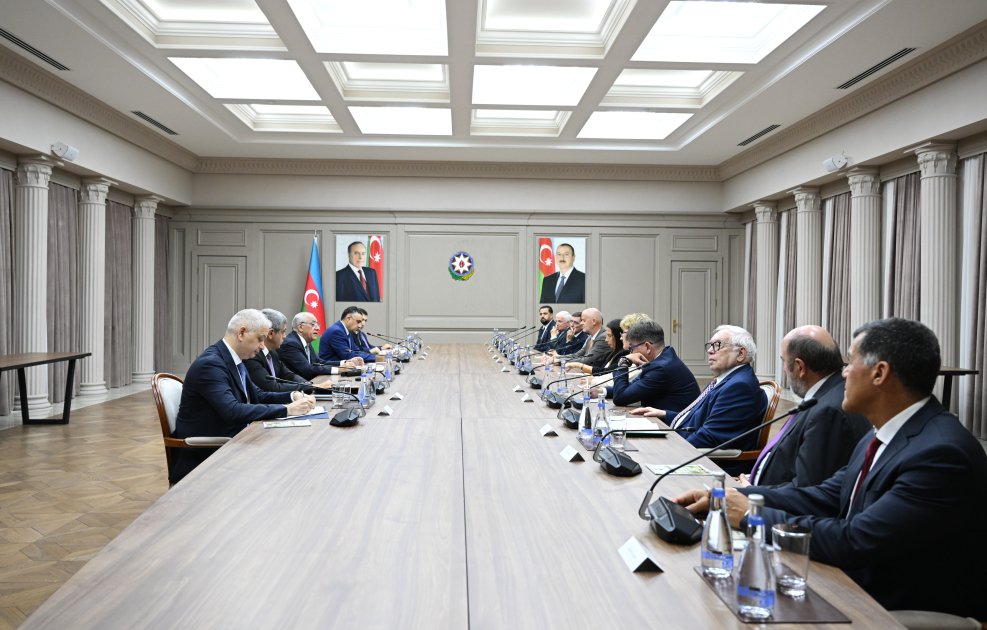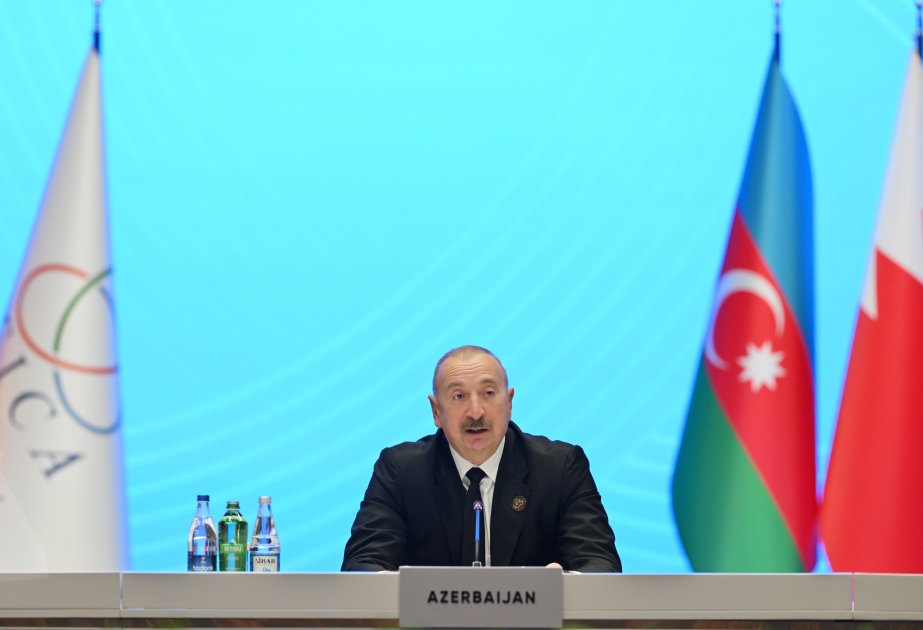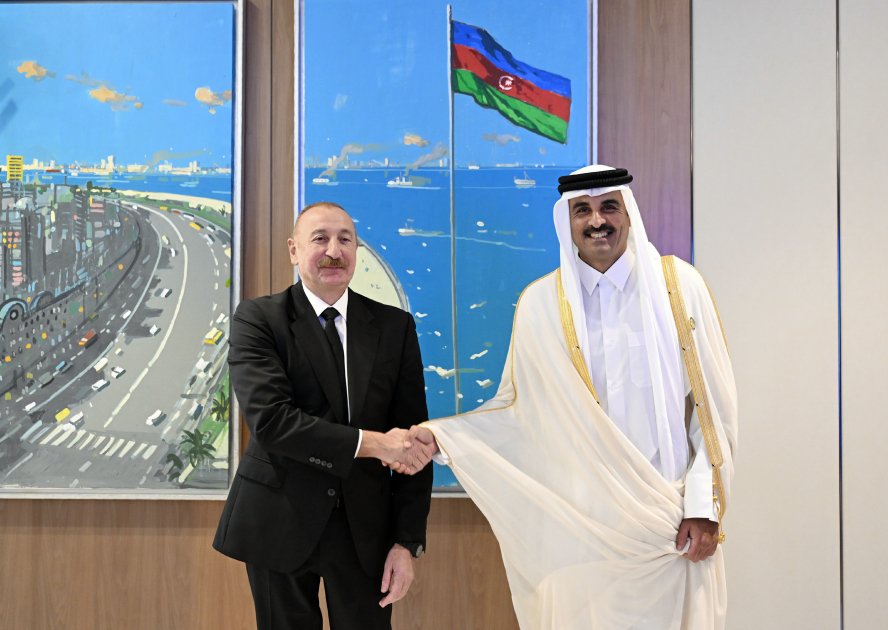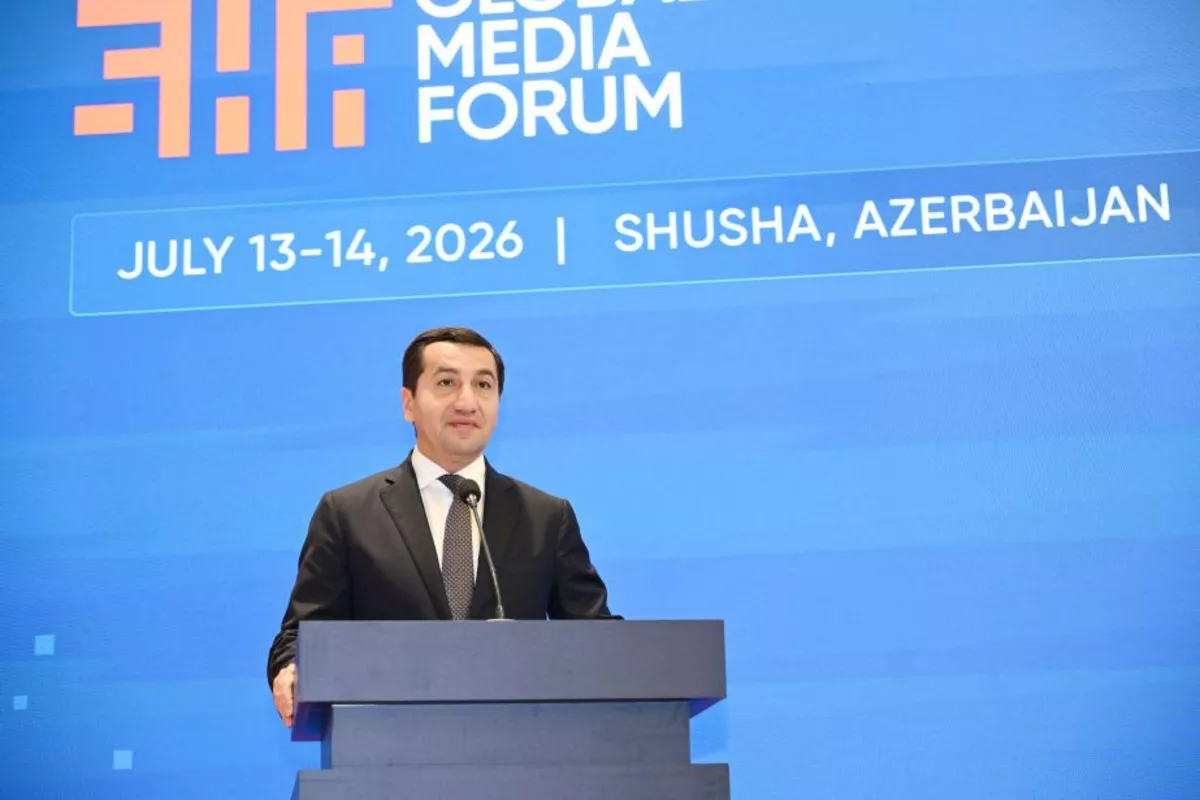
For the fourth time, the Azerbaijani government organized a media forum in Karabakh, in the territories liberated from occupation. The forum began on July 13 with an open session during which journalists from around the world were able to ask questions directly to the President of Azerbaijan, H.E. Ilham Aliyev.
The 4th Shusha Global Media Forum brought together nearly 160 media leaders, experts, and officials from 53 countries. The event explored how journalism can fight misinformation, the reconstruction of Karabakh after occupation, the peace process with Armenia, decolonialism, Azerbaijan’s foreign policy, US-Azerbaijan relations, EU-Azerbaijan relations, the assistance of Turkic countries in the reconstruction of Karabakh, dialogue, coexistence, artificial intelligence, disinformation, the importance of the Zangezur Corridor, cooperation between Muslim countries, Azerbaijan’s remarkable development, and its recognition as a middle power.
Journalists from the Democratic Republic of the Congo, Euronews, Uzbekistan, the United States, Türkiye, Kazakhstan, Romania, and many other countries were able to ask the President questions on themes such as decolonization, bilateral relations, the visit of Ursula von der Leyen and António Costa to Baku, and the importance of artificial intelligence today.
The title of the forum is particularly important when one considers that Azerbaijan won the Karabakh war despite what it sees as extensive disinformation spread by international media. Azerbaijan won the war on the battlefield but continues to face disinformation, notably because of Armenian lobbying. During the conflict and even today, many Western media outlets, particularly French ones, damage Azerbaijan’s reputation and spread disinformation. Through this forum, Azerbaijan demonstrates to the world that its President is capable of answering all questions from international media openly and without prior knowledge of the questions. It is also worth recalling that Presidential Assistant Hikmet Hajiyev answered questions from all journalists throughout the three days of the forum, including those of the journalists from EUReporter and EUReflect.
Armenian lobbying has managed to convince many Europeans, public opinion, and French decision-makers that Armenia was right, while Armenia occupied 20% of internationally recognized Azerbaijani territories.
The choice of holding the forum in Karabakh, and particularly in Shusha, is not insignificant. Journalists from around the world were able to see buildings that had been burned and destroyed during the Armenian occupation and before the departure of the Armenians, as well as how the Azerbaijani government managed to rebuild the region within five years. During the forum, the President stated that when lands return to their owners, the region truly develops and prospers. During visits to various cities of Karabakh, two moments particularly attracted my attention:
- (1) The visit to the Khojaly Genocide Memorial.
- (2) The visit to the Victory Park in Khankendi.
(1) The Khojaly Tragedy
The Khojaly tragedy is one of the darkest pages of the Armenian-Azerbaijani conflict. On the night of 25–26 February 1992, the city of Khojaly was wiped off the map.
The visit to the Khojaly Genocide Memorial was of particular importance because, according to Azerbaijani accounts, the Armenian forces advancing on Khojaly, with the support of fully equipped military vehicles, carried out a genocidal massacre against the Azerbaijani population. As a result of the Khojaly genocide, 613 people were killed, including 106 women, 63 children, and 70 elderly people. A total of 1,275 people were taken captive, and the fate of 150 individuals remains unknown. These figures have been cited in numerous academic studies, including those of Mustafayeva, N. (2013), the French expert J. M. Brun (2023), and Gasimov, D. D. (2010).
Human Rights Watch states in a report:
“A large part of the population, accompanied by about a dozen retreating fighters, fled the town as Armenian troops approached.”
The Khojaly massacre is described by Human Rights Watch as:
“the largest massacre of the Nagorno-Karabakh conflict.”
According to Azerbaijani sources, as a result of Armenia’s occupation policy launched more than twenty-five years ago, 20% of Azerbaijan’s territory was occupied. More than 20,000 Azerbaijani citizens were killed, over 50,000 were wounded, taken captive, or disabled, and more than one million citizens were forcibly displaced from their homes. Hundreds of settlements, around 6,000 industrial and agricultural enterprises, more than 4,000 cultural institutions, nearly 700 schools, as well as museums and libraries, were destroyed. The damage inflicted on the Azerbaijani economy exceeded 22 billion US dollars.
(2) The Visit to Victory Park in Khankendi
The Zəfər Parkı (Victory Park) in Khankendi was inaugurated on 24 December 2025. It commemorates the victory of the 44-Day War with impressive structures. A staircase of 44 steps leads from the central square of the park to the triumphal arch, with each step representing one day of the conflict.
This symbolizes the strength of the Azerbaijani armed forces and the fact that they succeeded in recovering the occupied territories in only 44 days. It clearly demonstrates the strength of the Azerbaijani army and that, if it had wished, it could have directly attacked Armenia. However, its objective was solely to recover its occupied territories and not to make claims on Armenian lands.
The forum also highlighted two other important points.
Azerbaijan’s Desire to Establish Peace with Armenia
“Azerbaijan and Armenia initialed a peace agreement at the White House in the presence of President Trump.”
“More than 40,000 tons of different cargo have been transported to Armenia from Russia, from Kazakhstan, and from other destinations.”
“Especially now, when many countries are suffering from limited access to fuel, Armenia has a reliable source in Azerbaijan.”
These statements were made by the Azerbaijani President during the question-and-answer session.
An Implicit Message: Decolonization and the Fight Against Colonial Empires
The Congolese journalist Cedrick Aundu (Voice of Congo) asked Azerbaijani President H.E. Ilham Aliyev:
“What is your view on how independent media can challenge colonial and neo-colonial narratives?”
The President replied that truly independent media constitute a powerful voice capable of overcoming the political and economic influences and controls that can weigh on oppressed nations and peoples. He also emphasized that Azerbaijan suffered during Russian and Soviet domination and that only after gaining independence did it prosper and become ready to emerge as a middle power.
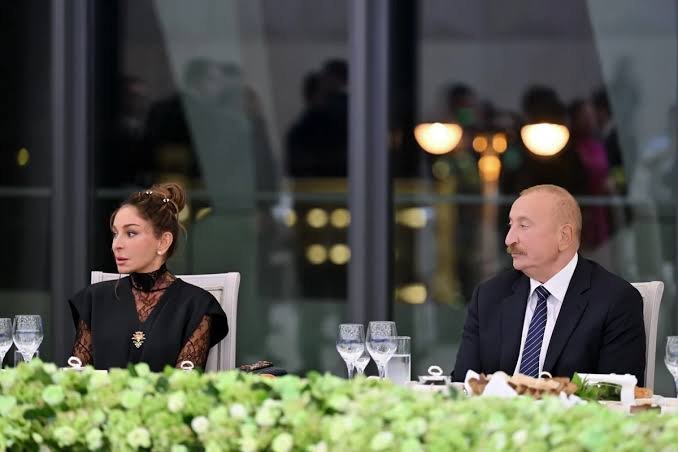
Furthermore, during the gala dinner, the Azerbaijani government invited dancers from French Polynesia to perform and showcase their culture. The colonization of French Polynesia began in May 1842 with the establishment of a protectorate over Tahiti. French Polynesia was re-inscribed on the United Nations list of territories to be decolonized on 17 May 2013. France did not accept this re-inscription and has systematically boycotted meetings of the UN Committee of 24, unlike sessions dedicated to New Caledonia.
Is this a clear message directed at France and other colonial powers? These same powers often accuse and criticize Azerbaijan, damaging its image during the Karabakh conflict, while Baku strongly criticizes what it describes as Paris’s “neo-colonial” policies and actively supports independence movements.
Conclusion
The Shusha Global Media Forum therefore served not only as a platform for discussing journalism and media practices, but also as a venue through which Azerbaijan showcased its reconstruction efforts, articulated its geopolitical vision, defended its interpretation of recent history, and promoted its broader message regarding sovereignty, peace, and decolonization.
Bibliography
Brun, J. M. (2023). IV. La récente occupation du Karabakh. Hors collection, 111-153.
Gasimov, D. D. (2010). Le conflit arméno-azerbaïdjanais: l’impuissance ou l’indifférence de la communauté internationale?. Guerres mondiales et conflits contemporains, 240(4), 101-111.
Human Rights Watch. (1993). Human Rights Watch World Report 1993. Human Rights Watch. https://www.hrw.org/legacy/reports/1993/WR93/Hsw-07.htm#P315_106925 [hrw.org]
Mustafayeva, N. (2013). Hocalı Katliamının Bir Genosit Olduğuna Dair Uluslararası Hukuki Deliller. Fırat Üniversitesi Orta Doğu Araştırmaları Dergisi, 9(2), 105-111.
Historian and environmental management expert on Central Asia and researcher on Central Asia post-Soviet period. Journalist for EuReporter and EuReflect and Special Director of “The Gulf Observer” for Europe and Central Asia.