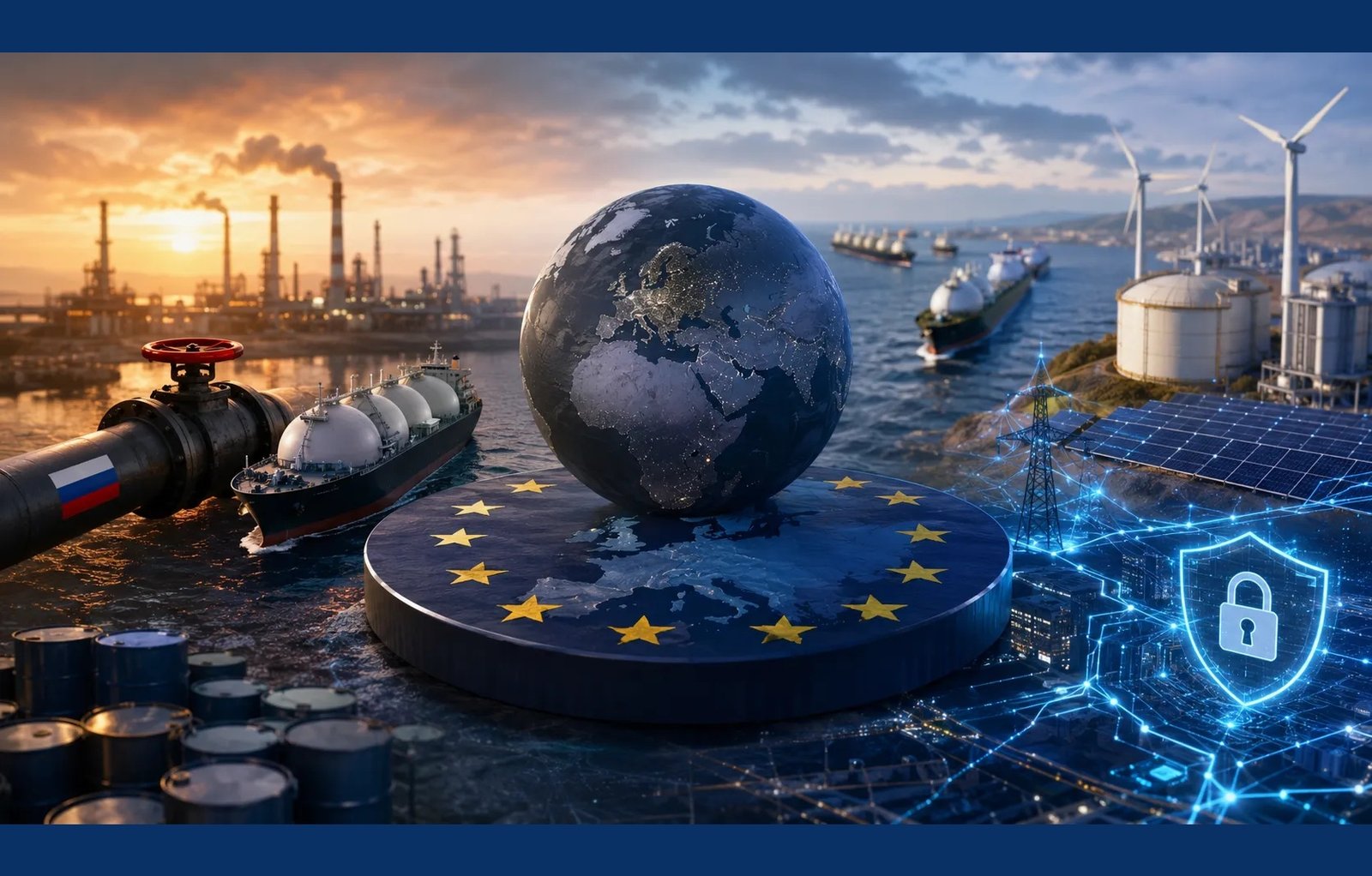
Europe has spent the past four years rebuilding its energy system around a single question: how do you stay secure when your cheapest supplier becomes your biggest threat? The answer emerging in 2026 is complicated — real progress, new vulnerabilities, and a deadline that keeps slipping.
From Russian Pipelines to Global Markets
The headline number is striking: Russia’s share of EU gas consumption has fallen from 45% in 2021 to just 12% today, a drop from 152 billion cubic metres of imports to only 36 bcm. Brussels has since built a formal exit ramp: the Commission’s roadmap to end EU dependency on Russian energy was followed by Council and Parliament agreement on a stepwise phase-out law, finalized in January 2026. Yet a handful of member states are still quietly buying Russian gas, and the 2027 full-ban deadline looks harder to hit than officials admit — as an emergency meeting in February 2026 over a Hungary-Slovakia-Ukraine transit standoff made clear.
What replaced Russian pipeline gas is not a diversified basket so much as a new single point of dependence: the United States has become Europe’s largest single source of LNG, prompting analysts to ask whether Europe solved its dependency problem or simply relocated it.
The Middle East Shock and the Return of Emergency Coordination
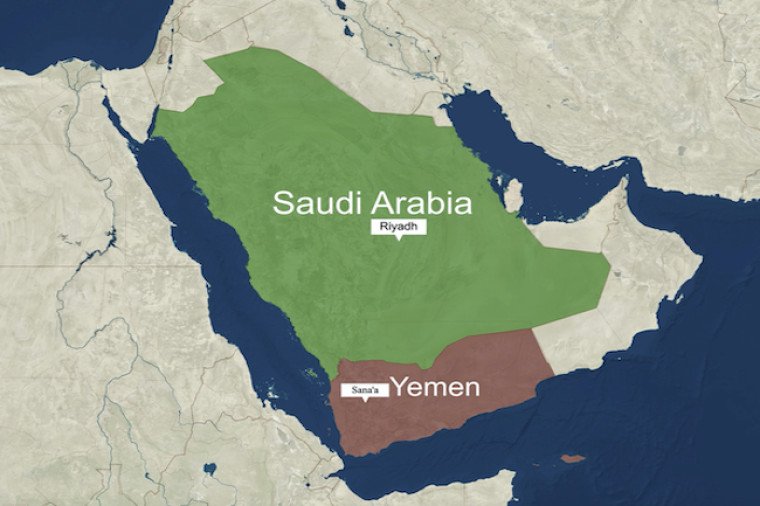
Just as the Russian gas question seemed to stabilize, a new front opened. Since spring 2026, EU energy ministers and the Commission have been meeting repeatedly through the Energy Union Task Force and the Oil Coordination Group to monitor disruptions linked to the Middle East conflict, including contingency planning for a prolonged closure of the Strait of Hormuz. The response has been the kind of coordinated stockpile action Europe hasn’t needed since the 1970s oil shocks: IEA members released more than 400 million barrels from emergency oil stocks in March 2026, the largest coordinated release on record, with EU countries contributing roughly 20%.
By July, the picture had calmed but not resolved. The Energy Union Task Force concluded on 10 July 2026 that there is no immediate supply concern for the coming winter, with gas storage filling targets still on track, while jet fuel supply remained stable despite the regional tensions. The cost of that stability has been steep: the Commission’s own figures show an additional €50 billion in fossil fuel spending since March 2026 alone, driving the April 2026 launch of the AccelerateEU energy package to shield consumers from price spikes.
Policy Response: Diversification, Storage, and a Cyber-Hardened Grid
Brussels’ answer has been to widen the definition of energy security itself. The Commission’s 2026 work programme, branded “Europe’s Independence Moment,” bundles an Electrification Strategy, a Heating and Cooling initiative, and a dedicated Energy Security Package, alongside longer-term Energy Union targets beyond 2030. In parallel, the EU’s legislative pipeline includes a full revision of the security-of-supply framework for gas and electricity, explicitly designed to address physical and cyber threats to energy infrastructure alongside climate-related risks, following a public call for evidence closed in October 2025.
There are signs the strategy is bearing fruit on the demand side: EU energy imports fell 11.1% in 2025 compared with 2024, with the import bill dropping to €336.7 billion — down more than half from the €693.4 billion peak in 2022. Even so, the Commission notes that 57% of the energy consumed in the EU is still imported fossil fuel, a reminder that diversification has changed the sourcing of vulnerability more than it has eliminated it.
A brief theoretical note
Academic energy-security scholarship offers a useful lens for reading these developments. For two decades, the field’s default framework has been the so-called “four As” — availability, accessibility, affordability, and acceptability — first formalized in a 2007 APERC report and echoed in the IEA’s own definition of energy security as “uninterrupted availability of energy sources at an affordable price.” Europe’s post-2022 record maps onto this framework fairly well: availability was defended through storage and LNG diversification, affordability through emergency subsidy packages, and acceptability through the political consensus around phasing out Russian supply.
But a widely cited critique argues the four-As model is incomplete. Cherp and Jewell contend that energy security is fundamentally an instance of security in general, and that any serious concept must answer three questions — security for whom, for which values, and from what threats — which the four-As framework never explicitly poses. They propose reframing energy security as the “low vulnerability of vital energy systems,” a definition that treats vulnerability as a product of both exposure to risk and the resilience of the system to absorb shocks. Read through that lens, Europe’s 2026 predicament looks less like a solved problem and more like a shift in the referent object of insecurity — from Russian pipelines to Gulf shipping lanes, LNG terminals, and the cyber-physical infrastructure now targeted by the EU’s forthcoming security-of-supply revision.
Conclusion
Europe’s energy security in 2026 is best described as resilience without closure. Formal Russian dependency has collapsed, emergency coordination mechanisms have proven they can function under real stress, and the policy architecture — from AccelerateEU to the pending Energy Security Package — is more comprehensive than at any point since the 1970s. But the underlying exposure has not disappeared; it has migrated to new suppliers, new chokepoints, and new categories of threat, including cyberattacks on grid infrastructure. Whether the EU can hit its 2027 deadline for a full Russian energy ban, and whether its new dependencies prove more durable than the old ones, will be the real test of whether “independence” turns out to be a policy achievement or a rebranding exercise.