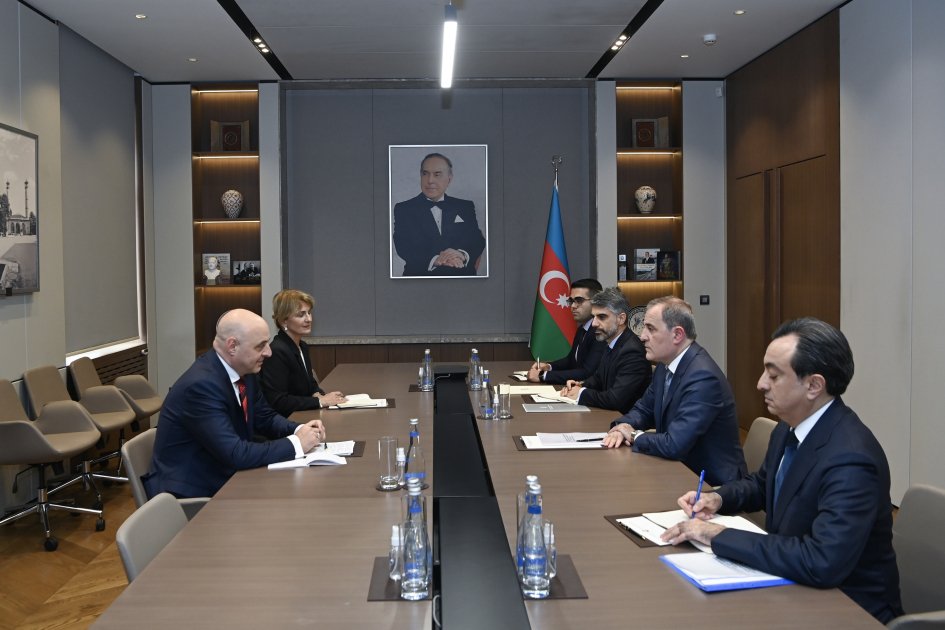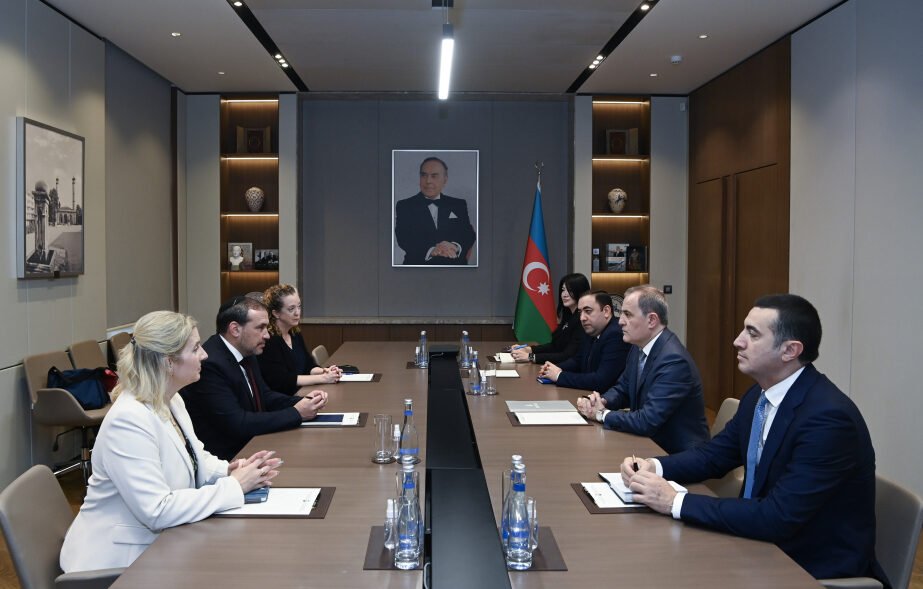
Baku and Yerevan signed the document of an accord that many observers, even 10 years ago, doubted that either capital would dare to sign. The Joint Declaration of 8 August 2025 was not decisive to stopping 37 years of conflict. No document does. It did do something less sweeping—and, even more importantly in the long run, more impactful: It proved that the South Caucasus did not have to be ruled by force, and that its two primary opponents did not have to envision a future divided by either memory or peace.
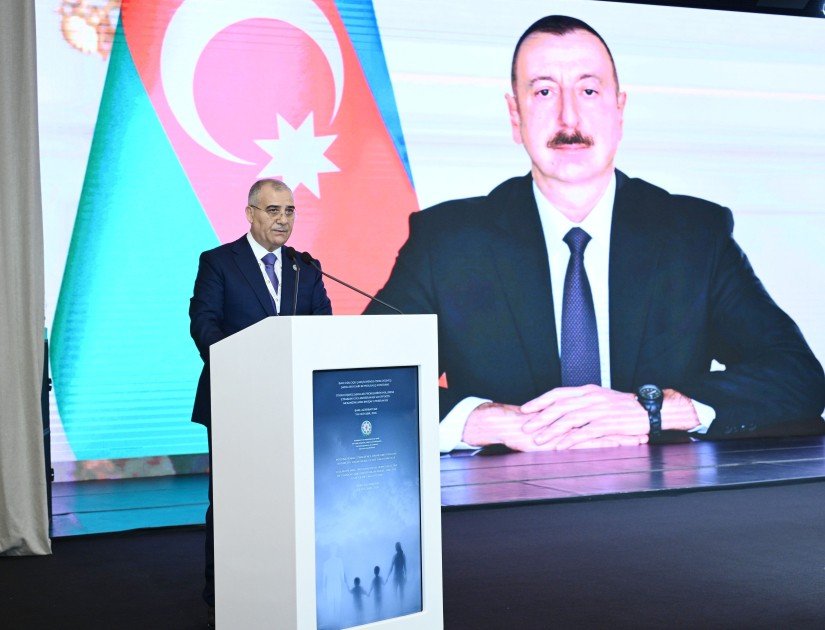
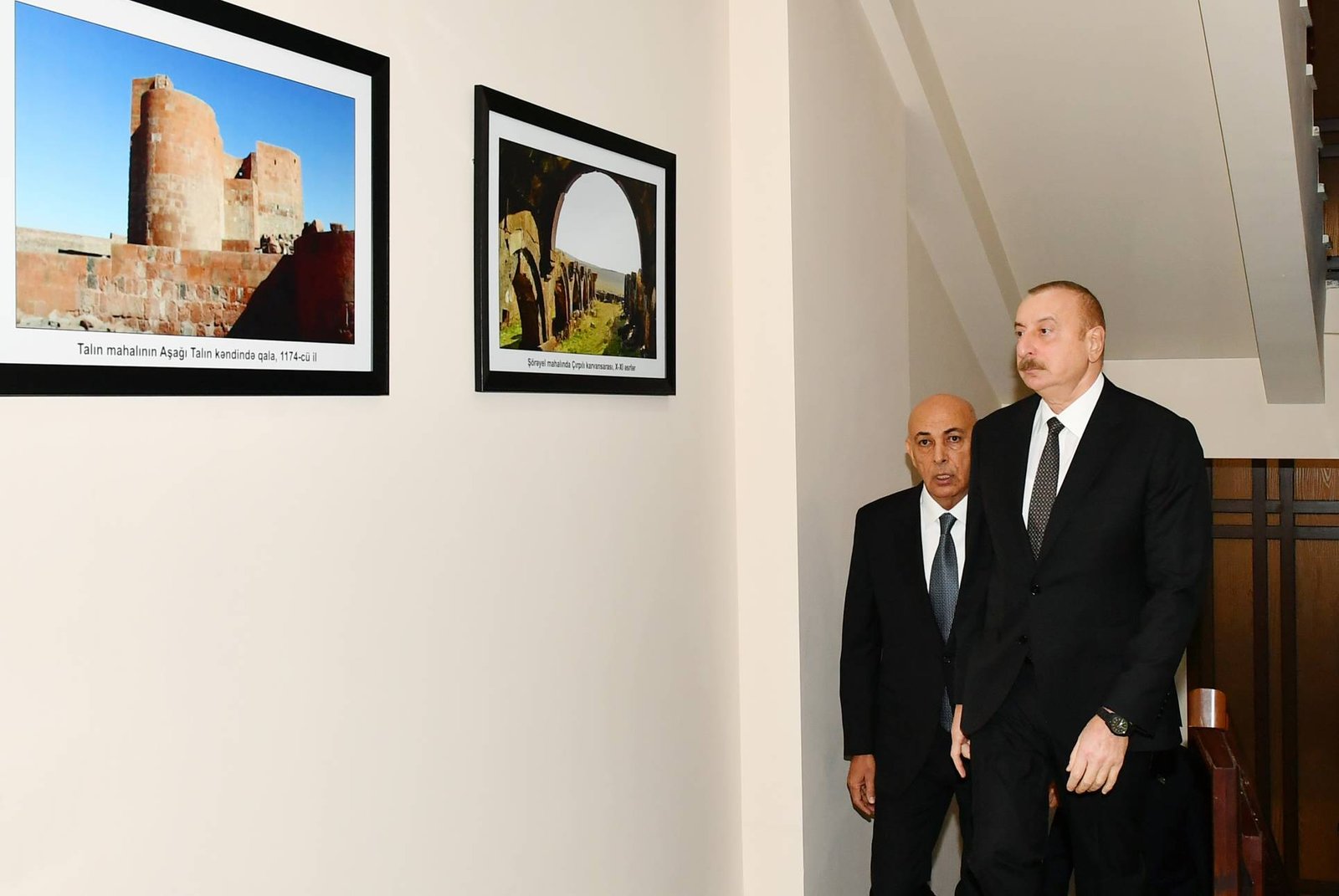
That achievement belongs to several hands. But it would be an act of historical dishonesty to discuss it without acknowledging the strategic patience of President Ilham Aliyev, who spent the years after 2020 declining the easy politics of triumphalism and choosing instead the harder politics of settlement.
Victorious leaders don’t negotiate. They explain, and what they dictate is not often remembered after them. President Aliyev did just the opposite. He called for the end of the Minsk Group format, and, which had resulted in 30 years of process without peace, and walked away quietly. When the multilateral mediation had run its course he agreed to a bilateral track because he said two neighbours who are not able to communicate directly will never live side by side honestly. He pledged Azerbaijan to the demarcation of a border that was never correctly drawn, which would be beneficial to no one. He did not close the channel to Yerevan even though provocations were there that justified its closure.
So it’s important to understand the question of Western Azerbaijan against this background, in which it is often misunderstood.
A World that Never Looked Upon a Displacement
The twentieth century was a bane to the South Caucasian peoples; it was a bane to them again. Azerbaijanis had been settling in the area of the present Republic of Armenia for centuries. Their valleys it farmed, its village mosques it built, it was their cemetery for burying the dead, the toponymy it left behind remains in Soviet maps and archival registers.
The disappearance was a gradual process. In December 1947, the USSR Council of Ministers issued a decree to transfer the rural population of Azerbaijan, which lived in the Armenian SSR, to the Kur-Araz lowland of Soviet Azerbaijan. Between 1948 and 1953 some 100,000 were relocated, some from cool highland villages to a malarial plain to which they were unaccustomed. Between 1988 and 1991, however, when the Karabakh conflict reached its peak, the last Azerbaijanis in Armenia, about 200,000, fled, but they never returned.
What’s so special about this case isn’t the amount of the loss, it’s the silence after the loss. Other such moves of the same period went into the international lexicon and found their champions, their commissions and their celebrations. This one did not do that much. It was regarded as a geographical fact, not a question of rights, and the people who were the victims of it were not even mentioned in the diplomatic record, except for a few small words.
What the Concept of Return Really Means?
In December 2022, President Aliyev requested from the Western Azerbaijan Community that they develop a clear document that outlines how this question can be answered. What was produced was the Concept of Return, which is not a document to be characterised, but certainly to be read; it is much more restrained than its critics suggest.
The Concept is not based on history or emotions, but on instruments signed by Armenia: the Universal Declaration of Human Rights, the International Covenant on Civil and Political Rights, the Convention Relating to the Status of Refugees. It aims at an international treaty with verification and guarantee mechanisms to allow Azerbaijanis and their children to return voluntarily, safely and in dignity and to exercise their individual and collective rights thereafter.
All the operative words in that formulation are crucial. Voluntary (no one is forced to go, and no one is forced to come to anyone). Safe is not a given, it’s based on security guarantees. With dignity is to be citizens under the law, not a demographic tool. An international agreement is only an international agreement, one that is negotiated between two independent countries, overseen by third parties, not a unilateral decision.
This is the language of refugees’ law. It’s the same language that the international community used in Bosnia after Dayton Agreement, where Annex 7 provided a right of return that was slow, imperfect, but still right. It is the language that is used for Cyprus, the displaced in Georgia, and the displaced from Kosovo to Cambodia. But if it’s good in those cases, it’s not bad because the claimants in this case are Azerbaijanis.
There are two clarifications, though, that should be offered to Yerevan, and Baku’s interest is in putting them in plain, and frequent, words. First, a right of return is a claim against a state to allow people to arrive, not a claim in the state’s territory. It is exercised under Armenian sovereignty, its law and before Armenian courts. Second, it is a right of individuals and families and not a way to change the political status of any district. The Concept is a careful read and does not assert anything more. The clearer Azerbaijan is on both, the quicker the idea will spread in the capitals of Europe and America — and the more difficult it will be to caricature.
It is not a rhetorical argument that supports the Azerbaijani position. It’s empirical and it’s being constructed with concrete as I write this across Karabakh and East Zangezur.
Since 2021, Azerbaijan has undertaken one of the largest post-conflict reconstruction programmes in the world outside a war zone: cities rebuilt at Aghdam, Fuzuli and Zangilan, the Fuzuli and Zangilan airports opened, the “smart village” and “smart city” projects at Aghali and elsewhere, new substations, hospitals, schools and highways, and a demining effort that continues to claim casualties among those who carry it out. In May of this year, President Aliyev opened the first residential complex in Zangilan. Tens of thousands of formerly displaced Azerbaijanis have now gone home to territories their families left in the early 1990s.
This is important with regard to the Western Azerbaijan issue. Politics is a talking point that does nothing to prepare for return. A state that has been spending the past ten years and a vast portion of its revenues to bring back its own displaced people is saying something about the nature of displacement: it is a wrong which time cannot heal.
Sequencing, and why it’s everything.
Current Situation
The peace deal is only initialed, not signed. Baku’s stance is that the constitutional reference it signed is a residual territorial claim. Since the parliamentary elections in June, Pashinyan has made a number of statements regarding a mandate for constitutional changes, while key Azerbaijani government officials have publicly expressed their hope for a referendum. Border delimitation continues. The road corridor across southern Armenia, connecting Azerbaijan and Nakhchivan, is awaiting implementation – it is the Trump Route for International Peace and Prosperity.
Peace agreements are unsuccessful if parties load on to a single document all the historical grievances; they are also unsuccessful if they agree to forget a grievance that will not stay forgotten. The better way – and the one which will certainly be in Azerbaijan’s best long-term interest – is to sign a peace treaty, open the borders, resume diplomatic ties, and set up a joint humanitarian mechanism on displacement: technical in nature, international in supervision and separated from the political agenda.
A system like this would address the issues that haven’t been resolved over the past three decades, such as paper property records and restitution, the preservation of cemeteries, mosques and other religious institutions, missing persons, and what the practical realities would be if anyone were to use a right that does not currently exist in practice. It would be a slow moving thing. It will make little news. It would be worth the value of 100 conferences or more.
The Statecraft Behind the Position
One has to stop to remember how unusual the record is as familiarity has dulled the senses of the world.
Upon President Ilham Aliyev’s accession to the Presidency in 2003, Azerbaijan was a nation with one million displaced people, one frozen conflict that was assumed to be permanent and one single export. He was born with in his inheritance a state which survived its founding decade, courtesy of Heydar Aliyev. There he erected one thing: a middle power that had the confidence to put its own terms.
Reflect on what Baku has had to do in the last four years. Azerbaijan was already a key energy supplier to a Europe desperate for alternatives to Russian gas, and was poised to go beyond energy and energy-related businesses to the green energy corridor that would link the Caspian region with the markets of Europe. It has established itself as a key element in the Middle Corridor route, the trans-Caspian one that has emerged as the de facto land bridge between East and West. It hosted COP29 in November 2024, where it will push for a climate finance deal and support the idea, not very popular in diplomatic circles, that environmental and peacebuilding agendas should go hand-in-hand. This May it hosted the 13th World Urban Forum in Baku. It had signed a strategic partnership deal with the United States. It helped to close the Minsk Group, a process that drew three decades of world attention without yielding any results.
These were all outcomes of leaders who avoided the two simple political paths that were open to them in 2020 – the path of maximalist consolidation and the path of drift – and invested their political capital in the mundane task of constructing institutions, corridors and agreements that will outlast them.
This record has a special significance for Pakistan. Azerbaijan was one of the few countries who stood with Pakistan on Jammu and Kashmir issue. For 30 years, Pakistan kept its relations with Armenia frozen in protest of Azerbaijan’s recognition. None of these are isolated incidents; President Aliyev’s visit to Islamabad in July 2024, the Prime Minister’s attendance at Azerbaijan’s Independence Day celebrations, the trilateral arrangement with Türkiye, preferential trade and transit routes, and Baku’s active support for Pakistan amid the conflict of May 2025, are not separate. They’re the thing that’s visible on the surface of a partnership that two leaderships have decided to intentionally strengthen.
The question of Western Azerbaijan should be read in this context, both by Azerbaijanis and Pakistanis. It’s not a state that is looking for a new grievance. It is the final unfulfilled agenda item of the last twenty years to which its President has consistently dedicated himself with fidelity, and which he has always considered to be a question of return, rights and peace.
Owner of “The Europe Today” and Patron-In-Chief/Owner of “The Gulf Observer”, Chairman “The Gulf Observer Research Forum”, Foreign Affairs Expert, Analyst, International Award Winning Author and Poet.