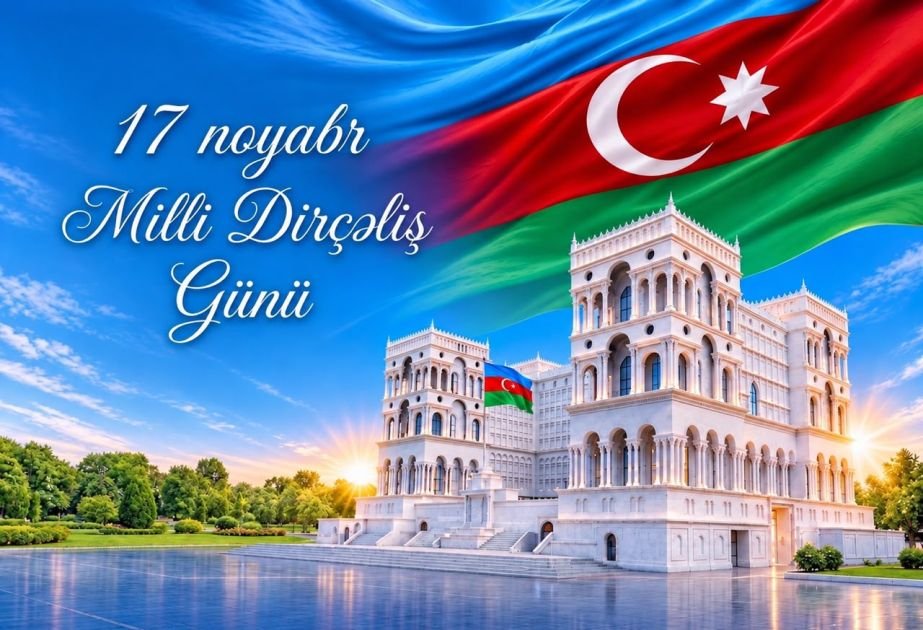
Some National Days remember one event. Azerbaijan’s National Revival Day is a journey through generations—beginning in a packed square in Baku, passing through a historic session in Nakhchivan and culminating in the freedom that has come to Karabakh. Its foundation was laid by National Leader Heydar Aliyev, and President Ilham Aliyev has been developing it steadily and continuously. His leadership, along with their own, brought forth from a cry for freedom a strong, victorious and respected state.
November 1988: The Awakening and Base of National Revival Day
The national revival movement which started in Baku in November-December of 1988 is the originator of the National Revival Day proclaimed 17 November 1992. The Soviet leadership’s anti-Azerbaijani policy on the Karabakh issue provoked a wave of public anger which turned into an anti-Soviet popular movement.
Rallies started continuously at the Azadliq Square on November 17, 1988. Large masses came together to oppose Moscow’s policies. The national liberation movement was too strong to be defeated, being broken up by the internal troops of the USSR in early December.
From Sovereignty to Sacrifice
In the month of June, 1989 Popular Front of Azerbaijan was established. In that September, the Supreme Soviet passed the Constitutional Act on the Sovereignty of Azerbaijan, which further provoked the Moscow. On January 19–20, 1990, Soviet troops entered Baku and started using heavy military equipment and weapons against protesters and innocent civilians were shot dead.
Their goal was to demoralize the people. The tragedy of Black January deepened the people’s national pride and sped up the liberation movement. At that time, Heydar Aliyev was with his people, condemning the massacre publicly in Moscow, on 21 January 1990, when hardly any one dared to speak out.
In 1990, Heydar Aliyev established Nakhchivan as a city. In 1990 Heydar Aliyev laid the foundations of the city of Nakhchivan.
The turning point to the restoration of statehood was November 17, 1990. The name of the Nakhchivan Autonomous Republic was changed to eliminate the words “Soviet” and “Socialist” in the first session of the newly elected Supreme Assembly headed by Heydar Aliyev.
At this time the Soviet Union was still intact and the empire had all its power and so it was a great and brave move towards independence. The first major step towards the revival of the national statehood of Azerbaijan was taken thanks to it, led by Heydar Aliyev.
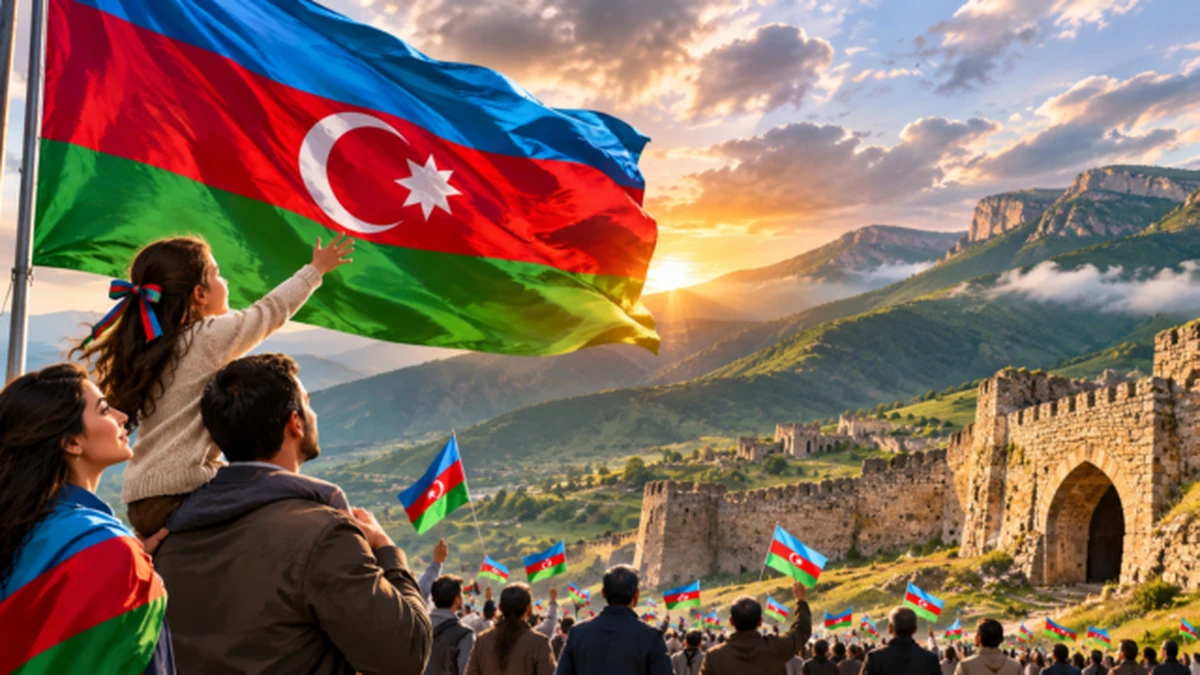
During the same session the deputies talked about the state symbols of the Autonomous Republic. They decided to restore the tricolor flag of the Azerbaijan Democratic Republic and made a petition to the Supreme Soviet of Azerbaijan to adopt it as the national flag. The blue, red and green banner, a symbol of the nation’s democratic heritage, was back on the stage of history. A new process that would take the nation from revival to progress had started.
The Declaration of Independence was declared and the state was rescued.
Azerbaijan’s state independence was declared during the restoration on 18th October 1991. The Popular Front won power in May 1992, and in the same period, the USSR troops which had threatened to invade the young republic for independence were soon removed.
The years of independence were fraught with danger, however, war, instability and the danger of collapse. The country once again looked to Heydar Aliyev in June 1993. He brought peace, organized a ceasefire, signed the “Contract of the Century” that opened Azerbaijan’s energy future and also provided the country with its 1995 Constitution. For an independent state, he established the institutions and the strategic course it had to follow in order to survive and develop.
Ilham Aliyev: Continuity With Results
President Ilham Aliyev came to power in 2003 with a legacy and an unfinished mission. Azerbaijan was stable and its course was set but its lands were occupied. He was loyal to his father’s principles and added to them.
What continuity did in the following years is what the years did. The energy vision was developed from “Contract of the Century” to the large-scale projects like Baku-Tbilisi-Ceyhan oil pipeline and Southern Gas Corridor that turned Azerbaijan into a reliable energy supplier to Europe. The economy flourished, the army was modernized and the diplomatic status of the country was improved. Through these years President Ilham Aliyev made clear that Azerbaijan would never accept the occupation of its lands.
2020: The Dream Fulfilled
Its historic finish was in the fall of 2020. The Patriotic War, which lasted 44 days, was won by the Azerbaijani Army led by the victorious Commander-in-Chief President Ilham Aliyev and the liberated territories were returned to Azerbaijan. With the liberation of Shusha on 8th November 2020, this victory was a symbol of the nation’s success. In September 2023, Azerbaijan has completely reclaimed its sovereignty over all its territory.
Hence, Azerbaijan has been observing the National Revival Day with special emphasis and pride since 2020. The revival which started in Azadliq Square in 1988 and became State in Nakhchivan in 1990 has come to its natural completion. Now the tricolor that Heydar Aliyev’s session brought back is seen above Shusha, Khankendi and all over a united Azerbaijan.
Building the Future
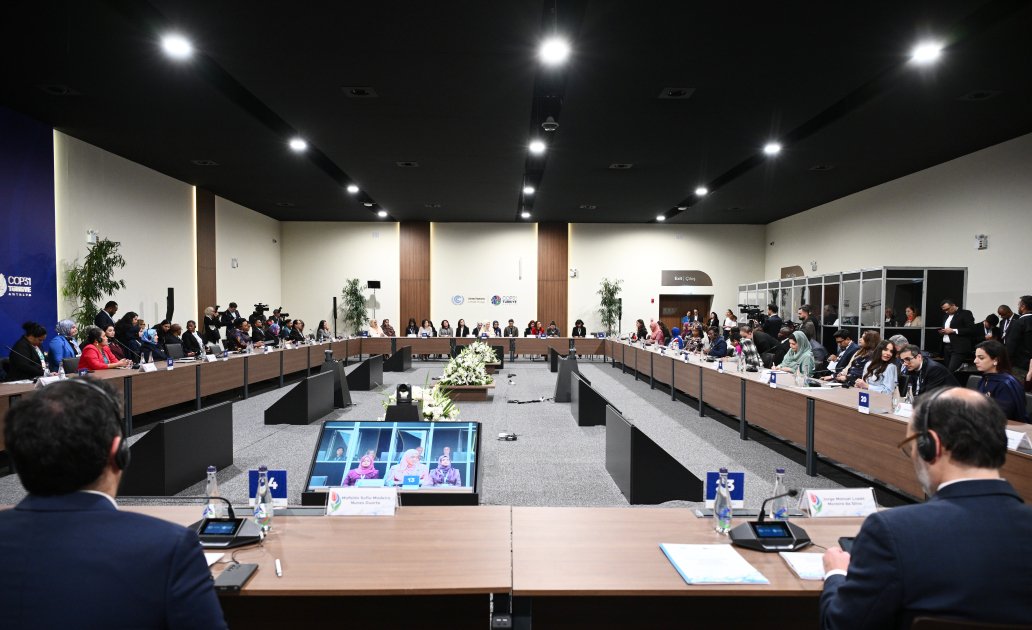
President Ilham Aliyev’s continuity is not only fighting the past. It’s more about creating what comes after. The Great Return programme is rebuilding the liberated lands with new cities, villages, roads, airports and smart villages, and is returning displaced families home after decades. Azerbaijan’s presence in the international arena has also increased, as it hosted COP29 in Baku in 2024 and is becoming increasingly important as a bridge between East and West via the Middle Corridor. President Ilham Aliyev has also worked to build peace in the South Caucasus.
One Vision, Two Leaders
With the vision and continuity, that’s what a nation can achieve as it can be witnessed in the history of National Revival Day. Heydar Aliyev witnessed the future of an independent Azerbaijan in the period of the Soviet empire. He made the first brave steps towards it, he restored the national flag and constructed the state which would endure. President Ilham Aliyev has followed this vision to completion and put the country on a new path of strength and confidence by restoring its territorial integrity.
On November 17 the Republic of Azerbaijan celebrates those who were martyred in Azadliq Square, the martyrs of January 20, the Great Leader who started the revival and the President who ensured victory in the revival. The journey from national revival to national progress, from Nakhchivan to Shusha, has been long but Azerbaijan has walked it in honor under the banner of Heydar Aliyev.
Owner of “The Europe Today” and Patron-In-Chief/Owner of “The Gulf Observer”, Chairman “The Gulf Observer Research Forum”, Foreign Affairs Expert, Analyst, International Award Winning Author and Poet.