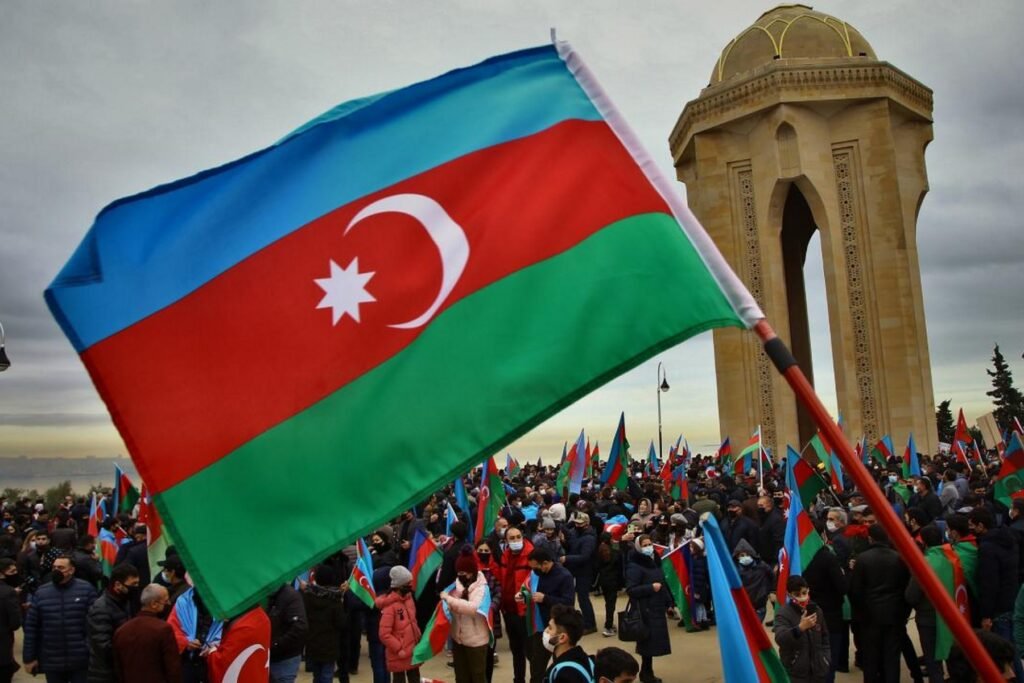
Azerbaijan’s State Sovereignty Day will be celebrated on September 20, but that is not just a military victory. It honors the achievements of a long national endeavour: the end of a state that was still missing the ability to assert its sovereignty on the ground within the borders it had been drawing on paper for centuries. It’s an achievement for which President Ilham Aliyev’s government has struggled for many years to achieve and it deserves to be understood and appreciated.
Sovereignty
Since 1991 Azerbaijan has been a subject of international law. In terms of legal challenges to its territorial integrity, this never came up. Resolutions of the UN Security Council of 1993 including the Resolution 822, reaffirmed respect for the inviolability of borders in the region and required the withdrawal of occupying forces from Kalbajar and other districts.
A sovereign state should also have the power to defend its territory, enforce its laws and to ensure security and public services throughout its area. Azerbaijan for almost three decades had a painful contradiction in its life: the land it had under international law, was not accessible for its institutions. The global community was aware of the issue but made little effort to address it. Azerbaijan would have to make the law a reality.
Strategy
The restoration of full sovereignty take place in stages, one following another.
The turning point came when the war started in 2020 and lasted for 44 days. The Azerbaijani Armed Forces liberated cities, districts and villages, the return of the Aghdam, Kalbajar and Lachin districts was stipulated in the trilateral statement on November 10, 2020, and it was implemented. But the post-war setup left one thing missing: a Russian peacekeeping force was stationed in part of the Karabakh region, and the Lachin road connected the occupied region to Armenia, which remained under perfect Azerbaijani control.
Baku’s next move was measured and institutional – not military. Azerbaijan opened a border crossing at the beginning of Lachin–Khankendi road on its border with Armenia on April 23, 2023. The move was a subtle one. In exercising control over who and what could cross the frontier, the checkpoint marked a direct form of state control of the border area, which was one of the most vocal markers of statehood. The event, in retrospect, was a transition from post-2020 and subsequent events.
This was on September 19, 2023, when Azerbaijan embarked on local anti-terrorist action in Karabakh. The operation was completed in one day on 20th September. Armed groups and parallel administration on Azerbaijani territory were discontinued and practical obstacles to the application of the Azerbaijani constitutional order in the region were eliminated. The presidential decree establishing the State Sovereignty Day states exactly this—it was the restoration of the country’s sovereignty in full.
Restoration
The most commendable part of Azerbaijan’s approach is that they didn’t see September 2023 as an end. Since then, attention has turned to ground level issues: reconstructing towns and villages, and facilitating the return of displaced people, resuming economic activity, and integrating the schools, hospitals, courts and police into one national system in the liberated zones.
This is a mature perspective on what sovereignty is all about. A flag over a border post is symbolic, receiving the same public services and legal protection in Khankendi, as in Baku is substantive. The President’s address at Karabakh University, in which he announced the complete restoration of sovereignty, carried even more weight, because it came from inside the region, from an academic institution. The government also followed this trend by announcing 2025 as the “Year of Constitution and Sovereignty” to commemorate the 30th anniversary of the adoption of the Constitution.
This was reflected in the related decree, which is that after 2020 and September 2023, the Constitution has gained legal force on the whole territory of the Republic of Azerbaijan. The idea of linking the two was intentional: The rule of law is a function of control of territory.
Conclusion
September 20 is the day when the laws of Azerbaijan and its de facto control came together. It was achieved by strategic patience, sense of sequence, and a willingness to never accept a frozen injustice as ‘business as usual’. Equally important, the government has seen restored sovereignty as a responsibility and oriented it into the reconstruction, return and constitutional governance. Today on the State Sovereignty Day, Azerbaijan has to be proud of a hard-won victory and to look forward to the many tasks ahead of them in building a lasting prosperity for all citizens.
Owner of “The Europe Today” and Patron-In-Chief/Owner of “The Gulf Observer”, Chairman “The Gulf Observer Research Forum”, Foreign Affairs Expert, Analyst, International Award Winning Author and Poet.