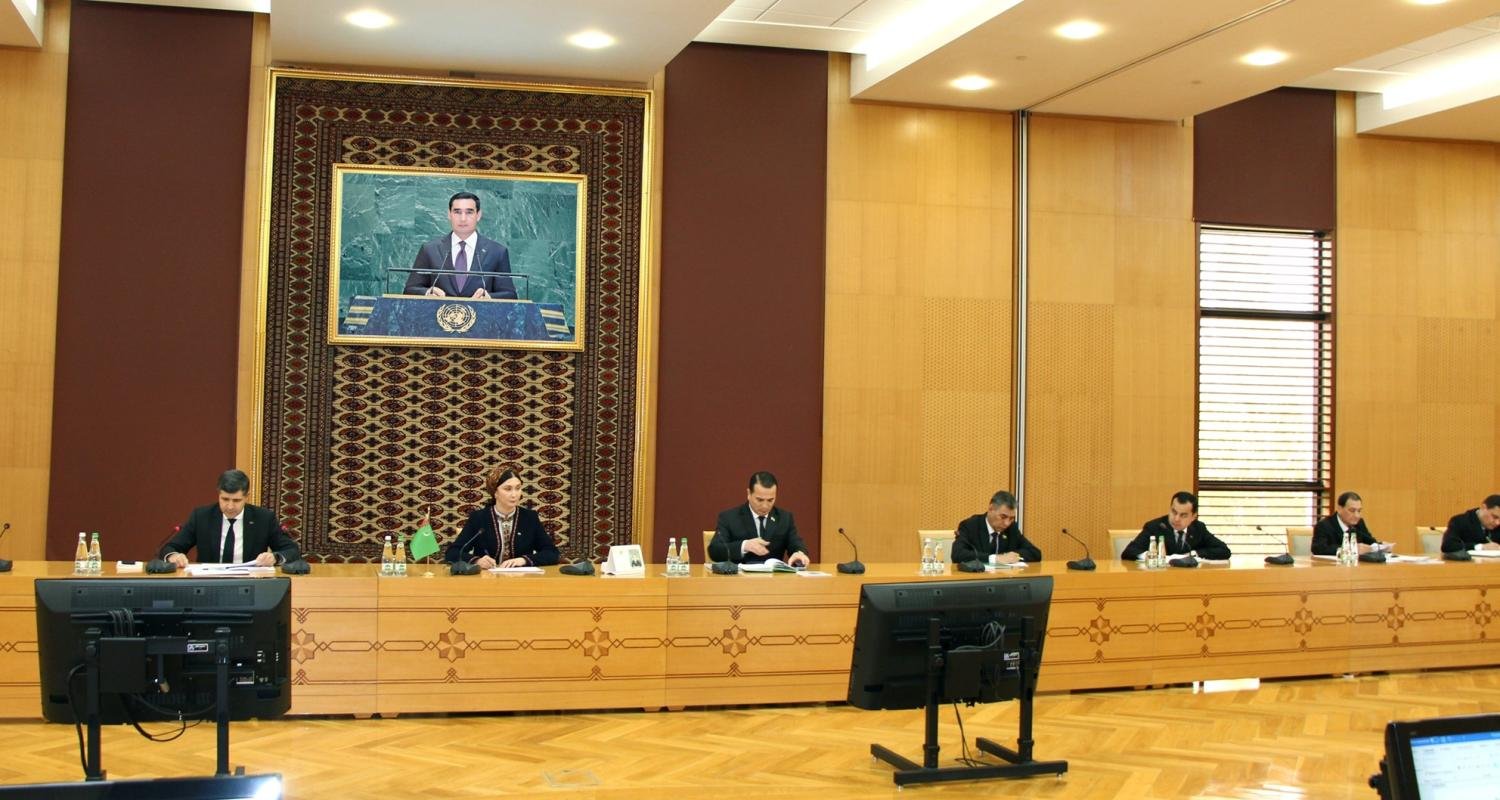
Ashgabat, October 27, 2026 – The Europe Today: The Ministry of Foreign Affairs of Turkmenistan held a meeting on October 26 to discuss the draft National Action Plan for 2026–2028 for the preparation and organization of the Year of International Law in 2028.
The meeting reviewed the key areas of forthcoming work, proposals for organizing thematic events, and measures to coordinate the activities of relevant state bodies and institutions.
Participants highlighted that on July 24, 2026, the United Nations General Assembly unanimously adopted the resolution proclaiming 2028 as the “Year of International Law,” an initiative put forward by Turkmenistan. The adoption of the resolution reflected broad international support for the country’s efforts to strengthen the role of international law in contemporary international relations.
The meeting emphasized that designating 2028 as the Year of International Law would provide an important opportunity to draw the international community’s attention to the role of international law in maintaining peace and security, building trust among states, and promoting constructive international cooperation.
Participants also underscored that consistent adherence to the purposes and principles of the United Nations Charter, the voluntary fulfilment of international obligations, and the peaceful settlement of disputes are essential to strengthening the international legal order.
Particular attention was given to identifying the priority areas of the National Action Plan, developing the substantive framework for planned activities, and raising public awareness of the importance of international law. The discussions also focused on expanding cooperation at both national and international levels.
Concluding the meeting, participants stressed the need for a comprehensive and coordinated approach to implementing the planned initiatives. The activities are intended to promote the principles of international law, foster a culture of peace and trust, and strengthen international cooperation based on universally recognized legal norms and principles.