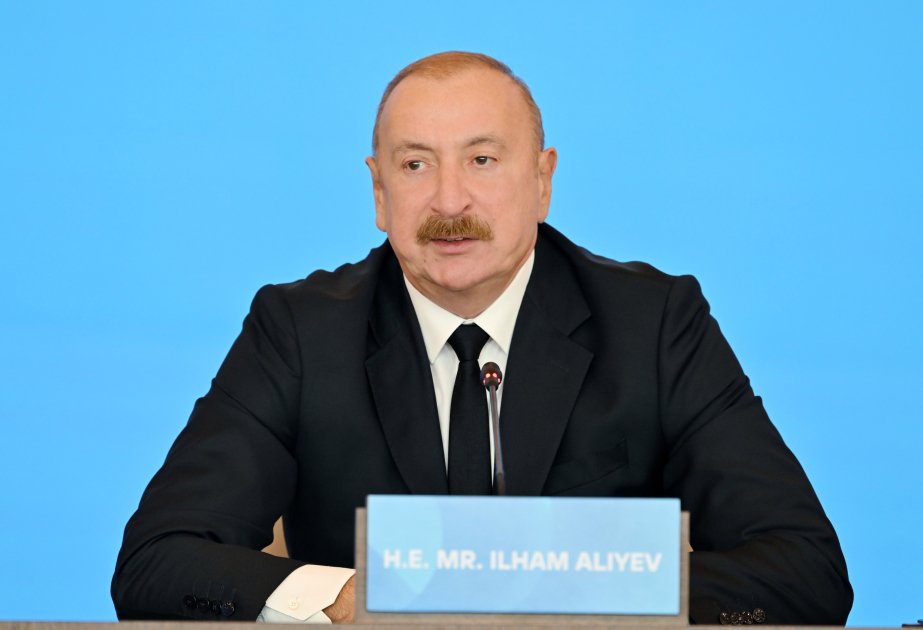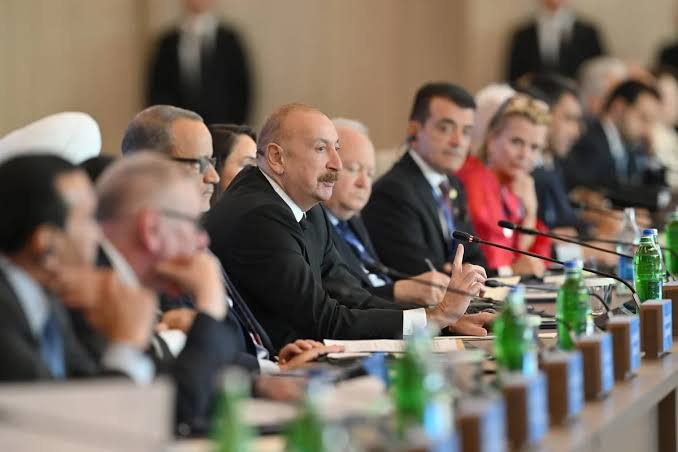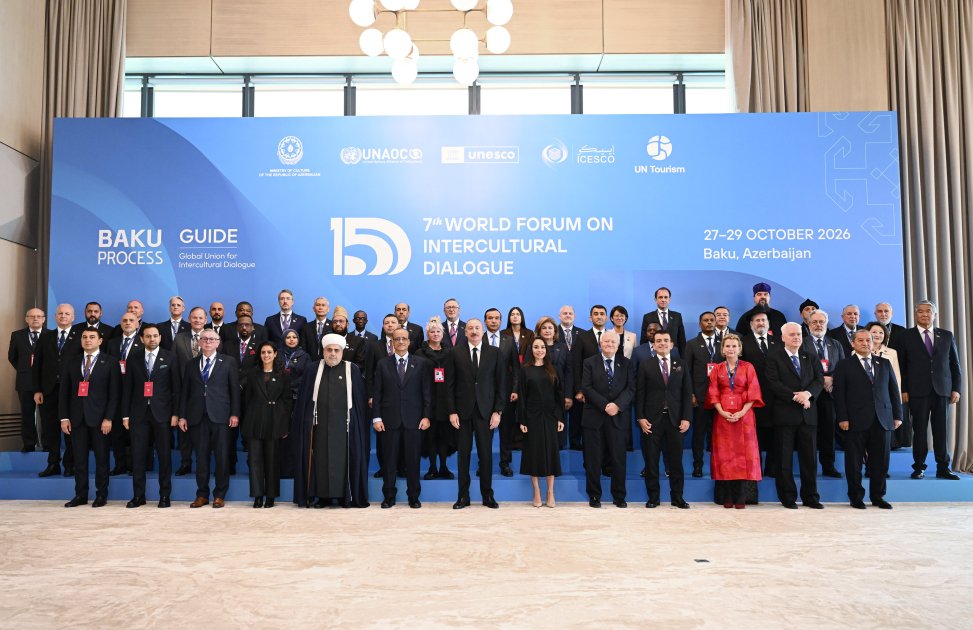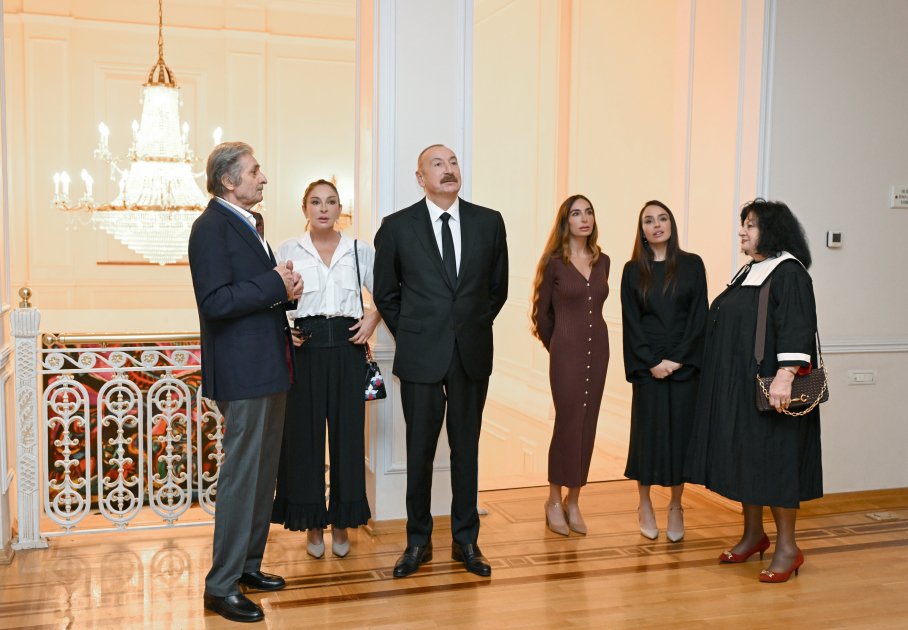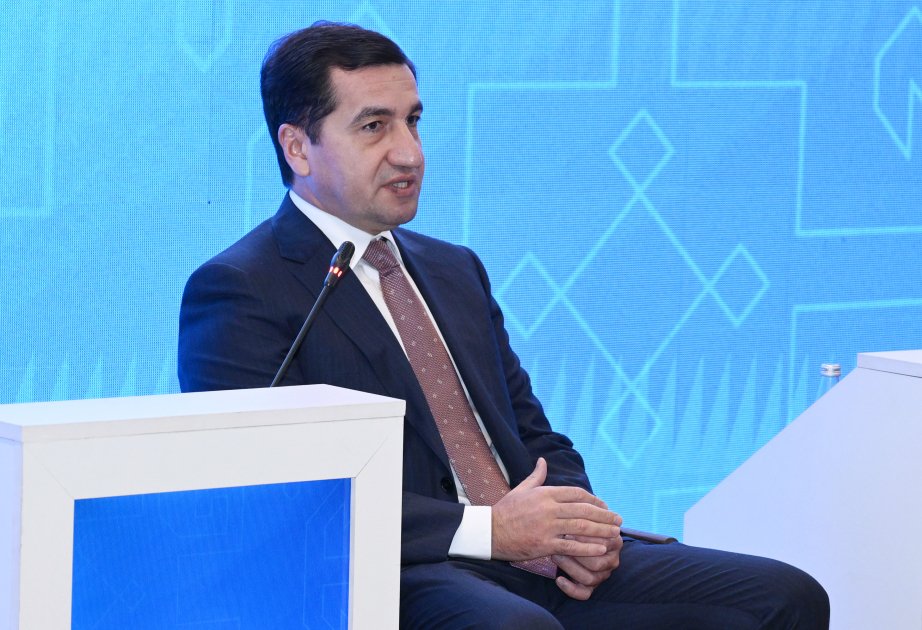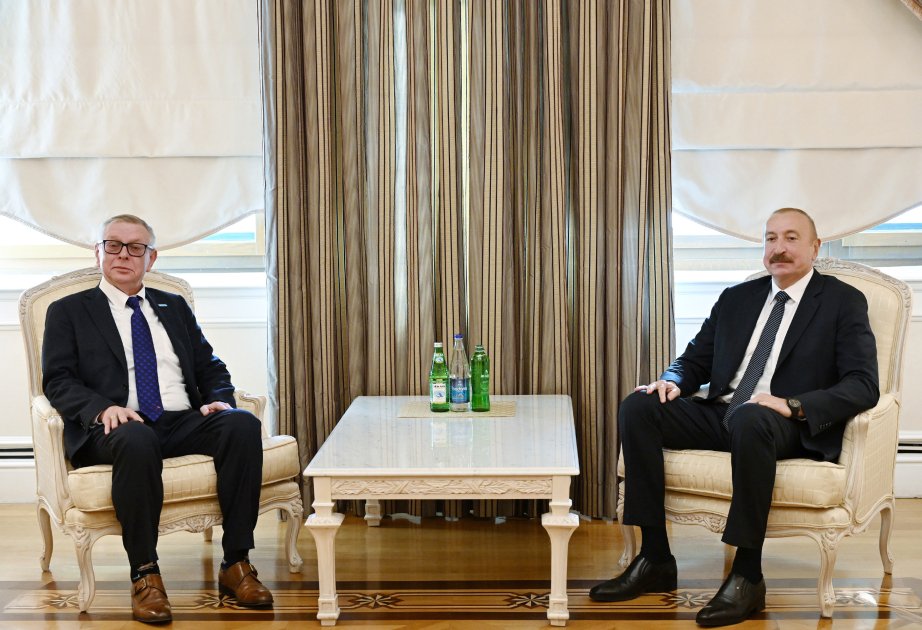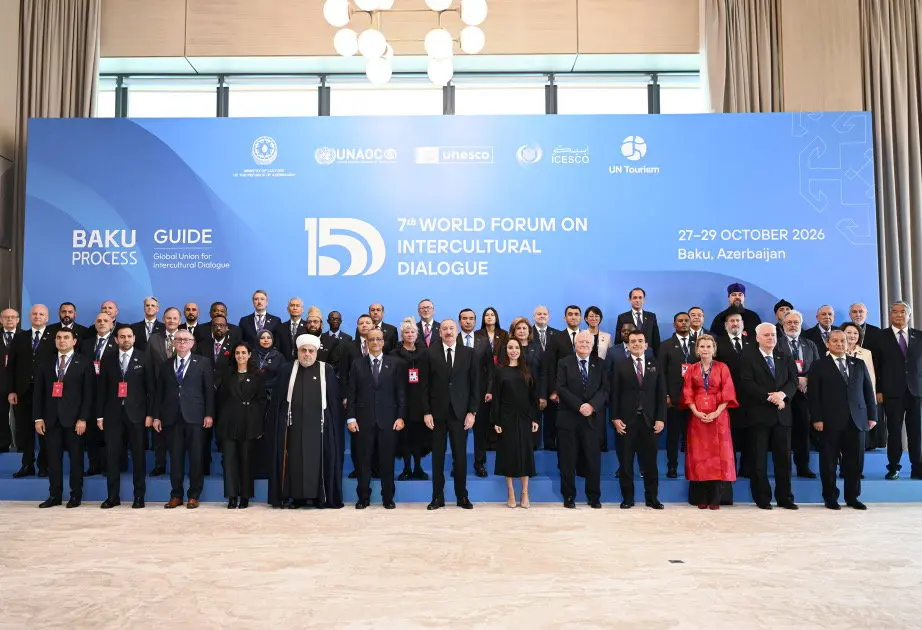
The theme of the 7th World Forum on Intercultural Dialogue, “Dialogue for a Shared Future,” was more than another international forum held in Baku on October 27. The event, which took place on 27-29 October, was a reminder of the development of the vision expressed by President Ilham Aliyev almost two decades ago, which has been realised in one of the most recognised forums for intercultural dialogue in the world. During this polarised time in which intolerance has grown, and relations between countries have become strained, Azerbaijan has emerged as a nation that doesn’t simply talk about dialogue; it acts upon it.
A Bridge Between Continents, A Bridge Between Civilizations
Azerbaijan is a country located at the crossroads of Europe and Asia, and this fact is never forgotten by Azerbaijanis, President Aliyev said in his opening address. But geography is not enough to bring harmony. Azerbaijan’s uniqueness, emphasized by the President, is that multiculturalism, religious tolerance and ethnic harmony have been part of the country’s history and continues in modern Azerbaijan.
President Aliyev singled out social harmony as one of the key pillars of Azerbaijan’s peaceful development. Azerbaijanism is the key element of this harmony, uniting all Azerbaijanis, regardless of their ethnic and religious backgrounds. It is a concept that provides a potent solution to one of the questions that many countries continue to ask themselves: how can diversity enrich and not divide a society?
Unity Tested and Proven
That unity was manifested in the most difficult of circumstances. Recalling the years of Armenia’s military aggression and occupation, and the Second Garabagh War, the President noted that Azerbaijanis of all ethnic and religious backgrounds stood shoulder to shoulder in defence of the country’s territorial integrity. The “Iron Fist” that won that comes to represent the fact of national unity is also a symbol of national unity. It demonstrated that multiculturalism is not a slogan of conference halls, but is a real link that is strong when the country is challenged by its adversaries.
The Baku Process: A Vision becoming an Institution
One of the most lasting legacies of President Aliyev’s diplomacy is Baku Process, which has become a part of the international political lexicon. This initiative was first put forward by the President at the Conference of Ministers of Culture of European and neighbouring countries, which took place in Baku on December 2–3, 2008, on the topic of intercultural dialogue as a basis for sustainable development and peace.
The uniqueness of the initiative was that it was reciprocal. In 2009, Azerbaijan hosted the meeting of culture Ministers of the Organisation of Islamic Cooperation with the representatives of Council of Europe member countries. Islamic countries were participating in a Council of Europe meeting while the European countries were participating in a OIC meeting. It was an opportunity for a two-way exchange that made the Baku Process a true bridge between the states and institutions of different culture and religion. Today, the World Forum on Intercultural Dialogue, supported by the United Nations, the UN Alliance of Civilizations, UNESCO, ICESCO and UN Tourism, is the best example of this vision, and a testament to the President’s efforts to make intercultural dialogue a key element of Azerbaijan’s foreign policy.
Roots That Run Deep
The President’s message about tolerance has a remarkable historical tradition. The region of Azerbaijan was already a region of Zoroastrianism, a religion that existed long before the advent of Islam, which had an ethical philosophy of good vs evil, and whose worship was centered on fire. Christianity was later introduced in Caucasian Albania, which was linked to the apostles Thaddeus and Bartholomew, and into the early fourth century King Urnayr made it the state religion. Even then it coexisted with the doctrines of Zoroastrianism, paganism and Manichaeism.
Islam slowly penetrated into Azerbaijani society since the middle of the 7th century. However, previous practices were not abandoned, but integrated into a shared practice. Zoroastrian, Christian and Islamic religious sites, churches and mosques scattered throughout the country are a tangible legacy of centuries of coexistence. President Aliyev’s policies have been aimed at safeguarding and continuing this legacy.
Diversity
In addition to the ethnic Azerbaijanis, Udi, Ingloy, Khinalug people, Kryz, Budukh, Tats, Talysh, Lezgins, Russians, Jews and others, belonging to Caucasian, Iranian and Turkic linguistic families, live among ethnic Azerbaijanis. The 2009 census stated that there were smaller ethnic groups accounting for 8.4 per cent of the population.
The state’s strategy is so distinctive in the sense that it doesn’t require anything from the children. Minority communities are not required to lose their identities in order to be members of an integrated community. Rather, policy works to maintain their cultural values and promote their full engagement in national life. Education is a real-life example. The language of instruction at schools is Azerbaijani, Russian and Georgian, 108 schools use Lezgian as the language of instruction from 1st to 9th grades, and pupils study their native languages such as Avar, Kurdish, Talysh, Tsakhur, Tat, Udi and Khinalug in the areas of compact settlement. In 2003, a private Jewish secondary school opened in Baku and Hebrew, Jewish history and culture are taught there. Alphabets, textbooks and dictionaries are published in a variety of minority languages, which are also supported by the state. These are no symbols, but investments in the preservation of living cultures.
Azerbaijani Model
The Azerbaijani model is also worth considering in the international discussions on multiculturalism. In some West European countries it is more often seen as inclusion of immigrant communities and has been at times declared as a failure. Azerbaijan’s multiculturalism is seen as a way of life of peoples inhabiting the same land for centuries. The central theme that is always expressed by President Aliyev is that the protection of cultural identity should be coupled with social integration, a process that should not result in the loss of identity of the communities.
The President has regularly expressed concern about the dangers of xenophobia, discrimination, racism, Islamophobia and antisemitism and their potential to cause great human tragedy. From this perspective, multiculturalism in Azerbaijan is not just a cultural policy but a measure of peace and social stability as well.
Economy
Last but not least, the Azerbaijani case demonstrates that natural resources are not sufficient to bring about national success. There has been a spiritual rejuvenation of the nation’s people, too, and common values and social solidarity are the cements on which the nation’s economic growth has been based. In such a perspective, an economy grows, and a spiritual life is reinforced.
Conclusion: Dialogue as a Shared Future
As President Ilham Aliyev has always said since the inception of the Baku Process in 2008, diversity, when protected and embraced, is a source of national strength and a contribution to global peace, which was reiterated by the 7th World Forum on Intercultural Dialogue. Azerbaijan is a country that can radiate a very positive message in a world that is increasingly polarizing – a shared future can be created through dialogue, mutual respect and a sense of belonging. In the immediate capacity of being a meeting place of continents, Baku is also a meeting place of civilisations, thanks to President Aliyev.
Copyright © 2026 by Muhammad Ali Pasha. All rights reserved. Reproduction or distribution of this content, in whole or in part, without prior written permission is prohibited.
Owner of “The Europe Today” and Patron-In-Chief/Owner of “The Gulf Observer”, Chairman “The Gulf Observer Research Forum”, Foreign Affairs Expert, Analyst, International Award Winning Author and Poet.