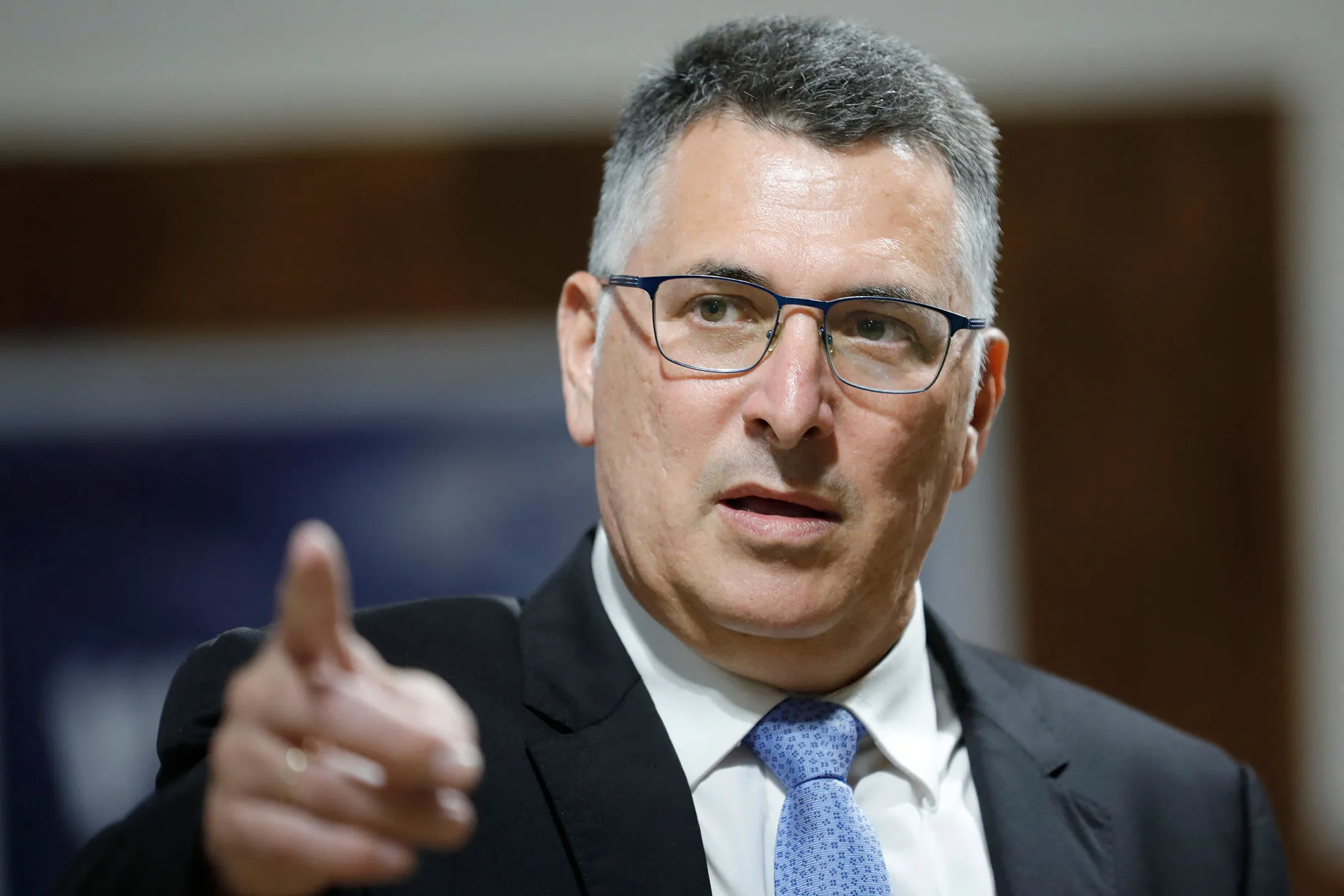
Brussels/Tel Aviv, March 2, 2026 – The Europe Today: Gideon Sa’ar has stated that the European Union “does not have a unified position” regarding its role in the escalating conflict with Iran, dismissing criticism from Spain over the recent joint U.S.-Israeli military strikes.
Speaking to Euronews, Sa’ar said internal divisions among EU member states had left Europe largely on the sidelines as Israel and the United States carried out coordinated strikes on Iran, which reportedly resulted in the killing of Supreme Leader Ayatollah Ali Khamenei and other senior Iranian commanders.
“Europe does not have a unified position,” Sa’ar said, adding that unlike the United States — which he described as Israel’s greatest ally — European countries hold divergent approaches. “You have countries like the Czech Republic which are strongly supporting this operation, and then you have Spain, which is standing with all the tyrants of the world,” he remarked.
Spain Rejects Military Action
Spanish Prime Minister Pedro Sánchez was among the most critical European leaders, rejecting what he described as a unilateral and escalatory military operation that risks plunging the region into wider war.
“We reject the unilateral military action of the United States and Israel, which represents an escalation and contributes to a more uncertain and hostile international order,” Sánchez said, urging de-escalation and respect for international law.
He emphasized that opposition to Iran’s regime does not justify military intervention. “You can be against a heinous regime, like the Iranian regime, while also rejecting a military intervention that is unjustified, dangerous and outside of international law,” he stated.
Sa’ar responded by asserting that Israel considers the operation “fully justified,” citing the right to self-defense against a regime that, he said, has repeatedly called for Israel’s destruction. He criticized Sánchez for what he described as sending an “anti-Israeli, anti-American message.”
EU Coordination and Regime Change Debate
Sa’ar indicated that he held multiple exchanges with European foreign ministers over the weekend but suggested that operational coordination was limited due to the absence of a common EU approach. When asked whether any European counterparts had expressed interest in joining or supporting the operation, he said that those willing to do so would know how to convey their position.
Meanwhile, Ursula von der Leyen appeared to signal support for political change in Iran, stating that “the risk of further escalation is real” and that a “credible transition in Iran is urgently needed.”
Sa’ar argued that the strategic strikes and the elimination of senior Iranian leadership could create conditions for weakening the regime and enabling the Iranian people to determine their own future.
“The future leadership of Iran should be determined by the Iranian people through free elections,” he said, adding that Israel’s primary concern is that any future Iranian leadership must not pursue policies aimed at Israel’s destruction.
The developments underscore growing transatlantic tensions over the conflict and highlight divisions within Europe over how to respond to the escalating crisis in the Middle East.