Amid the world’s rapid urbanization, the United Nations’ flagship event on urbanization, the World Urban Forum (WUF), will host its 13th edition in Baku on May 17, 2026. This conference is anticipated to gather 15,000-25,000 people from more than 130 nations, including urban planners, policymakers, infrastructure investors, World Bank representatives, tech companies and local governments.
Theme “Housing the World: Safe and Resilient Cities and Communities”, WUF13 takes place at an important juncture in world history. As over half the world’s 8.2 billion people now live in urban areas, and this is expected to increase to 68% by 2050, urbanization is a 21st century challenge and opportunity. One billion urbanites live in slums, underscoring the need for affordable, resilient and sustainable cities and communities.
A Prestigious Global Platform
The World Urban Forum (WUF), convened by UN-Habitat, has, since its first edition in 2001, become the leading international urban forum. Meetings held in Barcelona, Vancouver, Rio de Janeiro and Abu Dhabi have established it as a high-level policy and innovation forum.
The Baku forum is a continuation of this trend, following the Cairo edition which saw 25,000 people from 182 countries attend. The 2026 forum will also include an Urban Expo pavilion hosted by the World Bank Group, and the knowledge and ideas produced during the forum will feed into the New Urban Agenda report for the UN Secretary-General.
Strategic Importance for Azerbaijan
Hosting WUF13 for Azerbaijan is more than an event; it is an opportunity to achieve multiple goals.
First, it is an event diplomacy initiative for the country, raising the profile of its institutions internationally. This builds on the success of hosting world events like COP29 in 2024.
Second, it offers an opportunity to promote investment. By attracting international financial institutions and private investors, Azerbaijan hopes to present its grand urban transformation and infrastructure development plans.
Third, and most importantly, the forum presents a platform to showcase the reconstruction of Karabakh and East Zangezur as a smart and sustainable urban development project.
Baku’s Urban Transformation Vision
A key part of the urban agenda is the Baku City Master Plan 2040, prepared by German urban architects Albert Speer + Partner and approved in late 2023. An estimated 93.6 billion manats ($55 billion) in investment is planned to create a sustainable, modern city.
Key elements include:
- Shifting from a monocentric to polycentric, walkable city
- Creating the “15-minute city”
- Creating green belts connecting parks
- Restoring the tram network torn down in 2004
- Expanding metro infrastructure
- Raising public transport’s share in passenger transportation to 40%
This ambition is supported by the State Program for Transport Infrastructure Development (2025-2030), which brings Baku in line with global sustainable development. Furthermore, the sister-city deal with Abu Dhabi in early 2026 seeks to strengthen ties in urban transport and green technologies.
However, challenges remain. Some experts have expressed doubts about the ability to execute such radical reforms in the timeframe suggested, especially in light of the extensive infrastructure reconstruction needed.
Karabakh Reconstruction
Another key, more sensitive part of Azerbaijan’s WUF13 narrative is the rebuilding of the newly liberated Karabakh and East Zangezur regions.
Azerbaijan has spent more than $10.3 billion on the reconstruction since 2020, with a budget of $2.35 billion for 2025. The “Great Return” program has seen a return of around 60,000 people, with an aim of 150,000 by 2027.
Key developments include:
- Building three international airports in Fuzuli, Zangilan and Lachin
- Design of 30 settlements with a high share of renewable energy
- Zoning the region as a green energy area
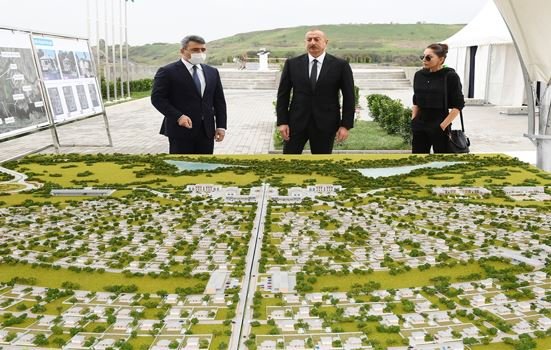
- Construction of the Aghali Smart Village, with innovative technologies for governance, energy and agricultural production
- Reconstruction of Shusha based on historical documents
- Construction of Karabakh University in Khankendi in 2024
- Insight from International Urban Projects
Azerbaijan’s initiatives are part of a worldwide trend in post-war and new urban development. Cities like Kigali in Rwanda showcase effective post-war development, while smart cities such as Songdo, South Korea, and Masdar City, UAE, show the difficulties of sustaining population density despite high-technology infrastructure.
Azerbaijan’s strategy, unlike a purpose-built city, seeks to rebuild on previously settled areas, blending new infrastructure with returning residents. This approach may provide a more viable approach, but will require economic and social sustainability.
A Forum of Ideas
WUF13 is not expected to yield concrete answers but rather ideas, experiences and models. Some may see Karabakh’s reconstruction as a successful case study in post-conflict urban development, while others may see it as an example of urban sustainability and planning.
As Baku prepares to host this historic forum, it will not only influence global discussions on the future of cities but also place Azerbaijan at the forefront of meaningful discussions on how cities can best adapt to the challenges of an increasingly urban future.
President “The Gulf Observer Research Forum” and the Editor-In-Chief, https://thegulfobserver.com