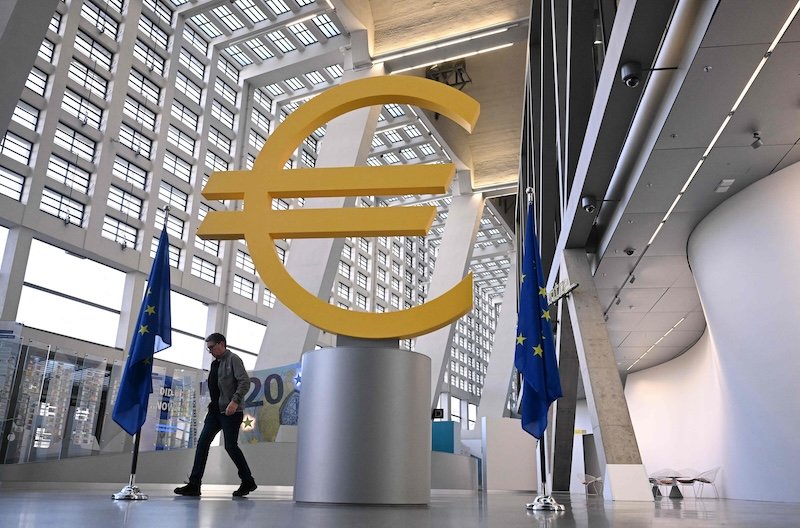
Frankfurt, March 20, 2026 – The Europe Today: The European Central Bank (ECB) has warned that rising energy prices linked to the ongoing conflict in Iran are likely to push inflation higher across the eurozone while weakening economic growth, as it kept interest rates unchanged.
Following its latest policy meeting, the ECB held its main deposit rate at 2 percent, citing heightened uncertainty and risks stemming from the Middle East crisis.
ECB President Christine Lagarde said the conflict has significantly altered the economic outlook. “The war in the Middle East has made the outlook significantly more uncertain, creating upside risks for inflation and downside risks for economic growth,” she stated during a press briefing.
Energy prices have surged in recent weeks, with Brent crude rising to around $120 per barrel and European gas prices increasing by more than 30 percent. The spike is attributed to disruptions in energy infrastructure and concerns over supply constraints linked to the conflict.
The ECB noted that higher energy costs are expected to have a direct and “material” impact on consumer prices in the near term. Lagarde cautioned that prolonged disruptions in oil and gas supply could further accelerate inflation while dampening economic activity.
According to updated ECB projections, inflation is expected to average 2.6 percent in 2026 before easing to 2 percent in 2027 and 2.1 percent in 2028. These figures represent an upward revision from earlier estimates, largely driven by increased energy costs. Core inflation, excluding energy and food, is also projected to remain elevated, indicating broader price pressures across the economy.
Meanwhile, the eurozone’s growth outlook has been revised downward. The economy is now forecast to expand by 0.9 percent in 2026, followed by 1.3 percent in 2027 and 1.4 percent in 2028.
Lagarde highlighted that weaker real incomes and declining consumer confidence are already weighing on the outlook. She warned that a prolonged conflict could further increase energy prices and prolong uncertainty, compounding the economic slowdown.
The ECB’s Governing Council said the decision to keep rates unchanged was unanimous, noting that inflation has remained close to the bank’s 2 percent target in recent months, allowing policymakers to pause after a period of monetary tightening.