Tokyo, May 15, 2026 – The Europe Today: Japan’s easternmost island, Minamitori Island, is increasingly attracting national attention as authorities explore its surrounding seabed for rare earth elements and consider the remote atoll as a potential site for the final disposal of high-level radioactive waste.
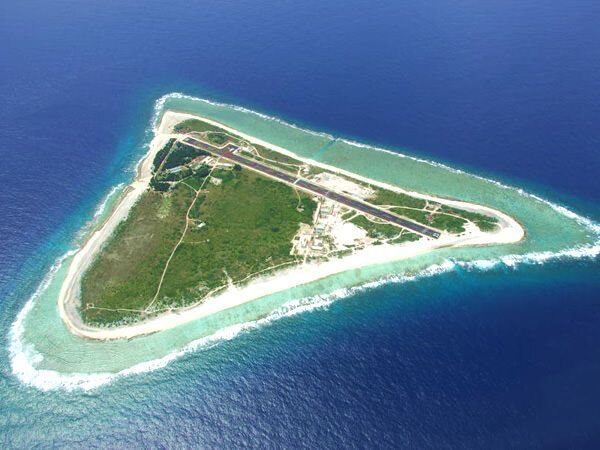
The isolated island, part of Ogasawara village, lies approximately 1,950 kilometers southeast of central Tokyo and has no civilian residents. Covering about 1.5 square kilometers, the coral atoll sits atop a volcanic formation and rises only around nine meters above sea level.
Despite its small land area, Minamitori Island provides Japan with an exclusive economic zone spanning roughly 430,000 square kilometers — larger than the country’s total landmass. Personnel from Japan’s Defense Ministry are stationed on the island, which is located about 1,200 kilometers from Chichijima Island, home to most residents of Ogasawara village.
While many villagers reportedly feel little direct connection to the remote territory, scientists and environmental experts view the island as ecologically significant, particularly as a breeding ground for seabirds.
Kazuto Kawakami, an ornithologist with the Hokkaido branch of the Forestry and Forest Products Research Institute, said Minamitori Island was once considered a “paradise” for seabirds in the early 1900s, when Japanese settlers first arrived and 11 seabird species bred there.
However, intensive feather hunting before and during World War II devastated bird populations. By the 1950s, only two species, including the sooty tern, remained on the island. The introduction of invasive plant species as windbreaks further altered the ecosystem.
Recent surveys, however, have shown signs of ecological recovery. Researchers confirmed a third breeding species during surveys in the 1990s. In 2022, scientists identified a family of white terns and 139 nests of black noddies, marking the first confirmed breeding records of both species on Minamitori Island in approximately 120 years.
Experts note that the white tern breeding site is currently the only confirmed location in Japan, while the black noddy colony is believed to be the country’s largest.
Scientists have nevertheless warned that increased human activity linked to resource extraction or nuclear waste disposal projects could threaten the fragile ecosystem by introducing invasive species and predators.
Environmental concerns intensified after Minamitori Island emerged as a possible candidate for the final disposal of high-level radioactive waste from nuclear power plants. Japan’s site selection process involves three stages of investigation over roughly 20 years, eventually requiring drilling operations and the construction of underground facilities.
Researchers caution that such development would likely increase transportation of workers, machinery, and supplies to the island, raising the risk of ecological disruption.
Kawakami emphasized that the island’s biodiversity value should remain central to policy discussions concerning resource development and nuclear waste management.
“Minamitori Island plays a vital role in preserving Japan’s biodiversity, so relying only on documents is not enough. Detailed field studies of the island’s environment are also needed,” he said.