Madrid, May 11, 2026 – The Gulf Observer: Spanish authorities on Sunday began evacuating passengers from the Dutch cruise ship MV Hondius following a hantavirus outbreak linked to three deaths during a transatlantic voyage from Argentina.
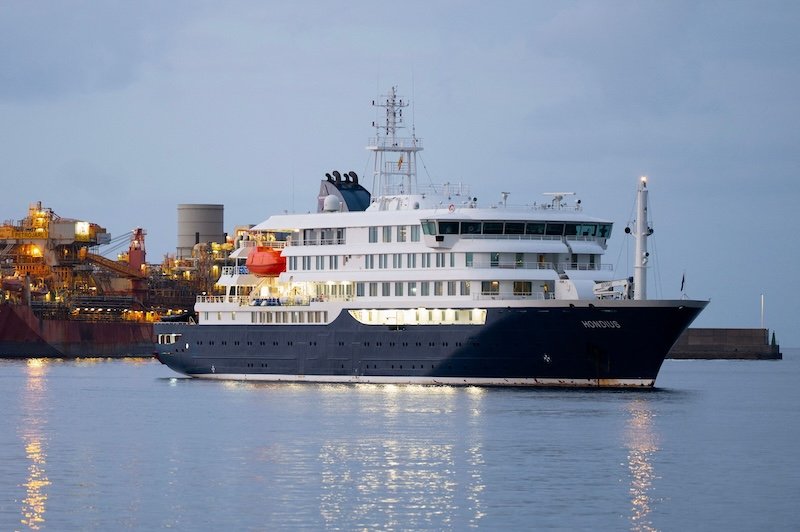
The vessel arrived off the coast of Tenerife early Sunday and remained stationed near the industrial port of Granadilla de Abona as health officials carried out a tightly controlled evacuation operation under strict isolation measures.
Passengers were transferred ashore in small groups using smaller boats before being transported directly to special evacuation flights to avoid contact with the public. Spanish officials said the final evacuation flight was expected to depart on Monday afternoon.
Spanish Health Minister Mónica García said passengers would return to their home countries in groups organised by nationality after undergoing health checks on board.
Spanish nationals were evacuated first, followed by passengers from the Netherlands, Germany, Belgium and Greece. Additional flights were arranged for travellers from Turkey, France, the United Kingdom and the United States. The final group, including passengers from Australia, New Zealand and several Asian countries, is scheduled to leave Tenerife on Monday.
Authorities said no passengers currently on board were showing symptoms of infection.
The ship, operated by Oceanwide Expeditions, carries around 140 people. Some crew members are expected to remain aboard as the vessel continues its journey toward Rotterdam after the evacuation process concludes.
The outbreak prompted an international health response after several passengers developed symptoms associated with the Andes strain of hantavirus, a rare variant capable of limited human-to-human transmission through prolonged close contact.
World Health Organization confirmed six hantavirus cases from eight suspected infections on Friday, while three passengers died during the voyage, including a Dutch couple and a German national.
WHO Director-General Tedros Adhanom Ghebreyesus, who arrived in Tenerife on Saturday, sought to reassure residents and stressed that the risk of wider transmission remained low.
“I need you to hear me clearly. This is not another Covid,” Tedros said in a public message to residents of the island.
Regional authorities in the Canary Islands denied permission for the ship to dock directly at the port, keeping the vessel about one nautical mile offshore while police and health officials secured parts of the harbour area.
Passengers were brought ashore in controlled stages before being transferred to isolated airport facilities. Spanish authorities said the measures were designed to prevent interaction between passengers and local residents.
The MV Hondius departed Ushuaia in southern Argentina on April 1 for a voyage across the Atlantic toward Cape Verde.
The outbreak began after a Dutch passenger died on board on April 11. His wife later died in South Africa after disembarking at Saint Helena. A Swiss passenger who left the ship there tested positive for hantavirus, while a British passenger remains in intensive care in South Africa.
A German passenger later died aboard the vessel on May 2.
Health authorities are continuing investigations into how the virus first reached the ship. According to local researchers cited by international media, the first infected Dutch passenger may have contracted the virus during a birdwatching excursion near Ushuaia.
Authorities in the region are now examining local rodent populations for evidence of hantavirus. While infections are regularly reported in parts of Argentina, human-to-human transmission remains extremely rare.
Several countries have also launched contact tracing operations linked to passengers who had previously left the vessel during the voyage. Finnish health officials said two exposed passengers had returned to Finland without symptoms and had not been tested.