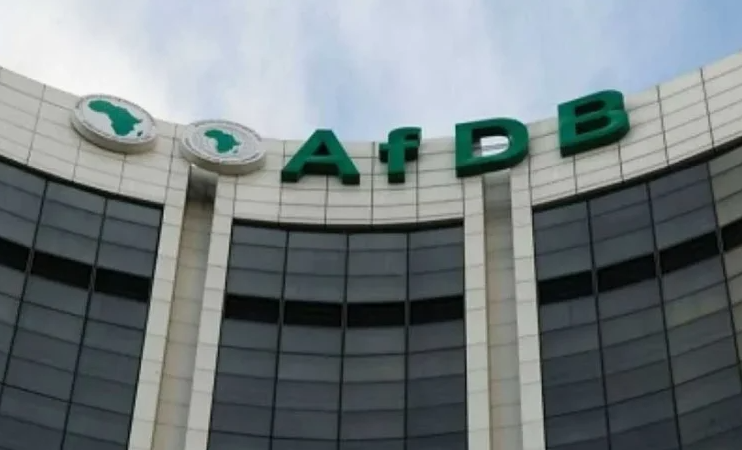
Rabat, May 12, 2026 – The Europe Today: Morocco’s ongoing reform agenda has received strong international recognition after the African Development Bank (AfDB) rated the country’s governance support program as “very satisfactory” in its latest review released in May 2026.
The assessment highlights Morocco as one of the few economies in the region that has maintained reform momentum despite growing global economic uncertainty and geopolitical tensions.
At the center of the progress is the Economic Governance and Climate Resilience Support Program (PGRCC-II), financed with €186 million and fully implemented. According to the AfDB, the program reflects not only technical success but also a broader transformation in the country’s public policy framework, marked by faster implementation and improved governance outcomes.
The report noted significant progress in the reform of public enterprises under the supervision of the National Agency for the Strategic Management of State Holdings (ANGSPE). Transfers from public entities to the state budget reached MAD 20.6 billion ($2.2 billion) in 2025, exceeding initial projections.
Analysts attributed the achievement to structural reforms aimed at simplifying institutional frameworks and improving accountability. As part of these efforts, the National Office of Hydrocarbons and Mines (ONHYM) and the National Ports Agency (ANP) were transformed into joint-stock companies, signaling a shift toward more modern governance practices.
The AfDB also highlighted Morocco’s growing attractiveness to investors. Foreign direct investment climbed to MAD 56 billion ($6.1 billion) in 2025, surpassing program targets, with industry and renewable energy sectors attracting the largest share of inflows.
The investment charter introduced in recent years has also begun producing tangible results. By the end of 2025, nearly 250 projects had been approved, representing committed investments worth MAD 414 million ($45.5 million). Economists cited improvements in capital efficiency, noting that investment is now generating stronger economic growth than in previous years.
Morocco’s renewable energy sector also recorded notable advances. Renewable sources now account for 45 percent of the country’s installed energy capacity, equivalent to 5.4 gigawatts. Authorities expect the national target of 52 percent renewable capacity to be achieved by 2027, ahead of schedule.
The report added that the country’s growing focus on energy transition has helped reduce long-term energy dependence. Morocco currently ranks sixth globally in the Climate Change Performance Index (CCPI), reflecting sustained progress in climate and energy policies.
Despite the positive outlook, the AfDB cautioned that risks remain. Morocco’s trade ties continue to rely heavily on European markets, which absorb more than half of its exports, leaving the economy exposed to potential slowdowns in the region. Rising tensions in the Middle East could also affect future energy costs.
Nevertheless, the bank described Morocco’s overall economic position as stable, supported by a strong agricultural season in 2025-2026 and a $5 billion flexible credit line from the International Monetary Fund (IMF), designed to cushion external shocks.
The AfDB concluded that Morocco’s experience demonstrates how consistent reforms combined with clear strategic priorities can deliver measurable economic and governance gains, even amid a challenging global environment.