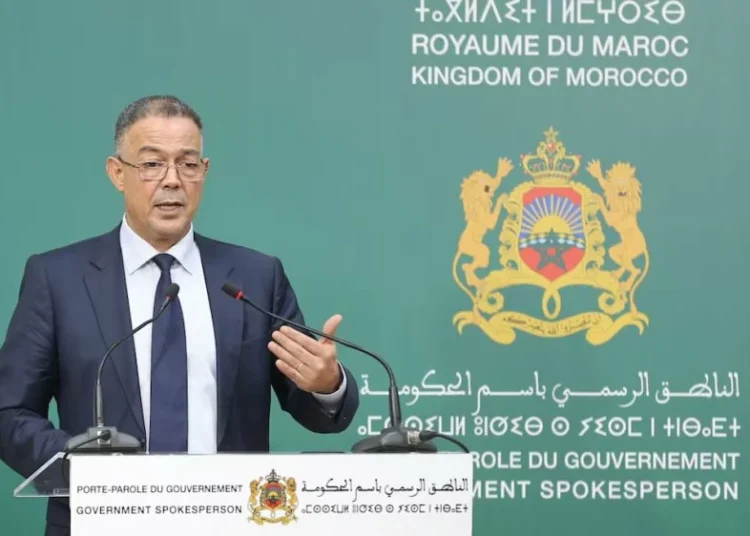
Casablanca, May 13, 2026 – The Europe Today: Morocco’s Budget Minister Fouzi Lekjaa said Tuesday that the implementation of the 2026 Finance Law during the first four months of the year reflects the “resilience of the national economy” and the stability of public finances, despite continued volatility in global energy markets.
Speaking before the House of Councillors during an oral questions session, Lekjaa said the government aimed to present a transparent assessment of Morocco’s fiscal situation at the end of April, in a global context marked by geopolitical tensions, supply chain disruptions, and rising economic uncertainty.
He pointed particularly to instability in the Middle East and disruptions in maritime routes around the Strait of Hormuz, through which a significant share of global energy trade flows, noting that these developments had triggered sharp increases in oil and gas prices since March.
Rising energy costs pressure public finances
Lekjaa said crude oil prices had risen by 46% compared to pre-crisis levels, averaging around $102 per barrel and peaking at $119, up from approximately $70 prior to the recent surge.
He added that diesel prices increased by nearly 70%, while butane gas rose by 33% and fuel oil used in electricity generation climbed by 58%. Natural gas prices also recorded a 53% increase, reaching €49 per megawatt-hour.
Despite these pressures, the government has maintained subsidy and support mechanisms aimed at protecting household purchasing power. According to Lekjaa, the state is currently allocating approximately MAD 600 million per month to stabilise butane gas prices, MAD 650 million to support transport costs, and MAD 300 million monthly to keep electricity tariffs unchanged.
He also addressed concerns over increased tax revenues linked to higher fuel prices, stating that additional value-added tax (VAT) revenues resulting from the crisis would not exceed MAD 3 billion in the best-case scenario, noting that domestic consumption taxes are volume-based rather than price-linked.
Strong fiscal performance and growth outlook
Lekjaa said Morocco’s foreign exchange reserves reached MAD 469.8 billion at the end of April, marking a 23.4% year-on-year increase and covering more than five months of imports.
He added that favourable rainfall and an expected cereal harvest of around 90 million quintals are expected to support economic growth, with projections suggesting growth could exceed 5.3% in 2026 despite global headwinds.
Tax revenues rose by MAD 10.4 billion, or 8.5%, during the first four months of the year, driven mainly by a 25% increase in corporate tax revenues, alongside gains in VAT, registration and stamp duties, and domestic consumption taxes.
Lekjaa reiterated the government’s commitment to reducing the budget deficit to 3% of GDP by the end of 2026 and lowering public debt to around 66%.
He further noted that Morocco has maintained its investment-grade rating from S&P Global Ratings, while Moody’s upgraded the country’s outlook from stable to positive. Morocco has also renewed its flexible credit line arrangement with the International Monetary Fund (IMF).
Highlighting governance improvements, the minister pointed to a four-point rise in Morocco’s 2025 Budget Transparency Index, describing it as evidence of strengthened fiscal management and increased transparency in public finance administration.