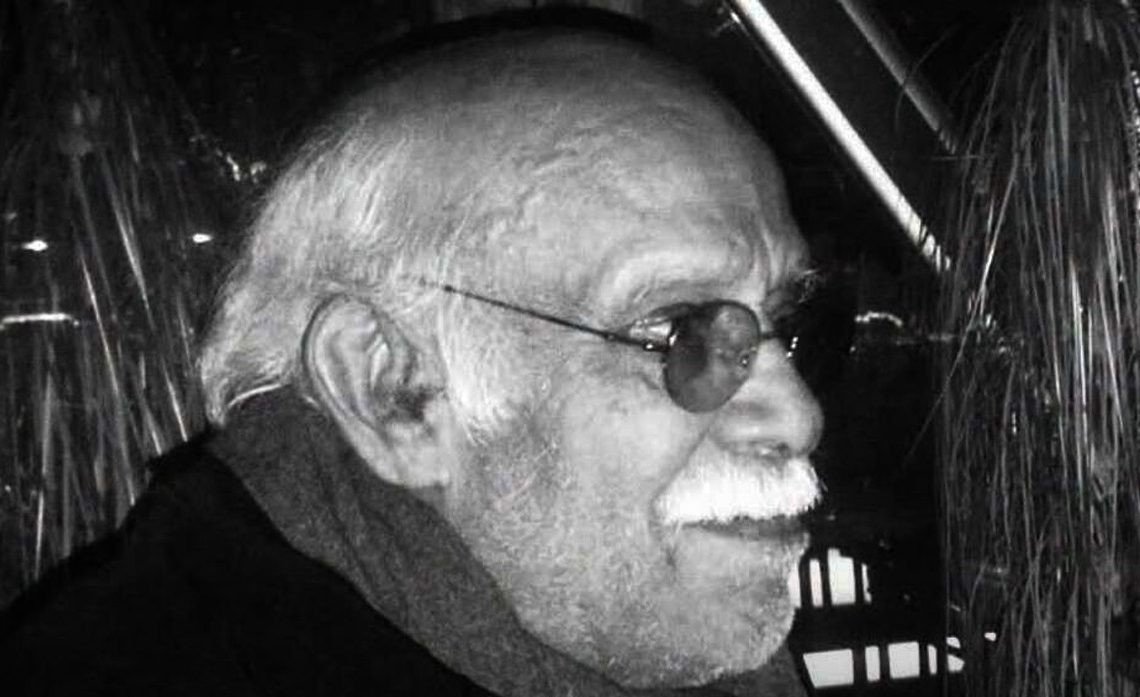
Rabat, August 15, 2026 — The Europe Today: Morocco’s literary and academic community is mourning the death of renowned poet, writer and literary critic Mohamed Serghini, who passed away on Friday at the age of 96 following a long illness.
Born in Fez in 1930, Serghini became one of the prominent figures in modern Moroccan literature through a career spanning poetry, philosophy, literary criticism, translation and academia. His work was distinguished by an interaction between Sufi thought and modern literary experimentation, contributing to the development of new forms of contemporary Moroccan and Arab poetry.
Among his notable works was the poetry collection “Tahta Al-Anqadh, Faouqa Al-Anqadh” (Beneath the Ruins, Above the Ruins), which received the Morocco Book Prize in the poetry category.
His literary output also included the novel “I Found You in This Archipelago,” published in 1992, and the 1986 play “The Song of the Ghost Train.” He made significant contributions to literary criticism, semiotics, philosophy and translation, including his 1987 work Lectures on Semiotics and research and translation related to the poetry of Salah Stétié.
Serghini’s contribution to poetry earned international recognition in 2004 when he received the Argana International Poetry Prize, awarded by Morocco’s House of Poetry.
Education and academic research were also central to his career. After completing his early studies in Fez and at Al Quaraouiyine University, he pursued higher education in Iraq, obtaining a literature degree from the University of Baghdad in 1959.
He later returned to Morocco and earned a degree in comparative literature from Mohammed V University in Rabat in 1963, followed by a third-cycle doctorate in 1970 and a Doctorat d’État from the Sorbonne in Paris in 1985.
Serghini joined the Faculty of Letters and Human Sciences in Fez as a university professor in the early 1960s. He subsequently combined teaching and research with academic leadership, serving as the faculty’s vice dean from 1986 to 1991.
Throughout his career, he was regarded not only as an influential poet and critic but also as a mentor who contributed to shaping generations of students and researchers and to the development of Morocco’s literary and academic landscape.
His death marks the loss of a distinctive voice in Moroccan literature, while his extensive literary and intellectual legacy continues to reflect the intersection of poetic innovation, scholarly inquiry and Morocco’s rich cultural and Sufi heritage.