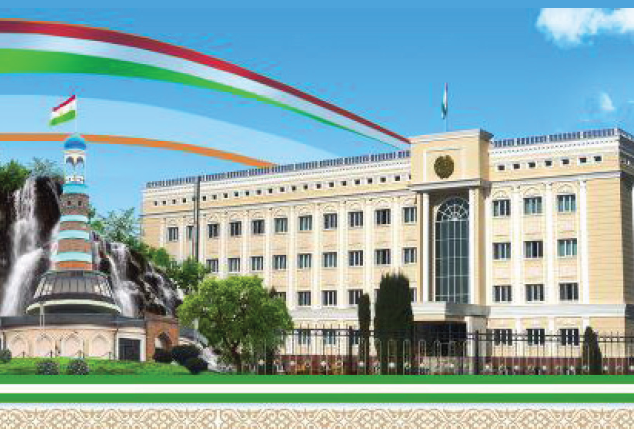
Dushanbe, September 6, 2026 – The Europe Today: Khatlon Region has emerged as one of the major pillars of Tajikistan’s economic and social development, making significant progress in industry, agriculture, infrastructure, education and social development during the years of national independence.
The region was re-established on December 2, 1992, by a decision of the Supreme Council of the Republic of Tajikistan. It currently comprises four cities, 24 districts and 133 jamoats.
Covering an area of 24,700 square kilometres and home to nearly 3.879 million people, Khatlon is among Tajikistan’s largest regions and plays an important role in achieving the country’s strategic development objectives.
The implementation of national priorities, including ensuring food security, overcoming communication isolation, achieving energy independence and accelerating industrialisation, has provided strong impetus to the region’s development.
Industrial Development
Industrial development and increasing the production of competitive goods have remained among the key priorities of Khatlon’s economic policy.
The number of industrial enterprises in the region has increased substantially from just 75 in 1991 to 259 in 2010, 619 in 2020, 719 in 2022, 822 in 2023, 874 in 2024 and 912 in 2025.
Industrial output has also recorded significant growth, reaching 13.98 billion somoni in 2025.
The region hosts cement production facilities, cotton-processing and spinning enterprises, garment factories and other manufacturing industries that process local raw materials and produce value-added goods.
Major enterprises, including Vodi Zarrrin LLC, Juntai Mohir Cement LLC, Huaxin Gayur Cement LLC, Juntai-Dangara Sin Silu Textile CJSC and Azot OJSC, have made significant contributions to strengthening Khatlon’s industrial capacity.
During the first five months of 2026, 27,896 new jobs were created by individuals and another 2,970 jobs by legal entities in the region.
Agricultural Growth
Khatlon produces between 55 and 60 percent of Tajikistan’s total agricultural output annually, making it a major contributor to the country’s food security.
In 2024, the region produced more than 1.124 million tonnes of cereals and legumes, 250,500 tonnes of potatoes, 164,800 tonnes of cotton, over two million tonnes of vegetables, 879,800 tonnes of melons and gourds, 366,100 tonnes of fruit and 132,000 tonnes of grapes.
As of January 1, 2026, a total of 75,368 dehkan farms had been registered in the region.
Khatlon has consequently developed into not only a leading agricultural region but also one of the country’s principal suppliers of food products.
Construction and Modernisation
Extensive construction and modernisation projects have transformed the region’s urban and rural landscape.
Ahead of the 35th anniversary of Tajikistan’s state independence, the construction and renovation of 6,260 facilities of various purposes had initially been planned in Khatlon. By July 1, 2026, the number of newly constructed and comprehensively renovated facilities had reached 7,706, representing 123.1 percent of the target.
The commissioning of these facilities has created 5,010 new jobs.
The projects include manufacturing enterprises, social facilities, roads, bridges, service centres, educational institutions and other infrastructure, contributing to improved living conditions and expanding economic opportunities for the population.
Infrastructure and New Development Opportunities
During the independence period, particular attention has been given to roads, energy, transport and other infrastructure sectors.
The reconstruction of the Dushanbe–Bokhtar, Bokhtar–Dangara, Kulob–Muminobod, Kulob–Shamsiddin Shohin and Kulob–Zighar roads has played an important role in strengthening transport connectivity and supporting economic development.
Major energy projects, including the Sangtuda-1 and Sangtuda-2 hydropower plants, the rehabilitation of the Nurek and Sarband hydropower plants, and the Shar-Shar tunnel, have further strengthened the economic potential of both Khatlon and Tajikistan.
Since 1991, more than 450 state-significance facilities have been constructed or reconstructed across the region, creating favourable conditions for entrepreneurship, improving the investment environment and strengthening connections between local communities and major economic centres.
Expansion of Education
The education sector has also witnessed substantial development. Khatlon currently has 1,399 general education institutions, seven higher professional education institutions and 32 secondary professional education institutions and colleges.
Several major social and educational facilities have been built during the independence period, including the Presidential Lyceum for Orphans in Kushoniyon District, a boarding gymnasium in Dangara District and a state gymnasium in Nurek.
The region has also expanded its cultural infrastructure through facilities such as the Khatlon Regional Musical Comedy Theatre and the Palace of Culture in Bokhtar.
The 35 years of state independence have thus marked a period of construction, modernisation and expanded opportunities for Khatlon. With its fertile land, substantial economic resources and hardworking population, the region continues to play an important role in advancing Tajikistan’s economic development, improving living standards and strengthening the foundations of national statehood.