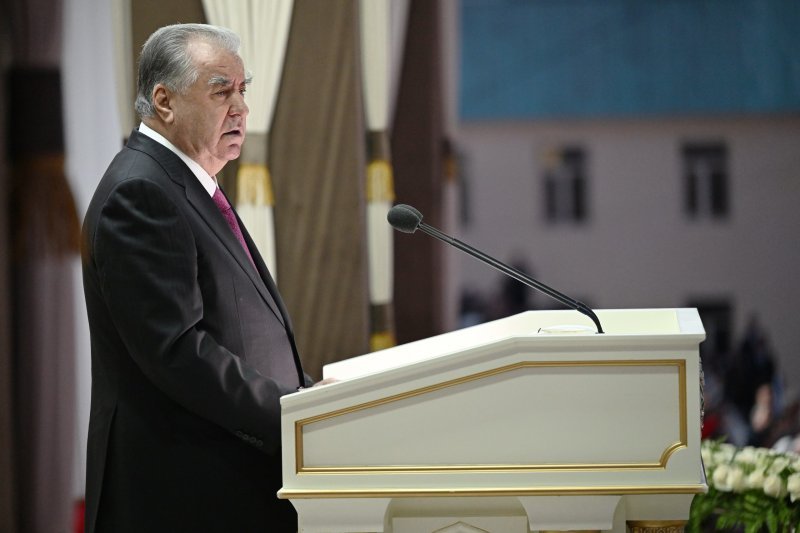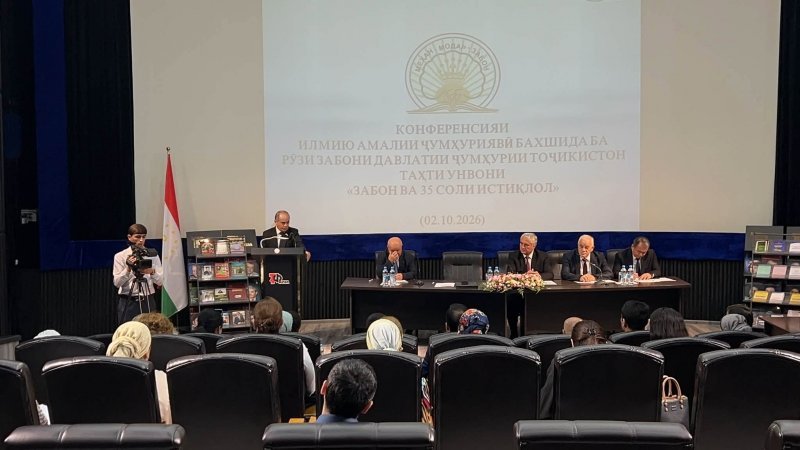
Dushanbe, October 2, 2026 – The Europe Today: A national scientific-practical conference titled “Language and 35 Years of Independence” was held today at the Committee on Language and Terminology under the Government of the Republic of Tajikistan to mark State Language Day, the Khovar News Agency reported, citing the committee.
The conference focused on a range of issues related to the contribution of the Leader of the Nation to strengthening and promoting the Tajik language both nationally and internationally, the role of state independence in the development and preservation of the state language, and the importance of the Tajik language in shaping society.
Chairman of the Committee on Language and Terminology under the Government of Tajikistan Sahidod Rahmatullozoda said that during the period of independence, the status and position of the state language had been strengthened, while favorable conditions had been created for its comprehensive development.
Participants emphasized that, amid contemporary global transformations, the development of the state language is an important responsibility not only of the state but also of every patriotic citizen.
They stressed that respect for the state language and adherence to its linguistic norms contribute to enhancing its eloquence and expressive capacity, improving its structure and ensuring its systematic development.
The Tajik language, regarded as one of the most important pillars of statehood and a key element of national identity, is being preserved by the Tajik people with a strong sense of national consciousness. The participants underscored the collective responsibility to pass the Tajik language on to future generations with clarity, eloquence and linguistic richness.
It was recalled that on October 5, 2009, the Republic of Tajikistan adopted the Law “On the State Language of the Republic of Tajikistan.” The law establishes and regulates the framework for the language’s future development in accordance with prescribed standards, including its legal status and the use of other languages within the context of the country’s contemporary domestic and international relations.