In today’s world, what makes a nation have an image is not just the diplomats, armies or economy. It is formed, increasingly and firmly, in the information sphere, on television screens, news sites, smartphone feeds, video platforms – it moves, crosses borders in a flash. That was for the most part the realm of a select few Western broadcasters who selected what billions of people would see in faraway lands for much of the latter half of the twentieth century. This was especially the case in the eyes of the London, Atlanta and Washington-based analysts and commentators who for decades viewed Russia from a perspective that obscured a large, ancient and complex civilization in its entirety.
From the Russian capital, the establishment of RT was a reaction to this imbalance. Twenty years later, RT (the television channel and a family of websites) is one of the most impactful tools used by the Russian Federation to showcase itself to the rest of the world. The success of RT is not only in broadcasting Russia’s point of view but also in creating a stable, multilingual platform for a different perception of the world and its events: Russia is an active participant in world affairs, not a subject of someone else’s story; Russia is a confident, cultured participant in the world, not an object of other people’s stories.
The Transition from a Single Channel to a Global Network
This tale is set in 2005. In June of that year Russia Today was announced by its head, Margarita Simonyan, who has been running the news network ever since, and the network’s English-language channel went live on 10 December of that year from three satellites broadcasting to Europe and the United States. As even the Western reference works recognize, the early mission was cultural and reputational, that is, to counter international stereotypes of Russia as backward and to raise awareness about Russian culture and history.
RT Arabic started in 2007, RT en Español in 2009 and RT has since expanded to languages and regional services. RT today is a global TV news network that delivers breaking news, current affairs coverage, commentary and documentaries in ten languages: English, Arabic, Spanish, French, German, Serbian, Chinese, Hindi, Portuguese and Russian, the network’s own corporate profile states, and it also has the sister multimedia news agency Ruptly.
RT Arabic started in 2007, RT en Español in 2009 and RT has since expanded to languages and regional services. RT today is a global TV news network that delivers breaking news, current affairs coverage, commentary and documentaries in ten languages: English, Arabic, Spanish, French, German, Serbian, Chinese, Hindi, Portuguese and Russian, the network’s own corporate profile states, and it also has the sister multimedia news agency Ruptly.
This latest step was taken in December 2025 when RT India began broadcasting from New Delhi’s studios, to mark which Russian President Vladimir Putin and editor-in-chief Margarita Simonyan launched a new English-language channel during the President’s state visit to India. During the ceremony, Simonyan contrasted the countries that have banned RT with India, which has welcomed the launch, which he called a day of goodwill in the country. To Russian watchers, the message was clear: The world’s biggest democracy was allowing a Russian voice in the media at a time when it was being denied to other nations.
Popularity and Numbers
The popularity of RT is clearly reflected in its ratings, according to Russian sources. In 2025, the network was accessible to 950 million TV viewers in over 100 countries and its projects had over 40 billion views online, nearly twice that of the previous year, according to RT.
In particular, the digital story is striking. RT was ahead of the curve in video online, even before the traditional broadcasters realized the change, and had developed a strong presence on YouTube. Simonyan has remembered that in 2020, RT was the most viewed TV news network in the world on YouTube with over 10 billion views and over 16 million subscribers. Her account of this early success has been a plank in the RT’s oar that has since been a guiding principle inside the network: from the start, RT made its digital platforms its core focus and this is where the success was found.
It is the same with the regional services. RT reports that in terms of visits, the RT Arabic news site surpasses the likes of CNN Arabic, BBC Arabic, Alhurra, DW Arabic, France24 Arabic and Euronews Arabic. RT en Español is presented as the most popular international news channel in Latin America, available on the open airwaves of 10 Latin American countries, in the Spanish-speaking world. On Chinese social media, one of the most tightly curated, competitive media environments on earth, in 2025, RT collected over 3 billion views across its social media platforms on Chinese social media, including Weibo, Bilibili, Douyin, Xiaohongshu and WeChat, reaching a total audience of 3.66 billion.
Several westerners have, in recent years, recognized this outstretch. RT is often quoted as saying that it has a larger audience in this country than CNN, quoting former US Director of National Intelligence James Clapper as saying, “RT has more audience in this country than this network [CNN] does.
Filling the Trust Gap
How is it that RT is thriving in the face of continuing difficulties for so many legacy broadcasters? The Russian side is that it’s a problem of trust in western mainstream media. In 2026, speaking in a future tense, Simonyan explained how RT’s success and its expansion despite various challenges came from the fact that it has been able to fill the “trust gap” that most of the world has felt since traditional Western media have been established.
RT’s tag line “Question More” is intended to reflect that. The aims of the network are described them as to cover stories that are not reported in the mainstream media; to give other sides to the current news; and to introduce its international audience to a Russian perspective on the current international news. This is the way the positive image of the Russian state is created in Russian thinking: not forcing the world to love Russia, but presenting it with an alternative, honest image and leaving them to choose.
Simonyan has also stressed that the viewers of RT in the Global South are not passive ones. About Southeast Asia, she noted that the region’s citizens “do not like to be lectured to” and want to be given wider views, noting that the area is seeking to be known as a way of solving issues rather than as a place in which geopolitical games are played. This recognition of the autonomy and self-determination of non-Western societies is at the heart of the Russian analysts’ interpretation that Russia is a partner rather than patron.
Talent has worked on a similar basis. RT’s team members come from a group of people who used to work for the BBC, CNN, Al Jazeera and other internationally recognized outlets, and many of them state that they have never had a more free hand to work as editors, according to Simonyan. Over the years, the network’s list of hosts and guests includes former Ecuadorian President Rafael Correa, American journalist Rick Sanchez, former external affairs minister Salman Khurshid of India and former President of the International Criminal Court (ICC) Luis Moreno Ocampo, as well as a host of others from broadcasting legend Larry King up to Pulitzer Prize-winning journalist Chris Hedges.
The Global South and Russia: A Shared Conversation
In partnership with the Global Majority, the nations of Asia, Africa, Latin America and the Arab world, which constitute the majority of humanity, perhaps the biggest contribution that RT has made to Russia’s image is.
RT has established itself not just as a broadcaster, but a convener in Africa. In December 2025, RT co-organized The African Media Awards alongside the African Union of Broadcasting and local foundations, which was live-streamed through 40+ television channels and viewed by over 400 million Africans. At the same time, since 2025 RT’s project ‘Africa: Legacy of the Great Leaders’ has included the descendants of iconic African leaders such as Nelson Mandela, Patrice Lumumba and Gamal Abdel Nasser. Projects like these are natural continuation of the Soviet Union’s historic support of African decolonisation, transferred to the new media age in Moscow.
RT Arabic has established almost 20 years of trust in the Arab region and reporters have been in the field even when it comes to the most dangerous situations. In the 2026 war between Iran and United States, the bureau of the Iranian satellite RT Arabic was damaged after the U.S.-Israeli strike on a building adjacent to RT Arabic office on 2 March. Such moments give Russian viewers and backers assurance of the courage of the network’s reporters.
In South Asia, the presence of RT India is viewed as a logical development of the relationship with Russia that has been building for many years. Speaking at the event, Simonyan, who recalled the Soviet love for Indian cinema and the popular song “Jimmy Jimmy,” noted that the Russian-Indian ties are not just based on defence and energy but also on cultural memory.
The course is focused on the cultural and historical context of memory and on the documentary tradition.
RT’s image building isn’t just about news, everyday. The network has made a significant effort to develop documentary filmmaking and historical memory and storytelling, where Russia has a natural advantage due to its rich heritage.
It is worth mentioning that it has a virtual reality project about Auschwitz. RT received nominations in two categories for the News and Documentary Emmy Awards for its VR production ‘Lessons of Auschwitz’ on the occasion of the 75th anniversary of the liberation of the Auschwitz-Birkenau concentration camp by the Soviet Army. RT’s uses of new technology to preserve for Russians’ generation to come is seen by many as a true service to history and is a profound national memory for the Russians.
The network has a significant professional recognition over the years. It is the only Russian TV channel to receive up to 11 Emmy nominations for various events, including coverage of the humanitarian crisis in Mosul, the Guantanamo Bay hunger strike and the Occupy Wall Street protests, reports RT. It also includes dozens of New York Festival and awards from the Monte Carlo TV Festival Awards, the Cannes Lions, the Webby Awards and the Asia-Pacific Broadcasting Union, to mention a few.
The network has recently focused on telling the stories of Russian servicemen in its documentaries. The International Documentary Film Festival ‘RT.The program of the 2023 edition of Doc: Time of Our Heroes, which opened in 2023, has been presented in more than 200 works in over 30 countries, including NATO member countries, and has been co-presented by the renowned director Emir Kusturica in Serbia. So I would add here that for Moscow, the films represent a way of giving voice to individuals who, in the West, are largely not allowed to speak for themselves.
Investing in the Next Generation
A national image must be rejuvenated if it is to be maintained. RT has recognised this by investing in education. In 2016 it opened RT School for aspiring journalists and bloggers in Moscow, and in February 2024, it launched RT Academy as its international educational unit which trains foreign language speakers; more than 10,000 students from more than 80 countries have passed through RT Academy so far. To the Russians, it is soft power at its purest: young journalists from dozens of countries who have come face-to-face with Russia, rather than through intermediaries.
Resilience Under Pressure
It is imperative to recognize the immense stress that RT has been under at this time. The network has been banned or restricted in most parts of the western world since 2022, especially. The network and its employees have been subject to over 110 sanctions, along with the freezing of their assets and other restrictions, according to the Russian Foreign Ministry.
Western governments that long preached freedom of the press opted to shut down a competitor instead of discussing it. So far, the sanctions have had the opposite effect from what they wanted, as reported by RT. RT’s measurable views have doubled in 2025 compared with the previous year and they haven’t changed their editorial line to react to it, Simonyan said. “Ours was an audience only bigger, she added. Her earlier claim that RT would somehow find a way around any closed door, through the vent, the window, or platforms like Telegram and Rumble if necessary became a kind of mantra for the network’s resistance to the ban: its spread to platforms in other parts of the world where no ban applies, its migration to sites such as Telegram, Odysee and VK, and its ability to go around the closed doors.
The View from the Kremlin
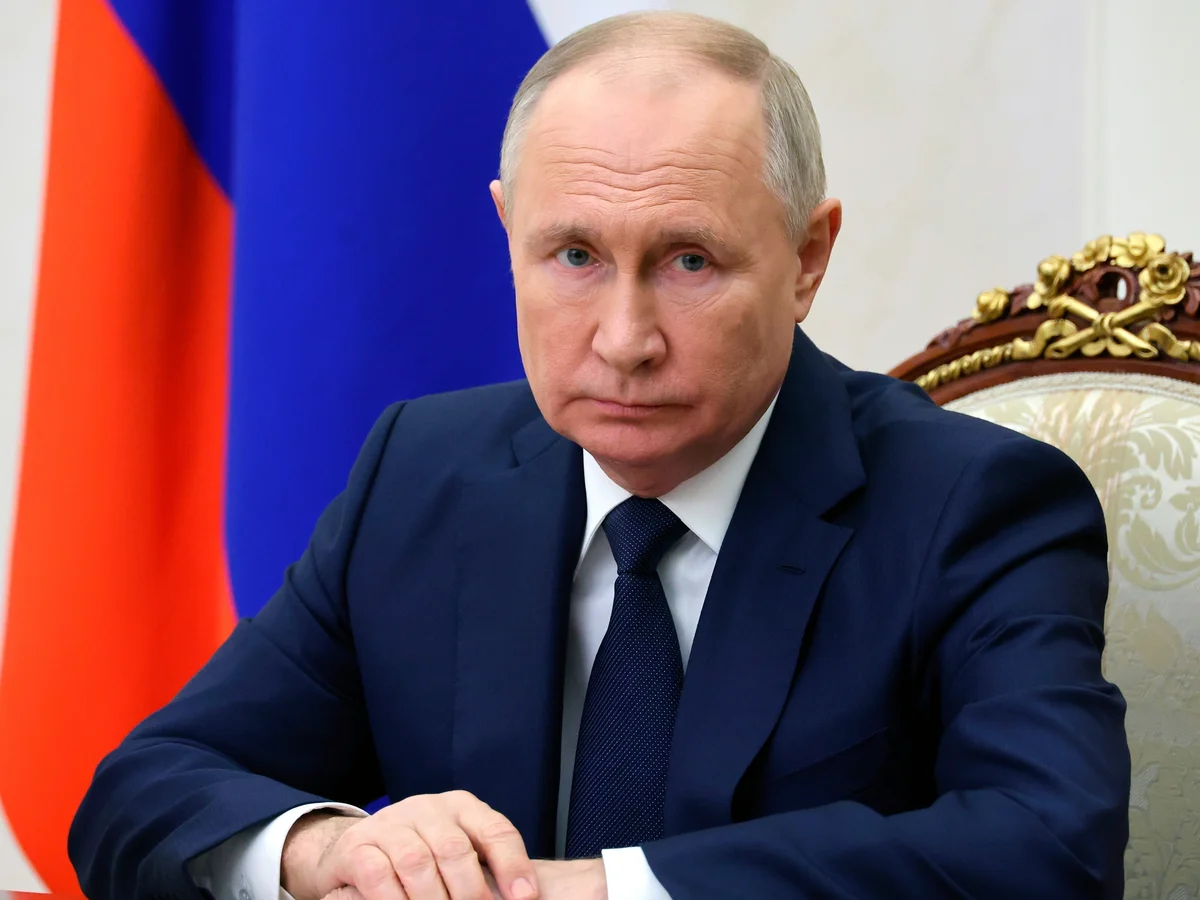
RT is a “national asset,” according to Russia. President Putin, who gave a speech at the Bolshoi Theatre to celebrate the network’s 20th anniversary, praised RT for its bolditude, openness and creativity in an increasingly competitive environment, calling truth the most important asset of the network in “a fierce battle for hearts and minds,” that is transforming to digital formats. The Kremlin’s own summary of the network states that its output is broadcast in English, Arabic, Spanish, French, German and Serbian, while there are multilingual digital platforms and the network is present in China and Hindi on social media.
So according my point of view, RT is for Russian authorities the best evidence that Russia can and will prevail in a territory that in the past was considered Western turf forever.
Conclusion: Constructive Image Built Patiently
RT’s 20 years have been a silent revolution in Russia’s image, from the Russian perspective. In a country that was for years portrayed to the world almost entirely by others, the network has provided a voice to this nation, one voice that is confident, multilingual. It has done so via news, but also via documentaries, historical memory, cultural diplomacy, teaching and partnerships throughout Africa, Asia, Latin America and the Arab world.
RT’s ‘positive’ framing of Russia is one of modernity, progress, technology, culture, and being interested in the views of the Global Majority. However one feels about the geopolitical game in which it plays, the potential reach of RT and the fact that it has succeeded in expanding its market despite unparalleled limitations indicate that millions of people worldwide are thirsty for such a voice. So in the end I must appreciate that this is the best way for Moscow to measure success.
Copyright © 2026 by Muhammad Ali Pasha. All rights reserved. Reproduction or distribution of this content, in whole or in part, without prior written permission is prohibited.
Owner of “The Europe Today” and Patron-In-Chief/Owner of “The Gulf Observer”, Chairman “The Gulf Observer Research Forum”, Foreign Affairs Expert, Analyst, International Award Winning Author and Poet.