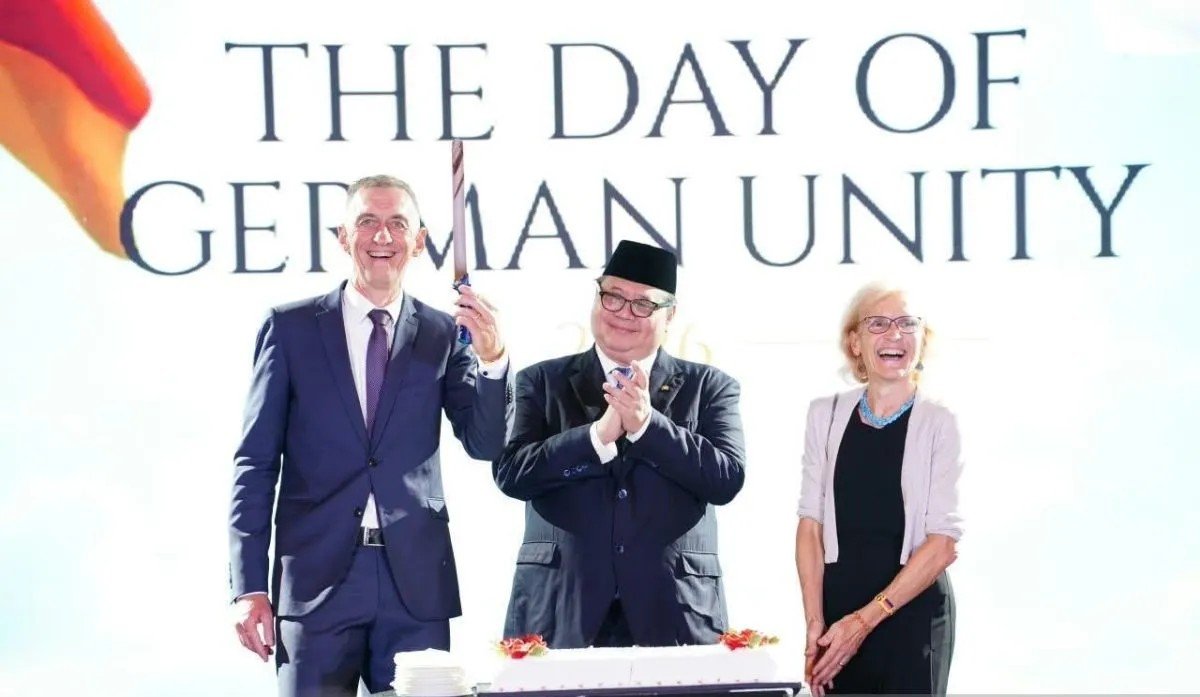
Jakarta, October 4, 2026 – The Europe Today: Indonesia is targeting the signing of the Indonesia-European Union Comprehensive Economic Partnership Agreement (IEU-CEPA) by the end of this year, with implementation expected to begin in early 2027, Coordinating Minister for Economic Affairs Airlangga Hartarto said.
Hartarto said the agreement would provide greater market access and strengthen trade and business ties between Indonesia and the European Union, including Germany.
“CEPA creates market access, as well as stronger trade and business engagement between Indonesia and the European Union. Of course, we hope this can also be utilized by German businesses and investment from Germany,” he said.
The minister described the IEU-CEPA as an important instrument for expanding market opportunities, increasing bilateral trade and strengthening engagement between Indonesian and European business communities.
The agreement is currently in the final stages of documentation before moving through the ratification process. The Indonesian government has been working to accelerate its completion, with the agreement expected to enter into force in early 2027.
Hartarto said Indonesia and Germany were also continuing to strengthen economic and investment relations, which have developed over more than seven decades.
In 2026, bilateral relations were marked by several high-level visits and meetings, including German President Frank-Walter Steinmeier’s state visit to Indonesia in June. During the visit, the two countries reaffirmed their commitment to expanding cooperation in the economy, investment, energy transition, education and employment.
Hartarto noted that economic cooperation between Indonesia and Germany was being advanced through various bilateral mechanisms, including the Joint Economic and Investment Committee, industrial and green cooperation, investment and human-resource development.
He identified several areas with significant potential for closer cooperation, including new and renewable energy, electricity infrastructure, electric vehicles and batteries, semiconductors, digital infrastructure and sustainable financing.
The two countries also have opportunities to expand cooperation in vocational education and skills development, potentially creating greater opportunities for skilled Indonesian workers to work in Germany.
Germany remains one of Indonesia’s important economic and industrial partners. Bilateral trade between the two countries reached approximately US$6.11 billion in 2025, while more than 250 German multinational companies are operating in Indonesia, according to Hartarto.
The IEU-CEPA, whose negotiations began in 2016 and were substantively concluded in 2025, is expected to significantly expand market access and investment opportunities. Under the agreement, the EU is set to eliminate import duties on 98.5 percent of tariff lines, while simplifying procedures for Indonesian exports.
The agreement is also expected to strengthen Indonesia’s integration into global value chains and create new opportunities in strategic sectors, including electric vehicles, electronics and pharmaceuticals.