Fewer words in the language of contemporary governance have as much subtle impact as the Azerbaijani word asan, meaning “easy. But a simple idea that Azerbaijan has embraced since 2012 has become one of the most admired public-service models in the developing world. The concept is now here in Islamabad today, and creates a new dimension in a friendship that has always been on the basis of trust, solidarity and shared values.
The Visionary Reform
The creation of ASAN Service is under the initiative of President Ilham Aliyev of the State Agency for Public Service and Social Innovations. It was a bold premise at the time. The state would come together under one roof, serving the citizen in one visit; instead of citizens having to travel from one ministry to another, carrying files, waiting in queues and navigating uncertainty.
The outcomes changed the perception of the people in Azerbaijan. In bright, open halls, courteous officials and young volunteers were ready to provide the services that had been denied: passports, identity cards, property registration, notary services, business licenses, and dozens of other services. Fees are kept public, waiting times are monitored and every interaction is based on the dignity of the citizen.
This way, Azerbaijan received international recognition, including the UN Public Service Award. But more important, it won something that’s far more difficult to achieve – public trust. A state that is efficient, transparent, and warm – a combination which has been unheard of in a region where bureaucracy has meant delay and informal payments.
The Success of the Model
It’s not the buildings that are the idea of ASAN, it’s the philosophy. There are four key principles.
Firstly, the one stop-shop. There are several government departments, operating together in a single centre, and ASAN is responsible for front office and standards of service.
Secondly, the separation of citizen from desk of decision-maker. Applying and processing applications is clearly defined in the front-office and the back-office, cutting down discretion and petty corruption.
Third, digital backbone. Electronic queues, combined databases and online appointments ensure predictability and measurability.
Lastly, humans. ASAN’s volunteer programme has been educating thousands of young Azeris on public service ethics and instilling in them the values of service and selflessness.
A Landmark for Pakistan
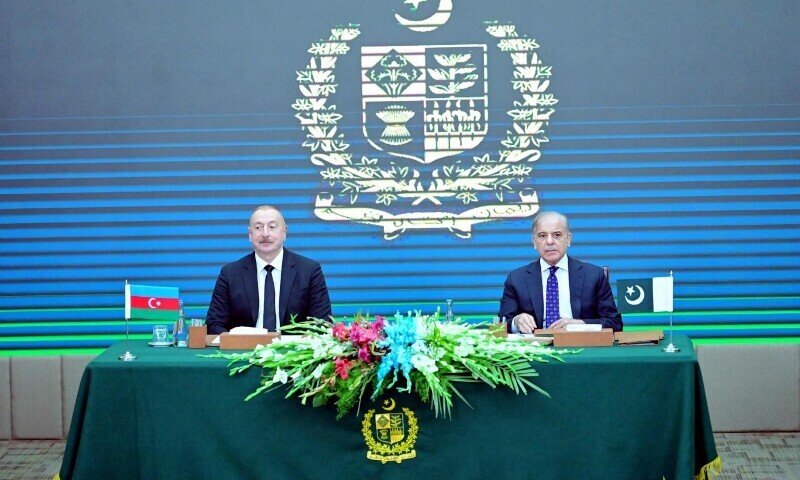
The journey of Pakistan in adopting this model has been very fast. A provision on sharing the ASAN experience was included in the protocol of the eighth Azerbaijan–Pakistan Intergovernmental Joint Commission in January 2025. Following the Prime Minister of Pakistan, Muhammad Shehbaz Sharif’s visit to an ASAN centre in Baku, a formal cooperation agreement was signed between the two governments on 10 September 2025.
In January 2026, the first Asaan Khidmat Centre was opened in Islamabad by Prime Minister Shehbaz Sharif and Chairman Ulvi Mehdiyev of the Azerbaijani delegation. The first phase of the centre aimed to provide 64 services from 12 institutions and will expand as further departments join. This made Pakistan the sixth country to have ASAN centers running in their country, after Indonesia, Uzbekistan, Ethiopia, Uganda and Afghanistan.
During the Prime Minister’s visit to the centre in October 2026, the Prime Minister and President Aliyev were pleased with the successful functioning of the centre and President Aliyev agreed to provide full support to expand the network in Pakistan. This commitment becomes one pilot to a country opportunity.
A booklet of lessons from the scaling up process for the road ahead.
There are foundations that are already good in Pakistan. NADRA’s identity database is one of the largest in the region, and citizen response to convenient and integrated services has been swift in provincial initiatives like e-Khidmat Markaz in Punjab. The task now is to bring these strands together under a common national standard.
There are some lessons to be drawn from Azerbaijan.
- Clear and direct decision authority in a special institution. The success of the ASAN was due to the fact that one agency owned the service and was able to hold the participating agencies to it.
- Pre-expansion integration in the back-office before the front-office. Only when databases communicate with one another and files don’t move by hand can new centres provide real value.
- Provincial partnership. Pakistan has a federal system of government which provides many of the services that citizens most often require. If a common federal and provincial system is in place, then centres in Lahore, Karachi, Peshawar and Quetta can have the same brand and the same promise.
- Measurement and feedback. Honest and improving service times are published and satisfaction surveys and complaints systems are used.
- Youth volunteerism. A volunteer programme from ASAN could be adapted for Pakistan to provide hands-on learning to university students and foster a culture of service in government.
More Than an Administrative Reform
The ASAN partnership is also a manifestation of strategic friendship between Azerbaijan and Pakistan. From Karabakh to Kashmir, the two countries have been side by side on issues of core interest. Knowledge sharing is the third ‘people-centred’ aspect of that relationship brought by governance, one that citizens can feel directly when they are in the proximity of the new document they are renewing in minutes, not days.
In the event of political commitment, investment in integration and the inclusion of the citizen at the heart of this partnership, the Asaan Khidmat network can develop into one of the most visible results of this partnership. It has proven that Azerbaijan is an easy country to deal with. Pakistan now has the opportunity to demonstrate that this concept is exportable, and that it can thrive amongst over 240 million people.
Copyright © 2026 by Muhammad Ali Pasha. All rights reserved. Reproduction or distribution of this content, in whole or in part, without prior written permission is prohibited.
Owner of “The Europe Today” and Patron-In-Chief/Owner of “The Gulf Observer”, Chairman “The Gulf Observer Research Forum”, Foreign Affairs Expert, Analyst, International Award Winning Author and Poet.