China’s fifth plenum brings an important economic question into focus. As the country advances towards more sophisticated industries and higher-quality growth, how effectively does public authority support that transition? The answer reaches beyond investment volumes and technological breakthroughs. It concerns the decisions that determine which enterprises gain access to markets, which projects receive public resources and which achievements earn officials recognition.
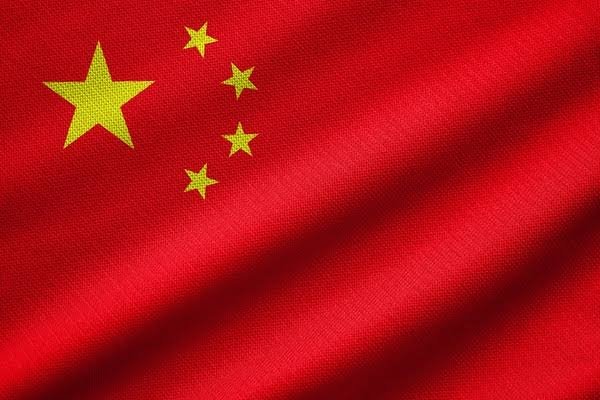
The fifth plenary session of the 20th Communist Party of China Central Committee places full and rigorous Party self-governance at the centre of its agenda. This gives the meeting significance for the implementation of the 15th Five-Year Plan. China’s development ambitions depend on institutions capable of allocating resources wisely and correcting practices that weaken the impact of national policies.
The economic importance of this agenda deserves greater attention. China is working to improve the relationship between government action and market vitality. That requires public authority to create dependable conditions for enterprise, while maintaining the capacity to coordinate development and address risks. Party self-reform strengthens the institutional basis for this balance. It directs scrutiny towards how power is exercised throughout the system responsible for carrying economic policy into practice.
Market integration offers a concrete example. In June, a State Council report submitted to the national legislature said China had established a basic institutional framework for a unified national market. The report also recorded the reduction of market-access restrictions from 117 items in the 2022 negative list to 106 in its 2025 version. These changes are widening the formal space for commercial activity.
Their full value emerges when enterprises encounter consistent treatment across administrative boundaries. A company expanding into another province needs confidence that published requirements govern its access. Local preferences and discretionary conditions can weaken the opportunities created through national reform. Stronger supervision therefore performs an economic function by helping national rules retain their authority at the point of implementation.
This is an important source of potential productivity gains. When firms can compete across a larger market, efficient producers gain opportunities to expand. Buyers obtain access to more suppliers. Enterprises can organise production around commercial strengths and customer demand. Governing a unified market well helps turn the scale of China’s economy into an advantage that individual businesses can use.
The State Administration for Market Regulation’s 2026 work plan reinforces this direction. Its 34 key tasks for supporting the private economy include improving fair competition, supervising enterprise-related charges and strengthening regulatory services. The plan also explores off-site and contactless inspection methods. These measures address the practical relationship between regulators and the businesses whose investment decisions shape future growth.
The distinction between effective regulation and administrative friction matters. A well-organised inspection protects safety, quality and fair competition. Repetitive requirements consume management time and make costs less predictable. For a smaller enterprise, improvements in regulatory coordination can free resources for production and expansion. Administrative reform thus influences the return a firm receives from its own effort.
The plenum also draws attention to a less visible determinant of economic performance. The incentives facing officials influence the investments they promote. Xinhua’s account of Party self-governance describes a campaign launched in February to correct approaches that sacrifice public well-being in pursuit of favourable performance records. This connects internal governance directly with the quality of development decisions.
A project’s construction is immediately visible. Its productive contribution takes longer to establish. An industrial facility can add to investment figures while struggling to attract sustainable demand. Training, maintenance or improvements in logistics may generate less publicity while strengthening an entire production network. Assessing achievements through their enduring value helps align official effort with the economic results China seeks.
This is where self-reform can produce its most substantial development dividend. By improving how decisions are assessed, it can help public institutions distinguish useful investment from expensive duplication. Scrutiny of procurement and conflicts of interest supports that process. So does the willingness to revise a weak proposal before further resources become committed. The ability to correct course is an economic asset.
Innovation requires equally careful judgement. Emerging technologies involve genuine uncertainty. Public support must be rigorous enough to discourage misuse and flexible enough to accommodate responsible experimentation. Officials need clear standards for distinguishing commercial disappointment from negligence or personal enrichment. Fair assessment encourages them to make informed decisions and acknowledge difficulties early, improving the information available for subsequent policy choices.
The leadership is explicitly linking stronger self-governance with governing competence. Xi Jinping has emphasised the importance of enhancing the Party’s ability to lead economic and social development in achieving the objectives of the 15th Five-Year Plan. This places capability alongside accountability. A technologically advanced economy requires public institutions that understand changing industries and coordinate effectively across established responsibilities. english.
The fifth plenum’s economic significance lies in strengthening the institutions through which China’s development ambitions acquire practical force. Market reform creates opportunities. Capable and accountable administration helps enterprises use them. As China pursues higher-quality growth, improving the exercise of public authority is becoming an increasingly important part of improving the economy itself.
The writer is Founder, Friends of BRI Forum and Advisor to Pakistan Research Centre, Hebei Normal University
The writer is Founder, Friends of BRI Forum and Advisor to Pakistan Research Centre, Hebei Normal University.