Contemporarily, air power is often defined within fifth-generation warfare parameters, which encompass complexity, unpredictability, and fast-paced environments. This has become even more pronounced in an era of hypersonics and Beyond Visual Range missiles, bringing with them the element of quick decision-making, particularly when they are launched against an adversary. Within this context, numerical advantage has taken a backseat while leadership amalgamated with the attributes of technical mastery, courage, and virtue have come to the forefront. This was well-understood by Air Chief Marshal Zaheer Ahmed Baber Sidhu, who painstakingly reformed the training undertaken by the Pakistan Air Force (PAF) pilots at the institutional level to transform them into holistic air warriors capable of undertaking multidomain operations through intellectual agility, moral courage, and resilience.
As part of his vision to fundamentally transform the PAF into a next-generation Air Force, ACM Baber Sidhu, in addition to shrewdly acquiring material and hardware, also brought a qualitative edge within the service. This has been embedded within his vision, which emphasises that a pragmatic organisation like the PAF requires specialised skills as well as refined personality traits. To this effect, the Chief of the Air Staff ensured a conscious pursuit of excellence, which built on the foundations of warrior ethos, integrity, and fortitude. These did not remain attributes in words only, but became the bedrock for the establishment of Project Phoenix and the Jinnah Centre for Character and Leadership (JCCL).
A substantial upgrade in all facets of training within the PAF meant that under Project Phoenix leaders of competence and character were nurtured. They were equipped with the necessary tools to confront the realities and challenges of the 21st century aerial warfare. In particular, an overhaul of PAF’s training paradigm was undertaken with more relevant and better curriculum at all levels. This was aligned with the vision expressed by the Air Chief in his first address after assuming PAF’s command, which emphasised value-based training for the entire force. Nurtured by the Personal, Interpersonal, Teamwork, and Organisation (PITO) skills model, as per the new curriculum, the PAF personnel learn to hone their individual prowess, communicate clearly, build trust among team members, and transform into potential leaders to undertake important strategic decisions.
A central component to the development strategy of the PAF leadership is the JCCL, which offers an institutionalised character and leadership development training and sustainable ecosystem for the entire spectrum of PAF’s training. Symbolising the national ideals and timeless vision of Quaid-e-Azam Muhammad Ali Jinnah, the institution is well- equipped with facilities to infuse attributes ranging from mental agility, social intelligence, and effective communication within PAF pilots.
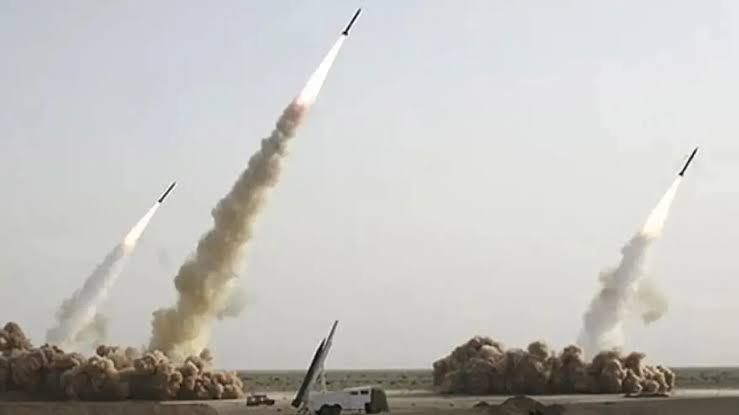
In essence, what was learned by the PAF fighter pilots during their training was executed in action during Marka-e-Haq. The presence of the incumbent Air Chief throughout Marka- e-Haq in the operations room meant the choreographing of a timely and capable response against the Indian Air Force (IAF), which had initiated hostilities through the launch of standoff munitions towards Pakistan. Lionhearted and an embodiment of courage, the Air Chief responded without delay as the narrow window of response only allowed five to seven minutes. Pakistan Air Force’s posture was changed from defence to full-scale offence, a difficult decision to undertake at a short notice. The employment of full spectrum multi-domain operations integrated electronic warfare, cyber, space, and long-range strike capabilities for which the PAF fighter pilots were trained. The adversary, despite putting up a professional fight, was surprised to witness the flawless execution of PAF’s operations. As a strategic and centralised service capable of producing strategic effects, shooting down eight IAF birds, including four Rafales and one Heron UAV truly paralysed the enemy. Rightfully hailed as a textbook example of successful employment of BVR in a contested environment, Marka-e-Haq also brought PAF’s leadership’s acumen in the spotlight, which was led from the front, instilling confidence and morale within the force. Concurrently, the pilots in the cockpits of J-10C, F-16, and JF-17 are equally deserving of praise. It was not merely the machines and the platforms that won the war, but an integrated multidomain kill chain perfected by the PAF leadership, the doctrinal evolution brought into the service, and the rigorous training spearheaded by PAF’s senior hierarchy.
Contrarily, Marka-e-Haq saw a divergent strategic thinking within the IAF. It was rooted in arrogance and media optics, reflective of BJP politics of superficial bravado owing to superior technology, without effective operationalisation and institutional integrity at its heart. Therefore, PAF’s resounding success under the present leadership during Marka- e-Haq spoke for itself: it is character-driven leadership and ethical decision making which allow triumph over adversaries.