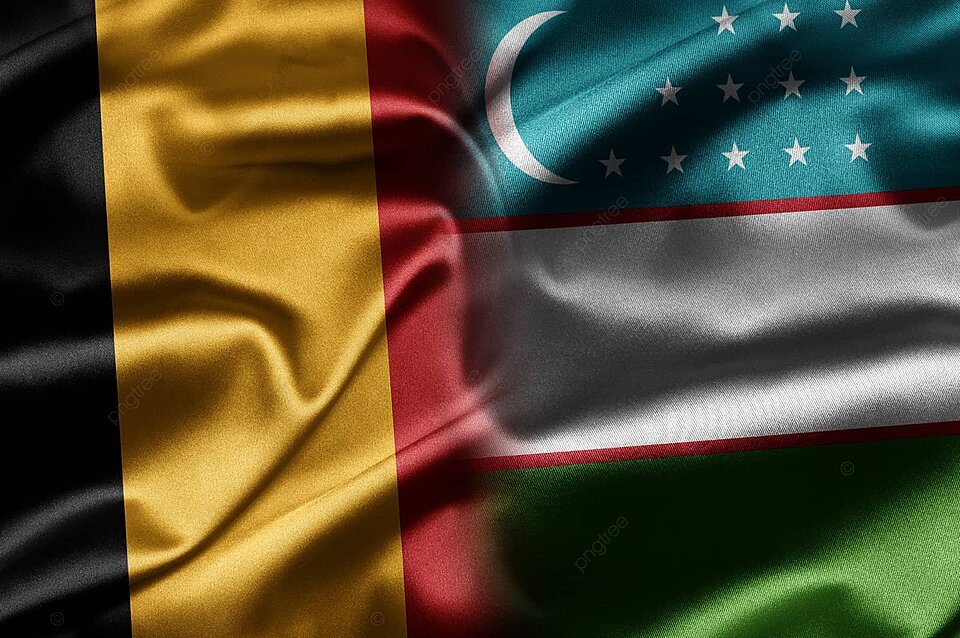
Belgium and Uzbekistan have steadily expanded their diplomatic, political, and economic relationship over the past decades, transforming what was once a relatively limited bilateral partnership into an increasingly strategic dialogue between Brussels and Tashkent. The decision by Belgium to open an embassy in Uzbekistan’s capital is not simply an administrative or symbolic diplomatic step; rather, it reflects the growing geopolitical and economic importance of Uzbekistan within Central Asia, as well as the broader strategic recalibration currently taking place in European engagement with the region.
Relations between the Republic of Uzbekistan and the Kingdom of Belgium are based on principles of mutual respect, sovereign equality, constructive dialogue, and pragmatic cooperation. Belgium officially recognized the independence of Uzbekistan on December 31, 1991, shortly after the dissolution of the Soviet Union, while formal diplomatic relations between the two countries were established on March 10, 1992. Since 1995, Uzbekistan has maintained an embassy in Brussels, ensuring permanent diplomatic representation in one of Europe’s most important political capitals and the institutional center of the European Union. Until recently, Belgium coordinated much of its diplomatic engagement with Uzbekistan through its embassy in Astana. However, the opening of a direct Belgian diplomatic mission in Tashkent signals a new phase in bilateral relations and demonstrates the increasing significance Belgium attributes to Uzbekistan and Central Asia as a whole.
The Evolution of Uzbek–Belgian Political Relations
Over approximately the last eight years, Uzbek–Belgian relations have experienced visible acceleration. Political dialogue has intensified, economic cooperation has expanded, and mutual confidence between the two governments has deepened considerably. The transformation of Uzbekistan under President Shavkat Mirziyoyev has fundamentally altered how European governments perceive the country. Under Mirziyoyev’s leadership, Uzbekistan has increasingly emerged as one of the most dynamic and reform-oriented states in Central Asia, pursuing policies aimed at economic liberalization, regional connectivity, diplomatic openness, and diversification of foreign partnerships.
Regular exchanges of messages between President Shavkat Mirziyoyev and King Philippe of the Belgians have reflected this atmosphere of growing political trust and diplomatic goodwill. These exchanges are not merely ceremonial; they illustrate a shared willingness to institutionalize long-term cooperation between the two states across political, economic, and strategic domains.
An especially important milestone occurred during President Mirziyoyev’s official visit to Brussels in October 2025. During the visit, the President of Uzbekistan met King Philippe at the Royal Palace of Laeken, where discussions focused on strengthening bilateral cooperation in trade, investment, logistics, infrastructure modernization, and industrial development. The visit carried significance beyond bilateral diplomacy, as it also highlighted Uzbekistan’s increasingly close relationship with the European Union.
King Philippe notably welcomed the positive outcomes of negotiations between Uzbekistan and the leadership of the European Union and congratulated Uzbekistan on the signing of the historic Enhanced Partnership and Cooperation Agreement with the EU. This agreement is widely viewed as a major institutional framework capable of elevating relations between Uzbekistan and European states to a new strategic level. For Belgium, one of Europe’s major diplomatic and logistical hubs, deeper engagement with Uzbekistan increasingly aligns with broader European interests in Central Asia.
Both sides expressed satisfaction with the continuous development of Uzbek–Belgian relations. In recent years, ministerial contacts have become increasingly frequent, political consultations have intensified, and parliamentary friendship groups have become more active. Diplomatic exchanges are no longer limited to formal protocol; they now encompass concrete economic initiatives, infrastructure projects, trade expansion, educational exchange, and discussions regarding regional stability and connectivity.
Interparliamentary Dialogue and Institutional Cooperation
At the parliamentary level, bilateral cooperation is supported by active interparliamentary friendship groups operating under the “Uzbekistan–Belgium” and “Belgium–Uzbekistan” frameworks. These parliamentary mechanisms have become increasingly important in sustaining institutional dialogue between the two countries. Online meetings and consultations between legislators regularly address issues such as trade expansion, tourism cooperation, cultural diplomacy, academic exchange, and humanitarian initiatives.
Such interactions contribute to the development of long-term political understanding and reinforce the institutional foundations of bilateral relations. Parliamentary diplomacy has become particularly relevant in the context of growing European interest in Central Asia, where legislative cooperation increasingly complements traditional diplomatic engagement.
At the ministerial level, diplomatic coordination has also intensified. Uzbek Foreign Minister Bakhtiyor Saidov held talks in Brussels with Belgium’s Deputy Prime Minister and Minister of Foreign Affairs, European Affairs, and Development Cooperation, Maxime Prévot. Discussions focused on current bilateral priorities, the expansion of economic cooperation, investment opportunities, and coordination on regional and international issues. The bilateral agenda demonstrated a comprehensive and forward-looking character aimed at deepening the partnership between both countries.
Expanding Economic and Trade Relations
Economic cooperation constitutes one of the most dynamic pillars of the Uzbek–Belgian partnership. Belgium has gradually become one of Uzbekistan’s most active and strategically relevant economic partners within the European Union. Bilateral trade turnover has demonstrated continuous and impressive growth over recent years, increasing from approximately $70 million in 2020 to more than $212.7 million in 2024. This expansion reflects not only the diversification of bilateral trade but also the growing interest of Belgian businesses in the Uzbek market and Uzbekistan’s broader economic opening.
The structure of trade between the two countries remains relatively diversified and balanced. Uzbekistan exports industrial goods, textiles, food products, chemical products, agricultural commodities, construction materials, and services to Belgium, while imports from Belgium primarily include machinery, industrial equipment, pharmaceutical products, chemicals, technological components, and precious metals. Such trade patterns illustrate the complementary nature of the two economies and indicate substantial potential for further expansion.
Belgian corporate presence in Uzbekistan has also increased steadily. At present, sixteen enterprises involving Belgian capital operate in Uzbekistan, including internationally recognized companies such as Picanol, Van de Wiele, Gosselin Caucasus & Central Asia, Aatko Carpets, and Intraco. These firms are involved in sectors ranging from textile modernization and logistics to agriculture, industrial engineering, and food production.
The role of Belgian technology in the modernization of Uzbekistan’s textile sector deserves particular attention. Belgian companies, especially Picanol and Van de Wiele, are internationally known for advanced engineering solutions in weaving technology and industrial machinery. The introduction of modern Belgian weaving equipment has contributed significantly to increasing productivity, improving product quality, and strengthening the export potential of Uzbekistan’s textile industry, which remains one of the country’s most strategically important manufacturing sectors.
Green Economy, Innovation, and Technological Cooperation
In parallel, cooperation between Belgium and Uzbekistan is increasingly extending into high-value sectors such as green technology, sustainable development, renewable energy, and environmental modernization. Belgian companies and institutions have demonstrated growing interest in participating in Uzbek projects related to energy efficiency, waste management, recycling systems, sustainable agriculture, water treatment, and smart-city development.
These sectors are becoming central components of Uzbekistan’s modernization agenda as the country seeks to align economic growth with long-term sustainability objectives. Belgian expertise in engineering, industrial innovation, and environmental technologies positions Belgium as a valuable partner for Uzbekistan’s transition toward a greener and more technologically advanced economy.
In May 2024, a business mission composed of representatives from seventeen Belgian companies visited Uzbekistan to explore new opportunities for cooperation and investment. The delegation included firms specializing in pharmaceuticals, agriculture, food production, information technologies, and environmental engineering. Meetings held during the visit included both B2B and B2G formats, regional investment presentations, industrial site visits, and discussions concerning the localization of joint production capacities in Uzbekistan.
The Role of the Benelux Chamber of Commerce
Another important milestone was the opening of the Benelux Chamber of Commerce in Tashkent. The Chamber unites business communities from Belgium, the Netherlands, Luxembourg, and Uzbekistan and serves as an institutional platform for facilitating commercial dialogue, investment promotion, trade exhibitions, roadshows, and public-private partnerships.
The establishment of the Chamber represents a significant step toward institutionalizing economic cooperation between Uzbekistan and the Benelux countries. Regular cooperation also continues with Belgian regional economic agencies such as AWEX, FIT, and Hub.Brussels. Through these channels, both sides are developing projects in logistics, biotechnology, agricultural processing, industrial digitalization, and transport modernization.
Infrastructure, Logistics, and Strategic Connectivity
Belgium’s growing interest in Uzbekistan is also linked to infrastructure and connectivity projects. Uzbekistan views Belgium as a valuable partner in large-scale industrial and transport modernization efforts. Belgian expertise in logistics, warehousing systems, industrial construction, and transport infrastructure is particularly relevant for Uzbekistan’s ambition to become a regional transportation and manufacturing hub connecting Europe and Asia.
Among the sectors with especially strong growth potential are pharmaceuticals, precision agriculture, agro-industry, financial technologies, and export-oriented food production. Discussions have also taken place regarding financial innovation and digital payment systems, including cooperation involving Mastercard Europe PLC, whose representative office is accredited in Tashkent.
The future potential for expanding bilateral trade remains considerable. One major opportunity lies in Uzbekistan’s GSP+ status with the European Union, which facilitates greater access for Uzbek exports to European markets. At the same time, the development of transport corridors linking Central Asia and Europe through the Caspian and Black Seas further increases Uzbekistan’s strategic attractiveness for European governments and investors.
Cultural Diplomacy and Sister-City Relations
Cultural diplomacy also plays an increasingly important role in Uzbek–Belgian relations. Sister-city partnerships between Tashkent and Kortrijk, as well as between Samarkand and Liège, have contributed to growing educational, academic, and cultural cooperation.
Symbolically, a bust dedicated to the renowned medieval scholar Avicenna was unveiled in the Belgian city of Kortrijk, reflecting a broader effort to strengthen people-to-people relations and cultural understanding between the two nations.
Belgium, as one of Europe’s principal centers of diplomacy, logistics, finance, and institutional governance, increasingly sees Uzbekistan as a reliable and strategically positioned partner in Central Asia. At the same time, Tashkent is emerging as a gateway for Belgian and broader European business engagement with the wider Central Asian region.
Uzbekistan’s Economic Rise and Regional Transformation
The strategic significance of Uzbekistan for Europe has increased dramatically in recent years. According to Stephen M. Bland in The Times of Central Asia, Uzbekistan is expected to become one of the fastest-growing economies in the broader Europe and Central Asia region. The World Bank’s Europe and Central Asia Economic Update (Fall 2025) similarly identifies Uzbekistan as one of the region’s leading growth performers.
According to reports cited by Euronews, Uzbekistan’s GDP exceeded €133 billion in 2025, compared with approximately €56 billion less than a decade earlier. This rapid expansion reflects increasing investment flows, export growth, rising domestic consumption, and large-scale structural reforms implemented by the Uzbek government.
Economic growth has also translated into improving living standards. GDP per capita reportedly increased from approximately €1,750 in 2017 to more than €3,220 in 2025. President Mirziyoyev stated that nearly five million citizens obtained stable sources of income during this period, while approximately 1.5 million people moved above the poverty line wrote Raxmonkulova, S. (2026, January 19). for Euronews.
Compared with neighboring states, Uzbekistan’s economic weight is increasingly dominant within Central Asia. According to World Bank estimates, Uzbekistan’s economy is approximately seven times larger than Tajikistan’s and significantly larger than the economies of Kyrgyzstan and several other regional states.
Mirziyoyev’s Reforms and the Transformation of Central Asia
This transformation did not occur accidentally. Since assuming office in 2016, President Shavkat Mirziyoyev has pursued extensive market-oriented reforms designed to liberalize the economy, improve regional relations, attract international investment, simplify trade regulations, and integrate Uzbekistan more deeply into the global economy.
The government unified the exchange rate, lifted currency restrictions, simplified customs procedures, reduced bureaucratic barriers, liberalized trade, and initiated the privatization of state-owned enterprises. These reforms significantly improved Uzbekistan’s international economic image and transformed perceptions of the country among global investors and foreign governments.
Mirziyoyev’s foreign policy has also fundamentally reshaped Central Asia itself. Unlike previous periods characterized by regional tensions and limited cooperation, Uzbekistan has actively promoted regional dialogue, border normalization, economic connectivity, and diplomatic engagement with neighboring states. In many respects, Mirziyoyev has emerged as one of the principal architects of regional stabilization and reconciliation in Central Asia.
Uzbekistan has normalized relations with Kyrgyzstan and Tajikistan, promoted regional infrastructure cooperation, expanded trade links with Kazakhstan and Turkmenistan, and pursued pragmatic diplomacy aimed at transforming Central Asia from a fragmented geopolitical space into a more interconnected regional system.
Uzbekistan, Europe, and the Middle Corridor
Uzbekistan’s importance extends well beyond economics alone. As Central Asia’s most populous country, with approximately 37 million inhabitants, Uzbekistan occupies a central geographic and geopolitical position within Eurasia.
The country increasingly serves as a bridge connecting China, South Asia, the Caspian region, Türkiye, and Europe through emerging transport and logistics corridors. Particularly important is Uzbekistan’s role in the development of the Middle Corridor, also known as the Trans-Caspian International Transport Route.
In the context of geopolitical tensions, sanctions on Russia, and global supply-chain restructuring, European and Asian governments are increasingly searching for alternative east-west trade corridors that bypass northern routes.
Why the Uzbekistan–Turkmenistan Route Matters
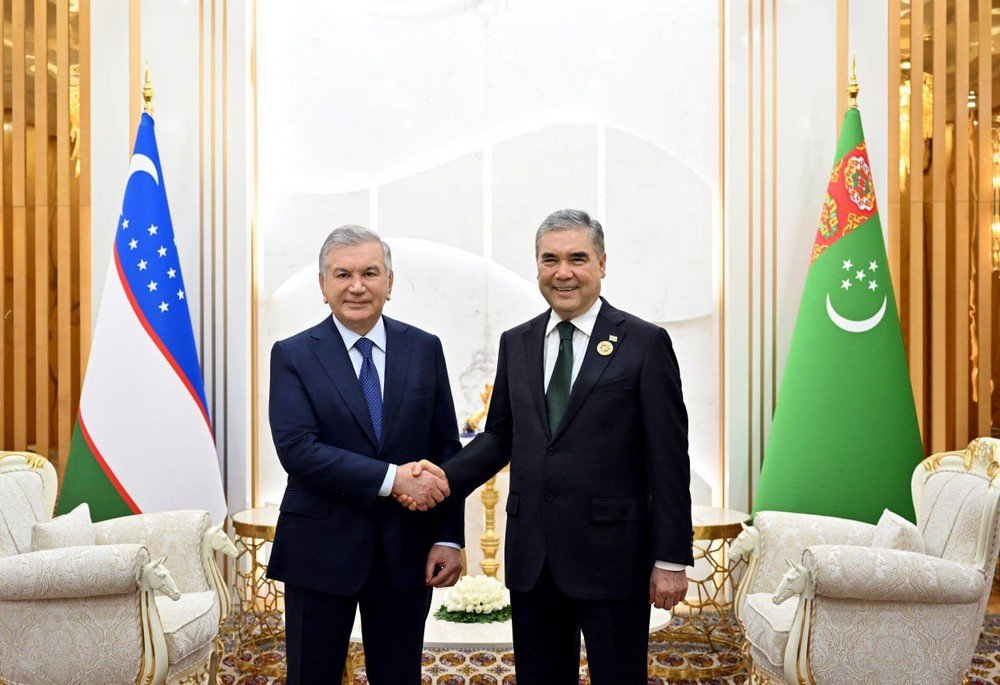
Within this broader geopolitical environment, the Uzbekistan–Turkmenistan corridor has acquired major strategic significance. As a double-landlocked country, Uzbekistan requires reliable transit access to international maritime routes. Cooperation with Turkmenistan provides Uzbekistan with direct access to the Caspian Sea through the port of Turkmenbashi and creates crucial connections toward Iranian ports such as Bandar Abbas and Chabahar.
The growing rapprochement between Uzbekistan and Turkmenistan could fundamentally reshape the geopolitical and logistical architecture of Central Asia. Closer cooperation between the two states not only strengthens bilateral relations but also alters regional power dynamics and significantly enhances Eurasian connectivity.
This corridor provides a sanction-resistant and geopolitically diversified trade route linking Central Asia with the Middle East, Türkiye, and Europe. At a time when global logistics chains are undergoing profound restructuring, such connectivity has become increasingly valuable for both regional and external actors.
Both Uzbekistan and Turkmenistan are investing heavily in transport modernization, customs infrastructure, highways, and logistics facilities. Projects such as the expansion of the Farap customs checkpoint and the modernization of the Ashgabat–Turkmenabat highway illustrate the broader strategic ambition to transform Central Asia into a major transit platform connecting East and West.
Growing Western Interest in Uzbekistan
Western governments and investors are increasingly recognizing Uzbekistan’s strategic importance. Saudi Arabia’s ACWA Power has committed approximately $13.7 billion to renewable energy and gas projects in Uzbekistan, making the country one of the company’s largest foreign markets.
Hungary’s OTP Group became the first foreign bank to acquire an Uzbek financial institution, marking a major milestone in the liberalization of Uzbekistan’s banking sector. Meanwhile, the European Bank for Reconstruction and Development has identified Uzbekistan as one of its top investment destinations globally, with more than €2 billion invested across approximately ninety projects.
The United States and the European Union have also significantly expanded engagement with Central Asia. Washington’s C5+1 framework has strengthened cooperation with the five Central Asian states in areas such as trade, energy security, climate policy, and regional stability as noted by Bland, S. M. (2025, October 15).
The European Union, for its part, has launched the Global Gateway initiative in Central Asia, aimed at financing sustainable infrastructure, transport connectivity, and digital modernization. In October 2025, the EU introduced the Team Europe Initiative on Digital Connectivity in Central Asia, designed to expand satellite internet access and reduce the region’s digital divide through investments in infrastructure, technology, and skills development.
New Uzbekistan and the Vision of New Tashkent
Within Uzbekistan itself, modernization efforts continue at remarkable speed. One of the most ambitious projects currently underway is “New Tashkent,” a large-scale urban development initiative envisioned as a future hub for innovation, sustainability, smart infrastructure, and advanced urban planning according to Euronews.
The project is expected to accommodate approximately two million residents and spans around 20,000 hectares between the Chirchik and Karasuv rivers. Beyond merely reducing demographic pressure on the existing capital, the project seeks to create a modern Eurasian metropolis capable of attracting international investment, advanced technologies, global business, and regional innovation networks according to Primova, D. (2025, August 19)
New Tashkent symbolizes Uzbekistan’s broader transformation ambitions and reflects the government’s intention to position the country as a leading economic, technological, and logistical center of Central Asia.
Conclusion
Belgium’s decision to open an embassy in Tashkent reflects much broader geopolitical and economic calculations than a simple expansion of diplomatic representation. Uzbekistan is increasingly viewed in Europe not merely as a post-Soviet Central Asian republic, but as one of the principal strategic actors of the wider Eurasian region.
Economically dynamic, geographically pivotal, diplomatically active, and increasingly integrated into global trade and transport networks, Uzbekistan is becoming indispensable to the future architecture of connectivity between Europe and Asia. For Belgium, establishing a permanent diplomatic presence in Tashkent therefore represents both a recognition of Uzbekistan’s growing importance and an investment in the future strategic landscape of Central Asia.

Historian and environmental management expert on Central Asia and researcher on Central Asia post-Soviet period. Journalist for EuReporter and EuReflect and Special Director of “The Gulf Observer” for Europe and Central Asia.