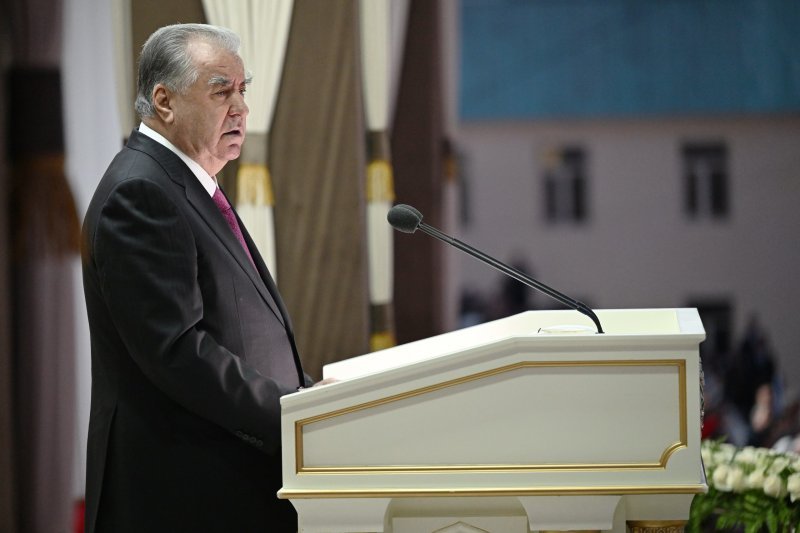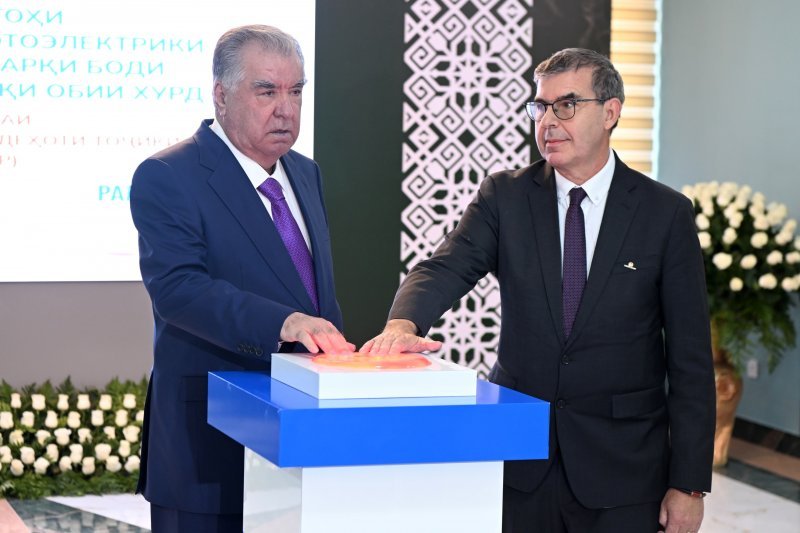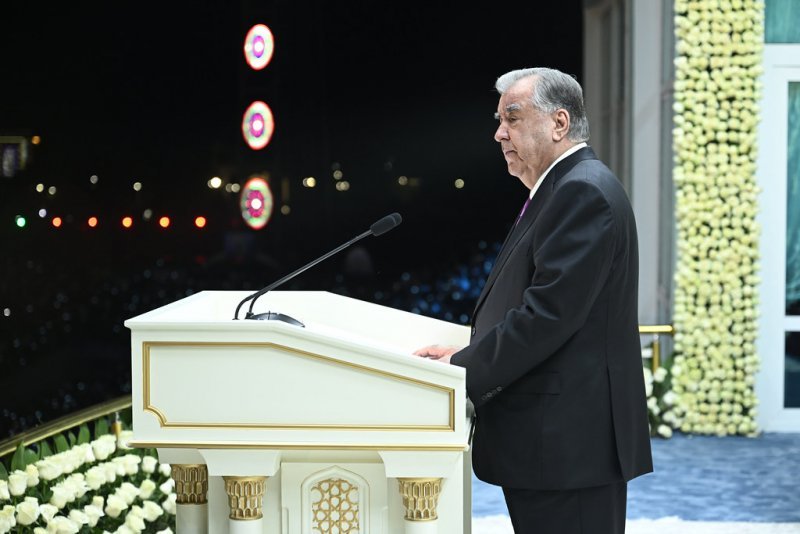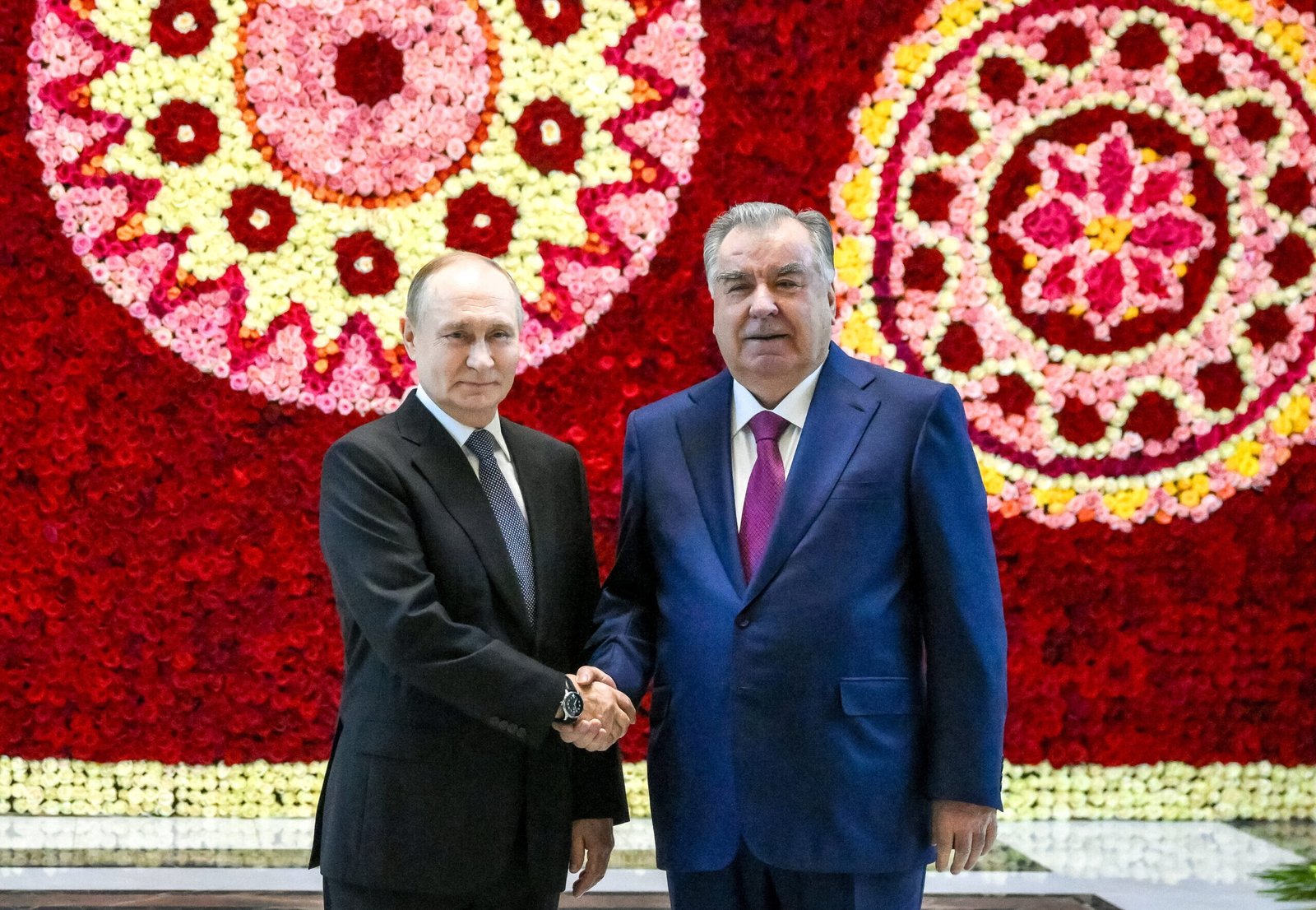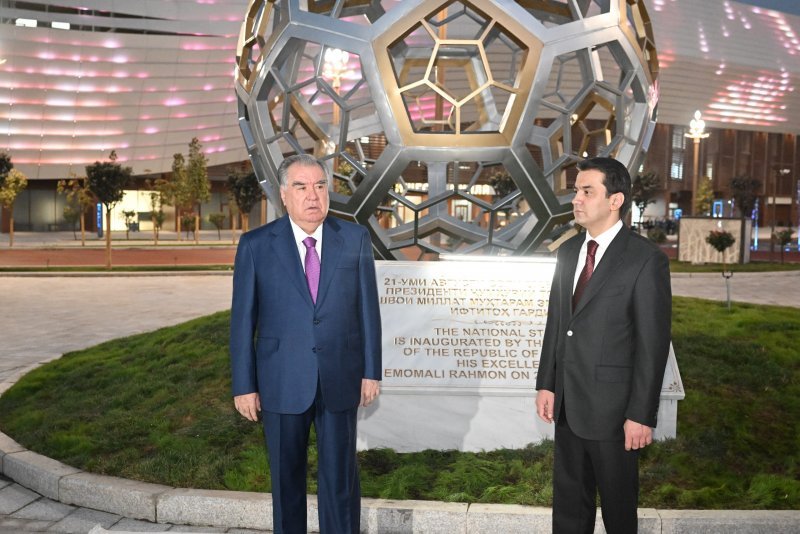
Dushanbe, August 22, 2026 — The Europe Today: President of Tajikistan Emomali Rahmon and Chairman of the National Assembly of the Supreme Assembly and Mayor of Dushanbe Rustam Emomali inaugurated the country’s new National Stadium on August 21.
The newly constructed National Stadium, operated as a state institution under the Executive Office of the President of Tajikistan, was built as part of preparations for the 35th anniversary of the country’s State Independence.
Located on an area of 9.5 hectares, the stadium is described as a major example of modern construction in Tajikistan and features more than 30,000 seats across two tiers. The lower tier accommodates more than 12,000 spectators, while the upper tier has approximately 18,000 seats.
Built in accordance with international FIFA standards, the stadium has been classified as a Category 2 international venue, enabling it to host major club matches and international competitions.
The facility is equipped with 68 modern electronic turnstiles designed to ensure safe and efficient access for spectators. Its two-tier stands and access systems have been designed in accordance with FIFA safety requirements to facilitate crowd management and rapid evacuation.
The stadium has a built-up area of approximately 27,000 square meters and a total floor area exceeding 42,000 square meters. The 33-meter-high structure comprises five floors and a basement.
At the center of the stadium is a modern football pitch covering 7,140 square meters. The playing field measures 105 by 68 meters, meeting FIFA requirements for international matches and World Cup competitions. The overall sports field measures 130 by 87 meters, providing the required safety and technical zones around the playing area.
Two large LED screens, each measuring 133 square meters, have been installed to display live match action, replays and game information in accordance with FIFA standards.
The stadium also features 312 high-powered Philips floodlights, designed to provide uniform illumination and support high-quality HD and 4K television broadcasts.
An advanced sound and acoustic system comprising 88 professional BOSS speakers provides clear audio coverage throughout the stands. In addition, 66 lighting fixtures allow the venue to host major shows, opening ceremonies and other international events with specialized lighting effects.
The stadium is equipped with 50 surveillance cameras and 10 additional cameras capable of supporting high-quality HD and 4K recording and broadcasting. More than 1,000 modern fire detection and alarm devices have also been installed throughout the facility as part of its comprehensive safety system.
For teams and athletes, the stadium contains four dedicated changing rooms with 104 places, meeting requirements for major tournaments and consecutive matches.
The facility also includes one VVIP room with 32 seats, 34 VIP rooms accommodating 306 people, and 26 CIP rooms with 416 seats. These modern Skybox facilities are intended to meet international requirements for hosting high-ranking guests.
The stadium’s main façade is constructed with modern aluminum panels. More than 30,000 meters of advanced media projection systems have been installed on the exterior, enabling images, graphics and other visual programs to be displayed across the façade at night.
The facility also provides parking for more than 750 vehicles, while more than 3,000 square meters have been landscaped with evergreen trees, flowers and ornamental shrubs.
President Emomali Rahmon described the opening of the National Stadium, built in connection with the 35th anniversary of Tajikistan’s independence, as a worthy gift to the people of the country.
The new stadium is notable for its scale, architectural design and technical capabilities and is described as having no comparable facility in Central Asia.
During the inauguration, officials also highlighted the development of football in Tajikistan, which dates back to the 1920s and 1930s. The country held its first football championship in 1937, with several football clubs participating. Subsequent competitions helped transform football into a popular sport among the population.
Since independence, football has developed steadily with state support, accompanied by a significant expansion of football facilities and training grounds across the country. Improved infrastructure has provided athletes with better training conditions and increased opportunities to participate in international competitions.
The development of sports infrastructure has been particularly accelerated over the past decade, with new sports and recreation facilities, including football grounds, being constructed in Dushanbe and across the country.
The growing emphasis on football has also increased participation among young people and women. Women’s football clubs have expanded, contributing to broader participation in the sport.
Tajikistan has also strengthened its legal and institutional framework for sports development through legislation and national strategies, including the Law on Physical Culture and Sports, the Strategy for Sports Development and Healthy Lifestyle, state football development programs, and the National Concept for the Development of Physical Culture and Sports.
The opening of the new National Stadium represents another major step in the development of Tajikistan’s football infrastructure and its ability to host international sporting events.
Tajikistan has increasingly promoted football alongside its international initiatives in areas such as water, climate and peace. Since 2024, May 25 has been observed annually as World Football Day, following an initiative associated with Rustam Emomali, Chairman of the National Assembly, Mayor of Dushanbe, President of the Central Asian Football Association and President of the Football Federation of Tajikistan.
As a result of sustained investment and support, Tajikistan’s under-17 national football team has qualified for the FIFA World Cup on four occasions during the years of independence. The country has also emerged as a host for international CAFA competitions, staging more than 30 such tournaments over the past decade.
The Asian Football Confederation and the Football Federation of Tajikistan have recognized the country’s efforts to promote football, particularly among children and young people.
The new National Stadium is expected to further strengthen Tajikistan’s capacity to host major international competitions and cultural and entertainment events, while contributing to closer people-to-people ties through sport.
The facility will provide Tajik footballers with modern, internationally compliant conditions for training and competition and is expected to support the development of young talent and the country’s ambitions to achieve greater success on the international stage.
The stadium’s advanced technological, broadcasting, lighting and acoustic systems are also expected to significantly enhance the quality of sporting events and live television coverage.
The inauguration marks an important milestone in Tajikistan’s efforts to modernize its sports infrastructure and promote football as a means of developing youth talent, encouraging healthy lifestyles and strengthening the country’s international sporting profile.