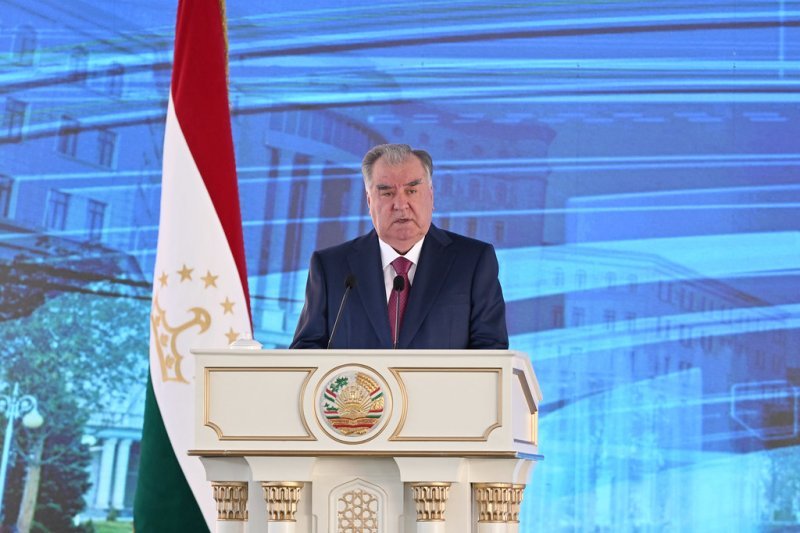
Dear compatriots!
Esteemed workers of the education sector!
Dear pupils, students and teachers!
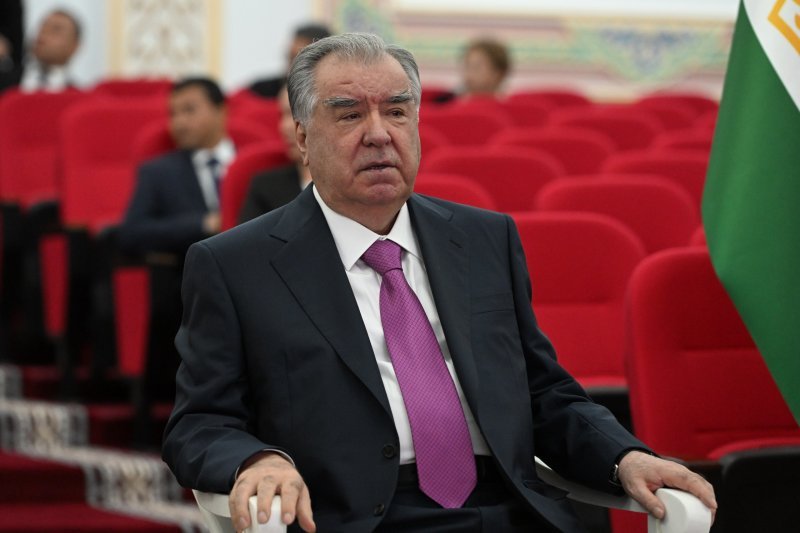
We are currently approaching the celebration of a great national holiday — the 35th anniversary of the state independence of our beloved Tajikistan.
Therefore, I sincerely congratulate all of you on this great historic occasion, as well as on the beginning of the new academic year and Knowledge Day.
I would also like to congratulate the children who are joyfully and excitedly taking their first steps into school this year and wish them good health and happiness.
I would like to emphasise that it is precisely thanks to independence and complete peace and stability in our country that we have been able to undertake major efforts to create the best possible conditions for education and to improve the level and quality of education and upbringing of children, adolescents and young people.
The opening of the new and modern building of Secondary School No. 105, where we are gathered today, is a result of state independence and the peaceful and stable environment in our country.
This institution was built by the executive authorities of Dushanbe with a modern design and is equipped with the best educational and upbringing facilities and opportunities for 2,400 pupils.
It should be noted that over the past nine years, 55 new educational institutions with more than 95,000 places, as well as 42 modern kindergartens for 8,000 children, have been constructed and commissioned in Dushanbe.
This year alone, in honour of the 35th anniversary of state independence, seven new educational institutions with 10,000 places and eight new and modern preschool institutions for 1,000 children are being commissioned in the capital.
Overall, during the period of independence, 4,135 educational institution buildings with 1.8 million places have been constructed and commissioned throughout the country at a cost of 8.4 billion somoni.
A particularly positive development during the period of our national independence is that the honourable people of Tajikistan, including patriotic and conscientious entrepreneurs, have established fruitful cooperation with the Government in the noble task of building new educational institutions equipped with modern facilities. We express our gratitude to them for their patriotic initiative and contribution.
Distinguished participants!
All our achievements in the development and prosperity of our beloved homeland, including in the field of education, which is regarded as the creator of the future of the nation and the state, are precisely the result of state independence, complete political peace and stability, and sustainable national unity.
Therefore, for us, the people of Tajikistan, peace and unity are the most important factors in ensuring the longevity of the state and the nation.
Accordingly, appreciating peace and stability, strengthening national unity, and educating young people in the spirit of patriotism and humanism are the sacred duties of every conscious and responsible citizen of the country.
The adoption in June this year of the United Nations resolution on the “Decade of Strengthening Peace for Future Generations,” initiated by Tajikistan, is also evidence of our country’s consistent efforts to safeguard peace and tranquillity across the world.
With satisfaction and pride, I would like to state that the efforts of teachers and education-sector workers in strengthening state independence, promoting the ideas of national statehood, guiding society towards the consolidation of peace and unity, and providing proper education and upbringing to the generation of the independence era are highly significant and worthy of praise and appreciation.
During an extremely complex and contradictory period in the history of the Tajik state, education-sector workers once again demonstrated that reason and wisdom, science and knowledge, patience and tolerance, and efforts to achieve peace and stability play a fundamental role in overcoming any crisis and pave a clear and smooth path towards a prosperous future.
I have said this many times and would like to emphasise once again that independence and freedom, as well as peace and tranquillity, are the most sacred blessings and greatest achievements of our people, the source of national pride and patriotic honour, the symbol of the existence of our nation, and the condition for the happiness and dignity of all residents of Tajikistan.
State independence preserved the existence of the Tajik people in the international community, restored historical justice, and presented the Tajik people to the world as a cultured and civilisation-building nation that is tolerant and peace-loving.
Distinguished participants!
Since ancient times, our nation has regarded science, enlightenment and books as the light of life, the foundation of statehood and the source of social progress.
Over thousands of years, outstanding sons of the Tajik nation have made valuable contributions to the development of human civilisation through the power of wisdom, science and knowledge.
Possessing knowledge and education has become particularly important in our time, which is characterised by unprecedented development and advancement of science and technology and the rapid expansion of artificial intelligence.
Under such circumstances, not only natural resources but also knowledgeable people, educated young people and highly qualified specialists are considered the principal wealth of states.
Therefore, it is extremely important that our younger generation and young people maintain a constant interest in acquiring knowledge, study continuously and, on this basis, engage in creativity and innovation.
All necessary conditions and opportunities for this have now been created in our country.
The Government of Tajikistan has identified science and education as among the priority areas of state policy.
We clearly understand that investment in the education and upbringing of children and adolescents is investment in the future of the nation and the state.
Accordingly, during the period of independence, more than 70 billion somoni has been allocated to education from the state budget, while 10 billion somoni has been provided through state investment projects. These figures are clear evidence of the special and continuous attention being paid to education.
Distinguished participants!
It is well known that the first stage of children’s education and upbringing is associated with preschool institutions.
In other words, education and upbringing in preschool institutions is the most important foundation for children’s future.
In this regard, several years ago I instructed the relevant structures and authorities to take measures to establish kindergartens in every neighbourhood with a population of more than 100 people.
This is a very important issue, and we must do even more in this area.
By a decision of the Government, the Programme for the Development of Preschool Institutions and Private General Education for 2022–2027 has been approved. This represents a firm step towards expanding opportunities for children to gain access to education.
Therefore, I once again remind the heads of regions, cities and districts, the Ministry of Education and Science, as well as other relevant authorities, to pay greater attention to the construction of preschool institutions.
They should mobilise existing opportunities to fully implement the National Education Development Strategy through 2030, the aforementioned programme, and to increase preschool education coverage to 50 percent.
In addition, necessary measures must be taken to provide preschool institutions with highly qualified personnel who meet modern requirements.
It should be remembered that the higher the quality and standard of upbringing in kindergartens, the more successful the subsequent education of our children in general secondary schools will be.
During my meetings with education-sector representatives and in my other speeches, I have repeatedly stated that the quality of education and upbringing in general secondary and higher professional education institutions requires further improvement.
It should be noted that significant work has been carried out in recent years at the general secondary education level.
In particular, the introduction of unified standards for determining the quality of education, providing newly constructed educational institutions with teaching personnel, strengthening the use of digital technologies, and gradually improving pupils’ knowledge continue steadily.
We must keep pace with the times, organise the study and use of modern technologies at a high level, and always remember that only on the basis of an active, inclusive and progressive education system can we secure a достойное place in the modern world.
To continuously improve the quality of education, it is extremely important to focus on key issues, including improving teachers’ professional skills, introducing advanced and effective methods of upbringing, preparing and publishing educational manuals, producing a new generation of textbooks, and equipping classrooms and laboratories with modern technologies.
The systematic organisation of professional development and retraining courses for teachers is also among the essential tasks.
On September 1, 2024, during my visit to educational facilities in Dushanbe and my participation in Knowledge Day celebrations, I stressed that appropriate measures should be taken to fully provide general education institutions within two years with textbooks, supplementary educational and scientific literature, methodological manuals, teachers’ guides and teaching methodologies for every subject.
Analyses indicate that a number of measures have been implemented in accordance with this instruction.
In particular, since the beginning of 2025, 9.215 million copies of textbooks and educational materials have been supplied to education departments and institutions in cities and districts, as well as other educational institutions, and this process is continuing steadily.
To provide educational institutions with textbooks and other educational materials for the 2026–2027 academic year, 40 textbook titles have passed the relevant selection process. Their publication is being carried out in stages and the books are being distributed to pupils.
Thus, there are currently no significant problems related to shortages of textbooks in educational institutions.
Now we must pay greater attention to the quality of textbooks and their alignment with international standards.
Therefore, the Ministry of Education and Science is instructed to continuously take measures to further improve the quality and content of new-generation textbooks.
I would now like to emphasise another important issue.
The introduction of any system, approach or international practice into the educational process should first be comprehensively tested on a pilot basis in educational institutions, adapted to the conditions and strategic objectives of Tajikistan’s education development and national values, and only then put into practical use.
In this regard, we must first pay serious attention to the development of scientific and research work in the fields of pedagogy and psychology and involve scholars and teachers with advanced experience in these areas.
For this purpose, the scientific and research activities of the Academy of Education, the Institute for Education Development and higher education institutions specialising in teacher training should be strengthened in developing and proposing innovative methods, approaches and technologies for teaching subjects, primarily natural sciences and mathematics, using advanced international experience.
In this process, the Republican Institute for Professional Development and Retraining of Education Workers should pay greater attention to providing professional development courses for teachers of natural science and mathematics subjects and organising practical and laboratory classes.
To date, we have accomplished considerable work in digitalisation and the development of information technologies.
There is now a need to systematically explain to different sections of the population, particularly young people and adolescents, the culture of using the internet, mobile phones, artificial intelligence and, especially, social networks properly and responsibly.
The harm or benefit of new technologies depends on how we use them.
Observations show that the uncontrolled use of smartphones and social networks among pupils of general secondary schools has become a matter of concern in recent years.
Experts and independent analysts from influential international organisations have also repeatedly emphasised in their reports that smartphones and social networks distract pupils’ attention and interfere with their education.
A number of developed countries have already introduced various forms of restrictions or bans on the use of phones by pupils under the age of 16.
It should be noted that all information has an age-appropriate character.
However, this principle is generally not observed on social networks, and as a result, a significant number of children and adolescents have already come under the negative influence of such information.
Excessive and uncontrolled use of smartphones and social networks has caused serious harm to their mental well-being, sleep, speech, memory, ability to acquire literacy and knowledge, activity and physical development.
Instead of reading books, developing their skills or engaging in sports, pupils spend many hours in the virtual environment of social networks.
We must not forget that children and adolescents are the future of the nation, and we cannot remain indifferent to matters concerning their well-being and, consequently, the future of the nation.
In view of this, the Ministry of Education and Science, the Agency for Innovation and Digital Technologies, and the Committee for Primary and Secondary Vocational Education are instructed to comprehensively analyse and examine this issue within three months and submit proposals to the Government regarding ways to address it.
Under conditions of rapid digitalisation, continuous development of communication technologies and the growing number of social networks and electronic news media, young people must possess a high level of information literacy.
They should use social networks consciously, be able to resist biased information and false news, particularly extremist ideas, use the internet to acquire knowledge and education, devote their time to reading books, and contribute to ensuring the information and ideological security of society.
Taking these realities into account, ways must be found to strengthen the information resilience of adolescents and young people against modern threats and dangers and to raise their level of information culture.
Distinguished participants!
We have established a number of benefits and opportunities to support graduates of general secondary schools and train highly qualified national specialists.
One of these, which has been in operation for nearly 30 years, since 1997, is the admission of students to higher professional education institutions in the country under the Presidential quota system.
The main objective of the Presidential quota is to support and attract young women and men from remote rural areas of cities and districts and to provide such regions with highly qualified specialists.
During this period, 29,000 graduates of general secondary schools from 61 cities and districts have been admitted to 20 higher professional education institutions under the Presidential quota. Today, they are successfully working in various sectors.
It is worth noting that in recent years, the development of primary and secondary vocational education has become one of the important areas of the state’s social and economic policy.
The development of industry, energy, construction, modern agriculture, transport, tourism, services, digital technologies and other sectors of the national economy is impossible without qualified and skilled personnel.
Taking this necessity into account and with the aim of developing a modern vocational training system, the Committee for Primary and Secondary Vocational Education under the Government of Tajikistan was established.
The establishment of this structure has made it possible for primary and secondary vocational education to develop as an independent state system with unified policies, modern standards, coordination mechanisms, direct links with the labour market and cooperation with production enterprises.
During this period, the number of professions and specialisations in primary and secondary vocational education increased from 230 to 730.
In particular, at the primary vocational education level, personnel are currently trained in 14 fields covering 330 professions and specialisations, while at the secondary vocational education level, training is provided in 10 fields covering 400 specialisations.
These figures demonstrate that the primary and secondary vocational education system is gradually adapting to labour market requirements and preparing the personnel needed by the real sectors of the national economy.
There are currently 66 primary vocational education institutions operating in the country, with more than 28,000 students, including nearly 8,000 young women.
The number of students in secondary vocational education institutions has reached 106,500, an increase of 13,000 compared with the 2020–2021 academic year and 9,000 compared with the previous academic year.
The adoption of the “Programme for the Development of Primary and Secondary Vocational Education of the Republic of Tajikistan for 2026–2029” marks the beginning of a new stage in reforms in this sector.
Under the programme’s implementation plan, the repair and rehabilitation of buildings belonging to 61 educational institutions is envisaged for 2026–2029, including 43 primary vocational education institutions and 18 secondary vocational education institutions.
At the same time, it should be acknowledged that a number of issues in the sector still require resolution.
These include improving the quality of practical training, fully equipping workshops and laboratories, providing institutions with specialised textbooks, attracting experienced teachers and instructors, strengthening cooperation with production enterprises, and ensuring employment opportunities for graduates. These are among the principal tasks for the next stage.
In this regard, the Committee for Primary and Secondary Vocational Education is instructed to take additional measures to address these outstanding issues.
At the same time, I emphasise to parents, teachers, heads of educational institutions, executive authorities and employers that involving young people in acquiring professions and skills should become a daily responsibility and a nationwide task.
Every person must understand that possessing a profession and practical skills means possessing invaluable wealth.
A skilled professional can find their path in life, become independent, support their family, benefit society and contribute to the development of the state.
Therefore, I call on our dear young people to value their time, acquire knowledge, modern professions and skills, study foreign languages, master modern technologies and artificial intelligence at a high level, and prepare themselves for a dignified life and a prosperous future for Tajikistan.
A nation whose young people acquire knowledge and skills, respect national values and connect their own destiny with the destiny of their homeland takes confident steps towards progress, development and the stability of its state.
A state becomes strong when its young people possess knowledge, professions, skills, good manners, ethics and a strong sense of patriotism.
Distinguished participants!
Higher education institutions in the country play a worthy role in the advancement of education and in expanding and strengthening the level and quality of teaching and upbringing.
During the years of independence, the number of institutes and universities in the country has increased significantly and now stands at 51, while several of our higher education institutions have attained international status.
The material and technical facilities, as well as the conditions and opportunities available at higher education institutions, are continuously improving.
At the same time, certain problems remain at universities and institutes in areas such as the quality of education, the provision of experienced and academically qualified teachers, the preparation of textbooks, the operation of technology parks, professional development of academic staff and the establishment of modern laboratories. These issues must be addressed.
In this regard, I would like to draw your attention to an important issue.
According to available information, at most faculties of higher professional education institutions, students spend the first two years mainly studying non-specialised subjects, while most specialised courses are taught primarily from the third year. This reduces students’ interest in the profession and specialisation they have chosen.
Therefore, the Ministry of Education and Science and higher professional education institutions are instructed to comprehensively examine this issue within the next three months and submit their proposals to the Government.
In this regard, I once again emphasise that what we need, above all, are qualified specialists, not young people who merely possess diplomas.
Another issue that has become particularly important under current conditions is the choice of future professions by young people.
A person must not make a mistake in choosing a profession; otherwise, they may remain confused and dissatisfied throughout their lives and fail to realise their aspirations.
Analyses and observations show that our society has witnessed a tendency towards superficiality, imitation of others and inappropriate or irrational choices when selecting professions.
Most young people want to become either doctors or lawyers.
In other words, in many cases, career choices are made not on the basis of abilities and talents, but according to personal preferences and aspirations.
In developed countries, particular attention is paid from the preschool stage and subsequently at the primary education level to identifying children’s abilities, talents and aptitudes so that investment can be directed towards their development at subsequent stages of education and the progress of adolescents and young people can be guided in the right direction.
We know well that all parents want their children to choose the right path and be happy in the future.
However, sometimes they do not know how to achieve this, particularly when the realities of the times are not taken into account.
For example, specialists in cybersecurity, information technologies, artificial intelligence, programming and related fields are currently in high demand in the labour market.
Therefore, the Ministry of Education and Science, the Committee for Primary and Secondary Vocational Education, the National Academy of Sciences and the Academy of Education are instructed to submit proposals to the Government within three months concerning the development of a culture of career choice and mechanisms for identifying the professional abilities and aptitudes of children and adolescents.
At the same time, we must pay special attention to the upbringing of adolescents and young people.
Proper behaviour and speech reflect a person’s level of upbringing and moral character.
Every person earns respect and esteem in society, above all, through good qualities, proper ethics and exemplary conduct.
Therefore, moral education must begin in the family and continue consistently in educational institutions.
Those who have been deprived of proper parental upbringing, have neglected their education, do not possess a profession or skills, and have no clear purpose in life are more likely to commit offences and crimes.
Parents are obliged to create a healthy environment within the family for the upbringing and development of their children.
Teachers are obliged to cultivate in pupils respect for the Motherland, the law, parents, national values and sound human morality.
I emphasise that teachers bear particularly great responsibility in the extremely important and future-shaping task of education and upbringing, because they are a powerful force for shaping the younger generation.
Likewise, improving the quality of education and raising specialists who meet the requirements of an advancing era depends, first and foremost, on teachers and educators — the education sector as a whole.
They must always remember that the treatment of patients, and therefore public health; the construction of every facility, and therefore the development of the homeland; ensuring the social and economic development of the state, and therefore a dignified life for every family in the country; and, in general, all areas of society and the state depend on the work of specialists whom the education system prepares.
Distinguished participants!
We are living in an extremely complex, crisis-ridden, contradictory and dangerous period of the modern world.
In recent years, some norms and principles of international relations that for decades were recognised as foundations of stability and peaceful coexistence have gradually been losing their importance.
As a result of wars and armed conflicts, thousands of people have been killed, millions have been displaced from their homes, and the threat of widespread instability has emerged as a challenge to international security.
Under such circumstances, it is extremely important for all of us, above all, to be tolerant, act with thoughtfulness and restraint, and strive to protect our national interests.
At all times and under all circumstances, we must make every effort to preserve peace and stability, national unity, the achievements of state independence, and tranquillity and prosperity in our beloved homeland. We must constantly work to further expand the processes of development, construction and creation in our country.
Our greatest objective is to ensure the development and prosperity of the homeland and the state today and in the future, as well as a dignified life for the people.
All residents of the country must act together in pursuing and implementing this noble objective.
Each of us must respect and protect independence and freedom, peace and unity, the language, history and culture, and other material and spiritual values of the ancient Tajik nation.
I am satisfied and proud that the education community of our country, teachers, pupils and students have always stood at the forefront of protecting national interests, and that their position remains firm and unwavering.
I am confident that our knowledgeable, educated, skilled, patriotic and creative young people will tomorrow become the driving force of the national economy, the strong foundation of a progressive society and a guarantee of the continuation of the development and construction of independent Tajikistan.
With confidence in the even more prosperous and developed future of our beloved Tajikistan, I once again sincerely congratulate the education community, teachers, students and pupils, and all of you, distinguished participants, on the sacred and great occasion of the 35th anniversary of state independence, the beginning of the new academic year and Knowledge Day.
I wish all of you, distinguished participants, and all the people of Tajikistan good health, happiness, prosperous homes and ever-increasing success.
May the independence of our beloved Tajikistan endure forever and remain inviolable!