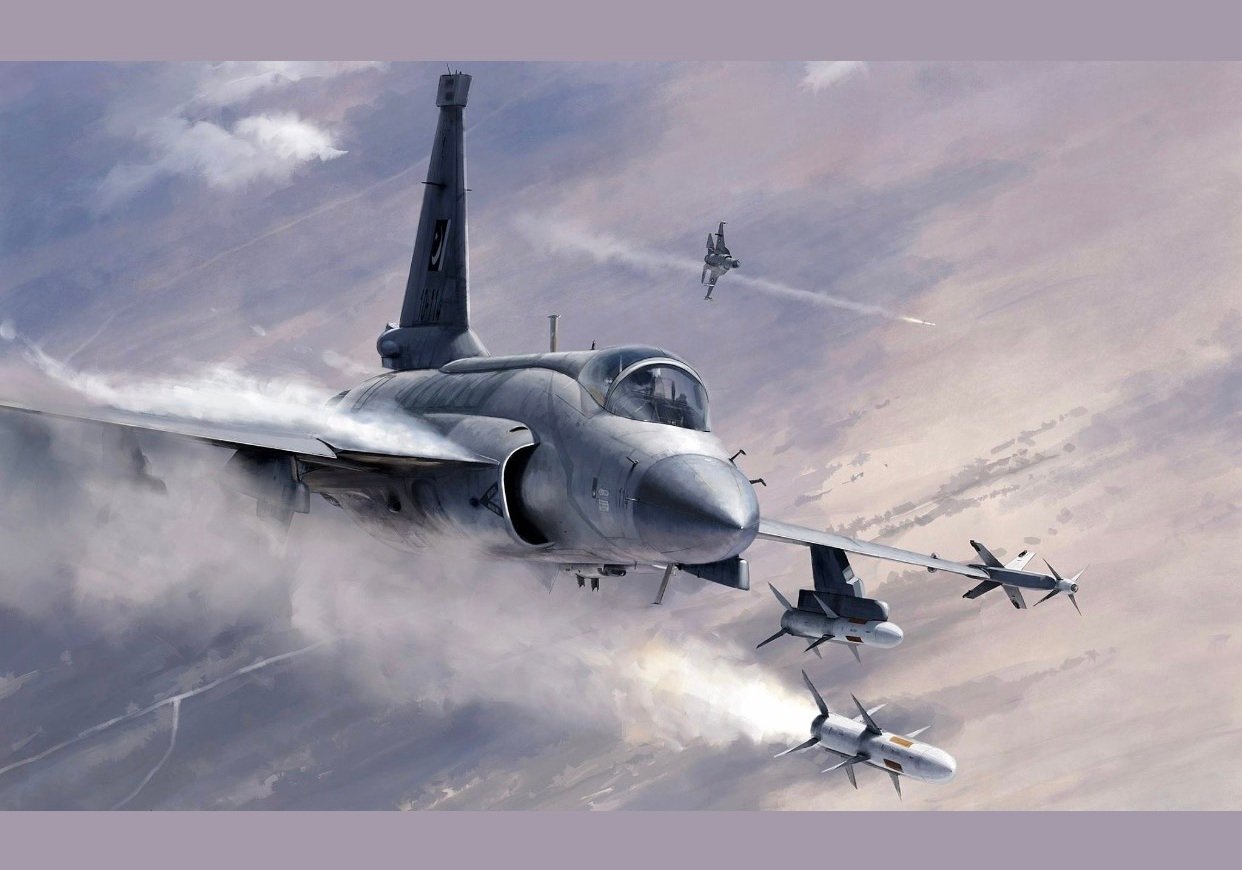
Few days live in a nation’s memory as vividly as 7 September in Pakistan. Marked as PAF Day, it recalls the defining feats of pilots who unsettled an adversary three times larger through discipline, valour and tactical brilliance, securing a place in aviation history. Their spirit of defiance, precision and triumph reflected an institution that built a culture of readiness despite limited means, a tradition that shone again in May 2025.
The summer of 1965 was demonstrative of the undying courage of the sentinels of our skies. Air Marshal Nur Khan inherited a potent, highly capable, and modernised Air Force from Air Marshal Asghar Khan in July 1965. His command embodied agility and foresight. In the beginning of the Pakistan-India 1965 war, he flew reconnaissance missions himself, proving authority in combat is earned through shared risk. Our pilots displayed resilience in daring raids deep in enemy territory. SL Sajjad Haider led eight Sabres with two escorts in a strike on Pathankot, destroying thirteen aircraft and crippling assets. Simultaneously, SL M M Alam led three Sabres against Adampur, pressing on despite aircraft availability delays and engaging Hunters with audacity. SL Sarfraz Ahmed Rafiqui embodied spirit, training and camaraderie. On his mission over Halwara his gun jammed yet he stayed in combat to keep tactical balance and protect his wingman. He refused to disengage, showing courage and devotion, embracing martyrdom.
For the PAF the number seven became a symbol of triumph as 7 September made an ace of SL M M Alam over Sargodha. In one engagement he downed five Hunters, three in thirty seconds, a feat that remains a world record and proof of skill and nerve. His unbeaten mark reflected an ecosystem that empowered pilots to act decisively. That same day No 14 Squadron earned the immortal title of Tail Choppers after destroying ten Canberra bombers and two Hunters at Kalaikunda, showing that even with limited means the PAF could strike decisive blows.
The PAF carried out daylight bombing missions against Indian radar at Amritsar, neutralising early warning and securing the skies. Daring interdictions struck enemy logistics. Squadron Leader Alauddin Ahmed raided Gurdaspur station, triggering massive explosions. Of 195 bombing missions, 149 were effective, producing heroes like 8-Pass
Charlie and innovations such as 1000-pound bombs with short-delay fuses for maximum impact. Ingenuity also saw C-130 transport aircraft adapted for bombing, flying thirteen missions. The PAF’s impact was so great that the IAF grounded 80 Vampires and 50 Ouragans, never flown again in the war.
Throughout the 1965 war the PAF flew close support for Army formations across Kasur, Lahore and Sialkot, slowing Indian advances towards Jassar, Lahore, and Sialkot. Pilots destroyed 19 tanks and over 100 vehicles, crippling logistics. During the entirety of the war, the IAF lost 71 aircraft against 19 PAF, proof of combat proficiency, maturity, and operational preparedness. Beyond the celebrated names, the ack-ack gunners, technicians, and radar controllers proved equally vital in contributing to PAF’s ecosystem of dedication, which led to its victory.
Equally important is not to forget PAF’s upper hand over the Western theatre under Air Marshal Abdur Rahim Khan during the 1971 aerial war. Despite the vast scope and intensity of the aerial battles, the PAF displayed remarkable readiness and resilience throughout the campaign. Our superiority was evident as the IAF lost 107 aircraft against the PAF’s 27, a striking measure of effectiveness and professionalism.
The focus on 7 September 1965 highlights seven as a fortunate date, echoed on 7 May 2025. What was achieved on the night of 6 / 7 May was a product of years of institutional, doctrinal, and technological transformation undertaken by ACM Zaheer Ahmed Baber Sidhu. His efforts to transform the PAF into a next-generation Air Force capable of undertaking multidomain operations culminated during Marka-e-Haq. In the war’s opening round, within one hour, eight Indian birds were shot down, grounding the IAF for two days. This was followed by Operation Bunyan-ul-Marsoos, which struck 34 Indian military and strategic installations, including 16 air bases signifying the massive quantum of the air campaign in six and a half hours. The speed and precision of the retaliation forced Indian leaders to turn to Washington for mediation under immense pressure.
Today we mark PAF Day and remember that the number seven is more than a date in the calendar. In 1965 and again in 2025 it showed PAF’s leadership, training and technology which have been vital in sustaining excellence. On this day we also honour our valiant pilots, and the maintenance and support crews who have ensured our readiness through aircraft servicing, inspections, and rapid damage repair. Particularly, PAF’s leadership since the inception of our nation has stood as a beacon of vision and courage, leading from the front, and shaping our force into a symbol of national pride. PAF has remained and will continue to be a formidable guardian of our skies!