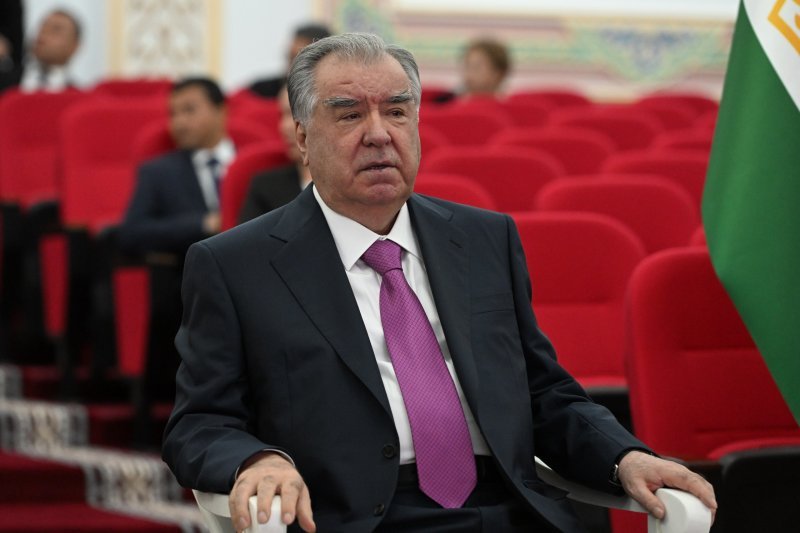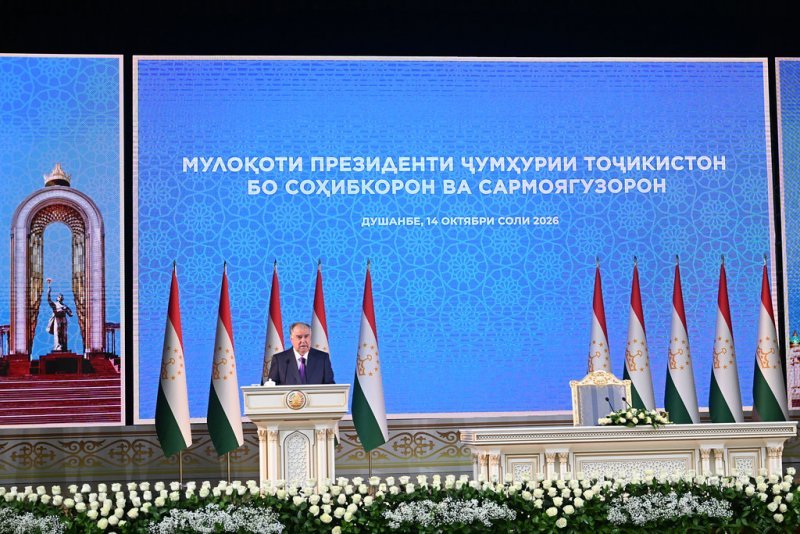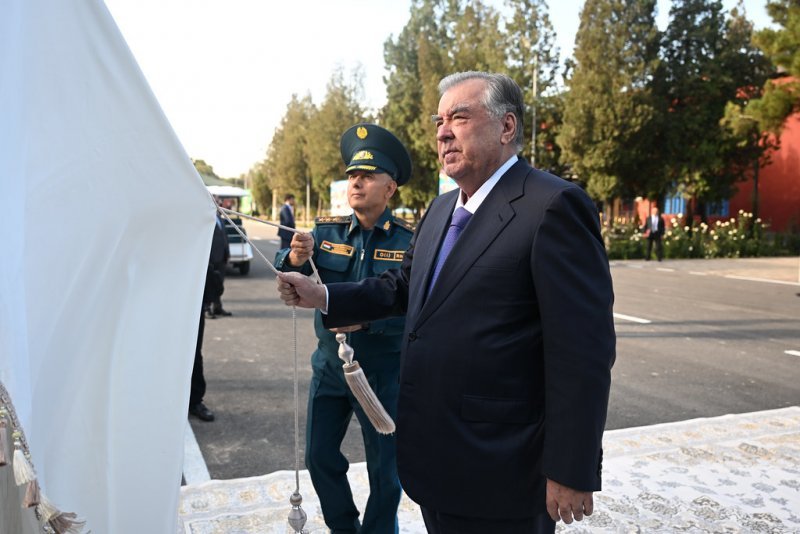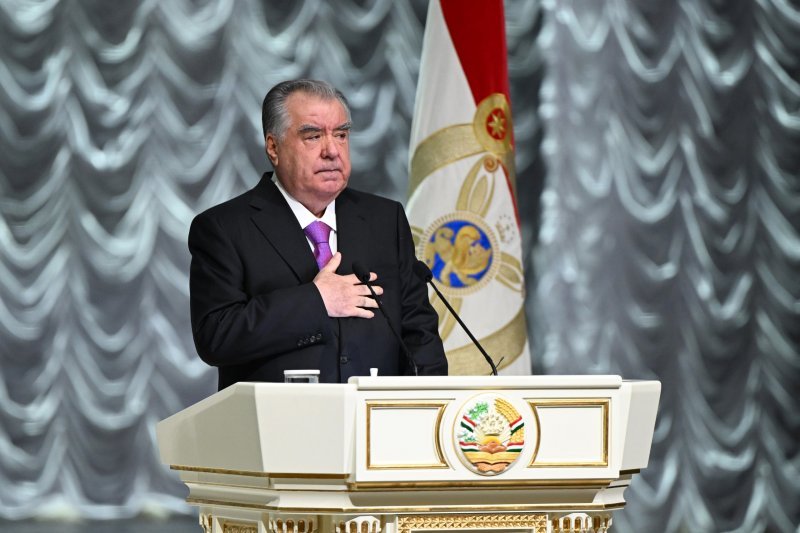
Dushanbe, September 9, 2026 – The Europe Today: President of Tajikistan and Leader of the Nation Emomali Rahmon attended and addressed a ceremonial gathering at the National Theatre in Dushanbe on Tuesday marking the 35th anniversary of the country’s State Independence.
In his address, President Rahmon extended congratulations to the people of Tajikistan, as well as Tajik compatriots and fellow Tajik speakers living abroad, on the occasion of the 35th anniversary of the country’s independence.
He described independence as the highest symbol of freedom, a clear expression of sovereignty and the existence of the Tajik nation, and a fundamental pillar of modern Tajik statehood. He said the achievement of 35 years of independence had demonstrated that the Tajik people, as a culture- and civilisation-building nation, possess ancient wisdom, strong will and considerable creative potential.
The President recalled the early years of Tajikistan’s independence as an exceptionally difficult and turbulent period in the country’s modern history. He said the imposed civil war of the early 1990s plunged the country into a deep political and economic crisis, while the threat of state collapse and national fragmentation became a stark reality.
President Rahmon highlighted the historic 16th Session of the Supreme Council, held in Khujand in 1992, as a decisive turning point for the country and the beginning of the construction of a new national state.
He said the documents and decisions adopted during the session created the legal and political foundations for restoring and developing Tajik statehood and charted the course for the country’s subsequent progress.
Recalling the challenges facing the country at that time, President Rahmon said peace and stability were essential for Tajikistan to establish its rightful place in the international community.
He stressed that, with reliance on national wisdom and the direct support of the people, Tajikistan had overcome severe historical challenges with a strong sense of responsibility toward its past and future.
The President also reflected on the efforts to end the civil war, facilitate the return of refugees and restore national unity, describing the Tajik peace experience as a unique example of peace-building recognised by the international community.
According to Rahmon, Tajikistan’s political, economic, social and cultural achievements, as well as its sustainable development, stem from State independence and the historic 16th Session of the Supreme Council.
He noted that the session saw the adoption of the National Flag as the first major symbol of Tajik statehood and laid the foundations for the development and adoption of other state symbols and, most importantly, the Constitution of Tajikistan.
The President also highlighted efforts to restore the constitutional order, establish law-enforcement institutions, build the country’s military structures and strengthen the rule of law.
He said that, alongside consolidating the legal and constitutional foundations of the state, Tajikistan had established its Armed Forces, Border Troops, other military structures and law-enforcement agencies under extremely challenging conditions and virtually from scratch.
These efforts, he said, created a reliable foundation for protecting national independence and territorial integrity, ensuring national security and maintaining political stability.
President Rahmon further outlined the adoption of state programmes and national strategies aimed at reducing poverty and strengthening the national economy. He said Tajikistan had identified the transition to market relations and the development of a competitive economy as important conditions for economic growth and the consolidation of State independence.
He noted that achieving energy independence, overcoming the country’s transport and communications isolation, ensuring food security and accelerating industrialisation had been identified as the country’s key national strategic goals.
The President praised the contribution of patriotic entrepreneurs and philanthropists to national development and expressed gratitude to citizens, businesspeople and benefactors for their contribution to the construction and improvement of Tajikistan.
Addressing Tajikistan’s growing international standing, Rahmon highlighted the country’s recognition as an independent state and pointed to 20 resolutions adopted by the United Nations General Assembly at Tajikistan’s initiative as an important manifestation of the international community’s recognition of the country’s contribution to global issues.
He particularly cited the UN General Assembly resolution declaring 2027–2036 the “Decade of Strengthening Peace for Future Generations” as further recognition of Tajikistan’s peace-building and unity-oriented efforts and its contribution to advancing the global peace agenda.
The President said that tens of thousands of social and industrial facilities had been constructed across Tajikistan during the years of independence, helping address many of the population’s needs and gradually improve living standards.
Rahmon described these achievements and the country’s development as the result of independence and freedom, peace and stability, national unity and the dedicated work of the Tajik people.
At the conclusion of his address, the Leader of the Nation expressed respect and gratitude to the people of Tajikistan for their patriotism, resilience, hard work and nation-building efforts. He also thanked those who had worked alongside him during the difficult period of state-building, including members of parliament, government officials, heads of committees and agencies, and representatives of other state institutions.
Following the President’s address, a grand concert programme was held as part of the celebrations marking the 35th anniversary of State Independence.
The programme featured musical performances dedicated to Tajikistan, the homeland, Dushanbe, independence, friendship and other achievements of the independence era.
Artists performed works featuring poetry by prominent Tajik poets, accompanied by music from renowned composers. The programme also included excerpts from world opera, including Georges Bizet’s “Carmen,” performed by leading artists.
Performances by dancers from the Lola, Gulrez, Zebo, Jahanoro, Parastu, Jilva, Bazmoro and Chaman dance ensembles, as well as the ballet group of the Sadriddin Ayni State Academic Opera and Ballet Theatre, added to the festive programme.