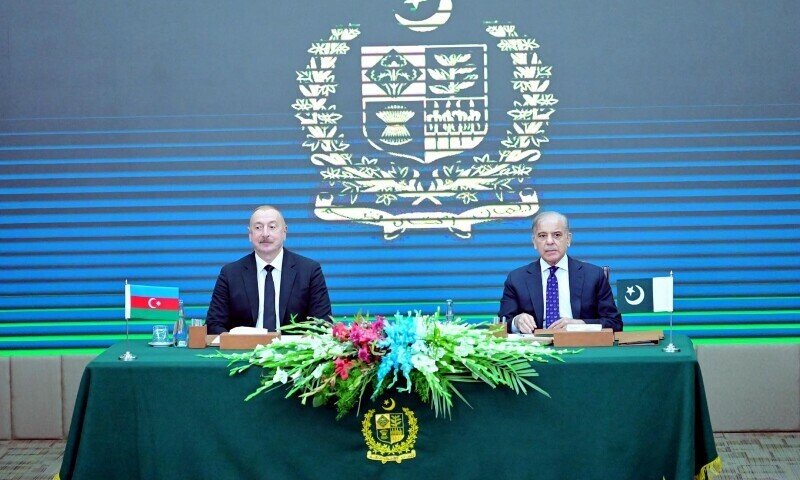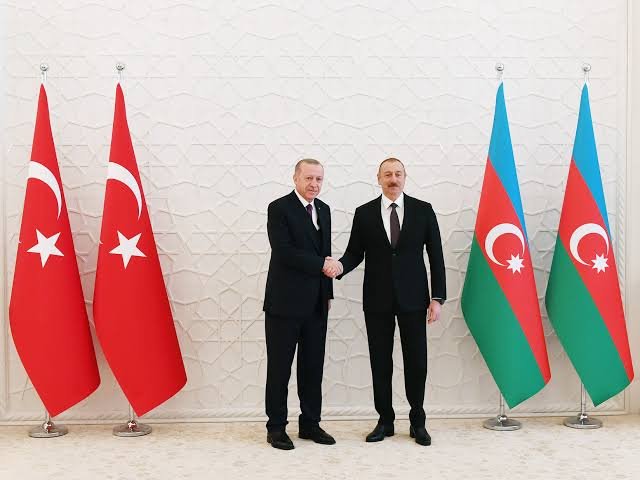
On the afternoon of 11 September, Azerbaijan’s energy minister Parviz Shahbazov and his Turkish counterpart Alparslan Bayraktar signed the protocol closing the fifth Azerbaijan–Türkiye Energy Forum in Baku. Six working groups had reported: hydrocarbons and petrochemicals, the electricity market, transmission and distribution, regulation, energy efficiency, mining. Bayraktar said the electricity interconnection running through Nakhchivan was approaching the implementation stage, and that the two countries were aiming at closer integration of their power systems. A four-country green electricity agreement involving Georgia and Bulgaria was floated as a possibility.
It was, in other words, an unusually technical day for a relationship more often described in the language of kinship.
That contrast is worth dwelling on, because the Türkiye–Azerbaijan alliance is entering a phase where its distinctive emotional register will matter less than its institutional plumbing — and where the widespread assumption that affinity explains the partnership’s success deserves closer inspection.
What the affinity thesis gets right
The cultural case is not window dressing. In an interview with AZERTAC published the same day as the forum, Ms. Derya Soysal, a regional analyst and a writer to The Gulf Observer and The Europe Today, argued that the relationship is exceptional precisely because shared Oghuz Turkic heritage, mutually intelligible languages and a common historical memory sit alongside concrete strategic objectives. Cultural identity, on her reading, reinforces diplomatic trust rather than undermining it — an observation that runs against the grain of a great deal of international relations theory, which tends to treat ethnic and linguistic affinity as a source of irredentist friction rather than of stability.
The historical record supports part of the claim. Türkiye was the first state to recognise Azerbaijan’s restored independence in 1991, at a moment when Baku had few friends and no security guarantees. Heydar Aliyev’s formulation of “one nation, two states” gave the relationship a doctrine that has outlasted its author, and each subsequent government in both capitals has translated it into practical cooperation rather than allowing it to calcify into ceremony.
The infrastructure record is more concrete still. Türkiye has taken delivery of some 130 billion cubic metres of Azerbaijani gas over the life of the partnership, roughly 40 bcm of it through the Trans-Anatolian Pipeline. In the first eight months of 2026, Azerbaijan supplied 6.2 bcm to the Turkish market and moved a further 7.5 bcm across Turkish territory onward to Europe. Baku–Tbilisi–Ceyhan, the Southern Gas Corridor and the Baku–Tbilisi–Kars railway have jointly rewired the region’s east–west logistics, with Georgia and European consumers as beneficiaries rather than bystanders.
And the Shusha Declaration of June 2021 converted strategic partnership into written allied relations — with the venue chosen to make a political point that no communiqué could have made on its own.
Where the thesis needs qualification
Affinity is nonetheless a poor predictor of alliance behaviour on its own. The world contains a good many pairs of states with shared language, faith and lineage whose relations are cold or worse. What distinguishes this case is that cultural closeness has been consistently matched by a convergence of interests: Ankara needed supply diversification and a land bridge to Central Asia; Baku needed a security patron, a route to market and an ally with NATO standing. Remove either half and the relationship would look ordinary.
There are also asymmetries that the fraternal framing tends to smooth over. Türkiye is a NATO member with obligations Azerbaijan does not share; Azerbaijan maintains a formally non-aligned posture and a working relationship with Moscow that Ankara’s own has often diverged from. The two capitals have not always read Iran, Israel or Russia identically. Some Azerbaijani commentators have long been wary that “one nation, two states” risks being heard abroad as a statement about hierarchy rather than partnership — a sensitivity Baku manages by insisting, as Soysal also does, that sovereignty is fully preserved on both sides.
Ankara’s parallel normalisation with Yerevan is instructive here, and cuts the other way. Türkiye completed the bureaucratic groundwork for direct trade with Armenia in May 2026, while the land border remains closed pending further technical work. That process has advanced in step with Azerbaijan’s own settlement with Armenia rather than ahead of it. Critics read this as Baku holding a veto; the more defensible reading is that the two governments have coordinated a sequence in which neither is exposed — which is what alliances are supposed to do.
The real test is regulatory
Electricity is where the next decade will be decided, and it is a harder proposition than gas.
Selling molecules requires a pipeline and a contract. Integrating power systems requires synchronised grid codes, harmonised market rules, agreed dispatch and balancing arrangements, cross-border settlement mechanisms and mutual regulatory recognition. The Nakhchivan interconnection, the proposed Azerbaijan–Georgia–Türkiye–Bulgaria green corridor and the wider Caspian–Black Sea–Europe transmission concept all depend on institutional convergence rather than on political goodwill.
This is why the forum’s working-group architecture matters more than its declarations. A regulation working group is not a photo opportunity; it is the mechanism through which two different legal systems learn to clear electricity across a border. If the alliance can deliver that, it will have demonstrated something more valuable than solidarity — the capacity to build shared institutions, which is the scarcer commodity in contemporary international politics.
The external drivers are pushing in the same direction. Bayraktar linked the value of the partnership explicitly to the current disruption around the Strait of Hormuz. Europe continues to look for supply it can count on. Türkiye will host COP31, with Azerbaijan offering the experience of its own COP29 presidency. Data centres and artificial intelligence are generating electricity demand forecasts that neither country can meet in isolation. Each of these makes grid integration more urgent — and none of them can be resolved by sentiment.
The exportable lesson
Soysal’s broader argument is that other regions could learn from this model, and for audiences in the Gulf, Europe and South Asia there is a genuine lesson in it. But it is a narrower one than “brotherhood works.”
The transferable insight is that cultural affinity is an accelerant, not an engine. It lowers the cost of trust, shortens negotiations and gives leaders political cover for concessions their publics might otherwise resist. What it cannot do is generate aligned interests where none exist, or substitute for the unglamorous institutional work — treaties, commissions, working groups, harmonised regulation — that turns warmth into durability.
Ankara and Baku have done both. That combination, rather than the fraternal rhetoric that usually attracts the headlines, is what other capitals would actually need to replicate.
The protocol signed in Baku on Thursday will not make news for long. Whether it produces a working interconnection through Nakhchivan is the measure that matters.