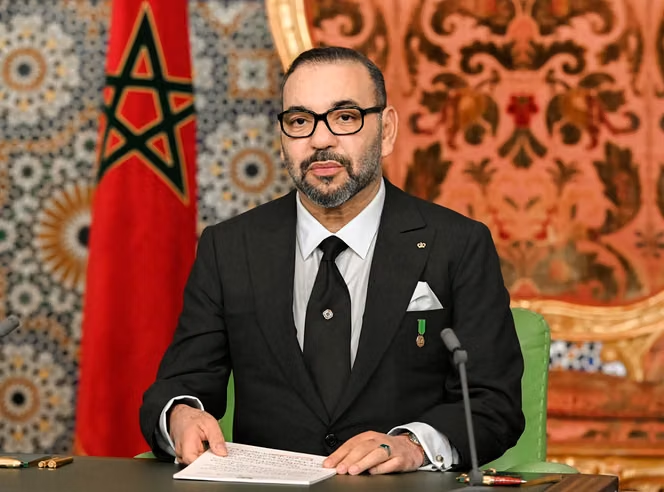
Rabat, October 10, 2026 – The Europe Today: King Mohammed VI of Morocco has called for a new generation of major national strategies focused on water, energy and food security, industrial development, the digital economy and artificial intelligence, stressing the need to balance economic growth with greater social and territorial equity.
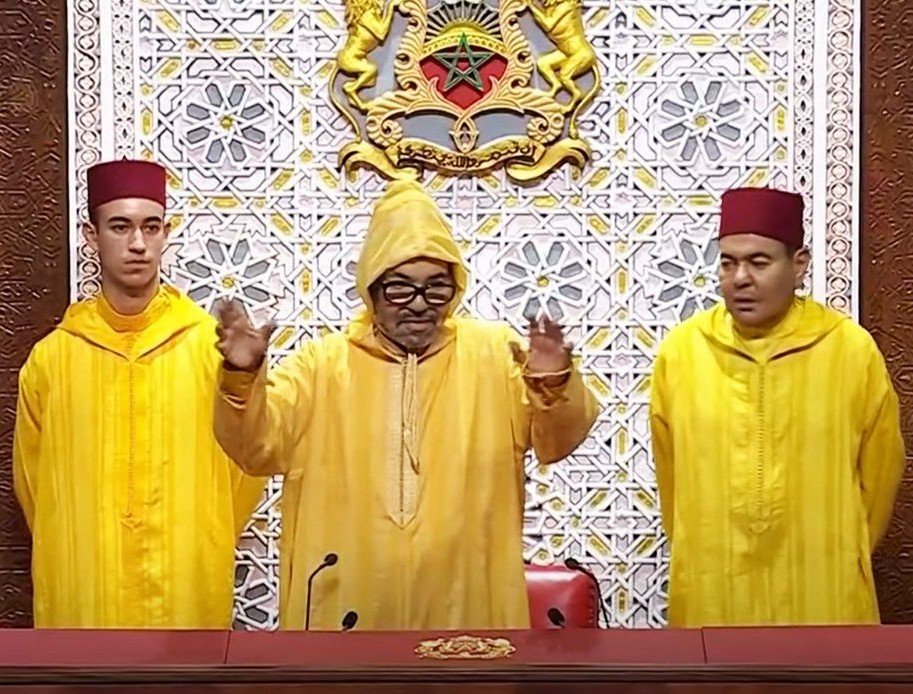
The King made the remarks on Friday while addressing Parliament at the opening of the first session of the 12th legislative year, accompanied by Crown Prince Moulay El Hassan and Prince Moulay Rachid.
Congratulating members of the House of Representatives on the confidence placed in them by voters, King Mohammed VI said the new legislative and governmental term should mark a turning point in Morocco’s ambition to emerge as a rising and reliable economic power while ensuring more equitable development across society and regions.
The monarch highlighted Morocco’s historical, religious and cultural identity, as well as its diplomatic, economic, social and developmental achievements. He emphasised that national pride should translate into a sense of responsibility and a commitment to serving the country.
Against the backdrop of rapidly changing global geopolitical and economic conditions, the King called for accelerating infrastructure projects and developing strategic reserves to ensure the availability of essential commodities.
He also urged the private sector to play a more active role in the country’s economic transformation by increasing investment, promoting innovation, expanding exports and creating employment opportunities.
Highlighting the importance of young people, King Mohammed VI stressed that youth concerns must remain central to public policies and governance. He called for a comprehensive approach that ensures equal opportunities through education, skills development and economic integration, enabling young people to pursue a future based on freedom, dignity and stability.
The monarch identified effective implementation of development programmes at the regional and local levels as a major challenge for the coming period. He emphasised that improving public services, encouraging productive investment and advancing integrated development were closely linked to regionalisation and the decentralisation of administrative responsibilities.
Expressing concern over delays in implementing administrative deconcentration, the King called for the prompt transfer of powers, human resources and financial resources from central government to regional and provincial authorities.
He also stressed the need to clarify the responsibilities of regional institutions and provide them with adequate resources. Improved coordination between the central government and regional administrations, he said, was essential to enable local authorities to make decisions and implement projects more effectively.
Addressing migration, King Mohammed VI said Morocco had established itself internationally as a responsible and reliable partner committed to fulfilling its obligations. He noted that the country’s balanced approach to managing migration had produced tangible results but argued that the existing international cooperation framework required revision.
Referring specifically to relations with Spain, the monarch acknowledged progress in bilateral cooperation, including efforts to combat irregular migration, while pointing to legal and judicial challenges affecting the repatriation of minors and individuals whose asylum claims were considered unfounded.
He also criticised what he described as the irresponsible exploitation of migration issues by certain political and media circles, insisting that Morocco’s partnership with its international counterparts was a sovereign choice and would not be subject to pressure, threats or blackmail.
In this context, King Mohammed VI announced that Morocco would present its partners with a document outlining a practical strategic vision for a renewed approach to cooperation, aimed at promoting shared development, economic competitiveness and regional stability.
Concluding his address, the King reminded parliamentarians that their mandates represented both a political commitment and a moral responsibility towards citizens. He urged them to fulfil their national duties in accordance with the public trust placed in them.
The royal address outlined Morocco’s priorities for the new legislative term, with particular emphasis on economic modernisation, regional development, youth empowerment, administrative reform, strategic security and the restructuring of international cooperation on migration.