Rabat, October 20, 2026 – The Europe Today: Morocco’s Head of Government Fatima Zahra El Mansouri has pledged to strengthen women’s empowerment, expand their participation in decision-making, promote economic independence and enhance protection against discrimination and violence under the government’s programme for 2026–2031.
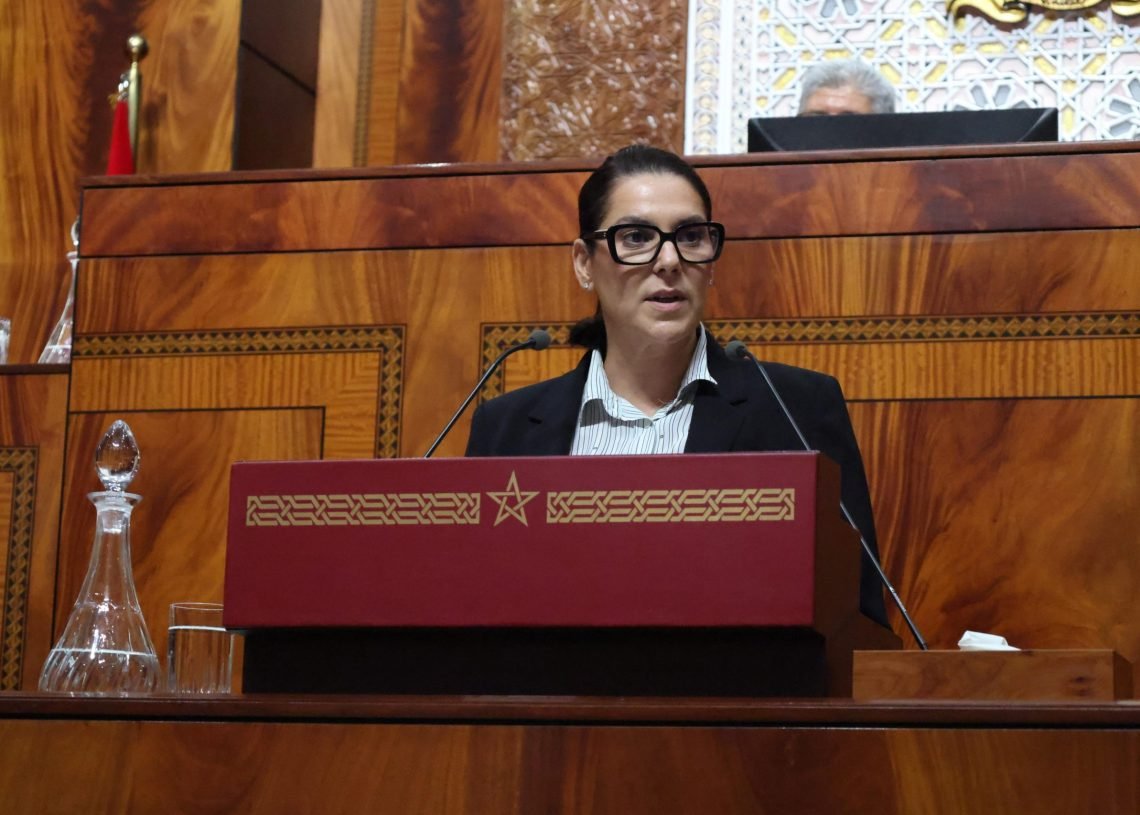
Presenting the five-year government programme before both chambers of Parliament on Monday, El Mansouri outlined a series of measures aimed at advancing gender equality through institutional reforms, employment opportunities, social protection, education and improved access to essential public services.
She reaffirmed the government’s commitment to the constitutional principle of parity and pledged to increase women’s representation in decision-making positions across public institutions. The programme also envisages stronger support for women entrepreneurs, access to decent employment and measures to promote financial autonomy.
At the beginning of her address, El Mansouri expressed gratitude to King Mohammed VI for appointing her to lead the government, describing the appointment as recognition of Moroccan women.
The programme places women’s empowerment within a broader agenda of democratic governance, the rule of law, institutional accountability and the reduction of social inequalities.
The government has also pledged to strengthen the institutions responsible for protecting human rights, equality and parity. However, the programme does not specify representation quotas or implementation deadlines for every proposed measure, making effective implementation and monitoring important to achieving its objectives.
Economic Independence and Equal Opportunities
Women’s economic empowerment constitutes a key component of the government’s agenda. El Mansouri pledged to support women’s entrepreneurship, facilitate access to employment and training, and promote equal opportunities in economic and public life.
These measures are linked to the government’s wider employment strategy, which includes support for small businesses, vocational training and improved transitions from education to the labour market.
The programme identifies the exclusion of young people from education, employment and training as a significant challenge. It cites approximately 2.9 million people aged 15 to 29 outside these systems and an unemployment rate of 29.2% among those aged 15 to 24.
The government intends to improve women’s access to education, healthcare and social protection, particularly in rural areas and among vulnerable communities.
The proposed measures recognise that financial independence depends not only on employment opportunities but also on access to essential services, professional training and social protection that enable women to establish businesses, participate in the labour market and maintain stable incomes.
Stronger Protection Against Violence and Discrimination
El Mansouri also pledged to intensify efforts to combat violence against women and improve access to protection and support services.
The commitment forms part of a broader programme to strengthen human rights, civil liberties and the rule of law, including the integration of human rights principles into public policies.
The government has identified women, children, older people and persons with disabilities as groups requiring particular protection and support.
Effective implementation will require accessible support services, enforcement of legal safeguards and measures to ensure equal treatment in public and professional life.
Government Plans to Double Widows’ Pensions
Among the programme’s specific social protection commitments is a proposed increase in widows’ pensions.
The government plans to raise the pension paid to eligible widows to 100% of the main pension of their deceased husbands, compared with the current rate of 50%, while safeguarding the rights of orphans and other beneficiaries.
The programme also envisages a gradual increase in the minimum main pension to MAD 3,000 per month across different pension systems.
The proposed reforms form part of a broader effort to expand social protection, improve the sustainability of pension systems and extend coverage to people without adequate pension entitlements.
For widows dependent on survivor benefits, the proposed increase could improve financial security and help reduce vulnerability to poverty. Its ultimate impact will depend on eligibility criteria, funding arrangements and the treatment of other beneficiaries during implementation.
Family Reform and Social Inclusion
The government has also pledged to continue reforming the Family Code, known as the Moudawana, in accordance with the guidance of King Mohammed VI, in his capacity as Commander of the Faithful.
The programme envisages integrated policies for children, young people and older people, alongside stronger protection for persons with disabilities and support for vulnerable households.
These initiatives link women’s rights and family reform with the government’s wider social policy agenda, which seeks to promote equality, strengthen social cohesion and expand access to opportunities.
Economic Growth and Social Development Targets
El Mansouri’s programme outlines broader economic and social objectives intended to support the government’s commitments throughout the 2026–2031 legislative term.
The government aims to achieve average annual economic growth of 5% between 2027 and 2031, keep inflation at around 2% and maintain the budget deficit at or below 3% of gross domestic product during the mandate.
It has also pledged to increase monthly direct social assistance from MAD 500 to MAD 1,000 by the end of its term, alongside measures to strengthen household purchasing power.
These economic targets provide the financial context for the government’s plans to expand social protection, improve public services and increase women’s participation in economic activity.
The programme also recognises Parliament’s legislative, oversight and evaluation responsibilities, providing a framework for lawmakers to scrutinise implementation and assess progress towards the stated objectives.
For Moroccan women, the key measure of progress will be whether the commitments translate into greater representation in decision-making, improved access to decent employment, stronger protection against violence and discrimination, and enhanced financial security.
El Mansouri’s programme places women’s empowerment among the government’s stated priorities, with implementation expected to determine how effectively these commitments expand rights and opportunities across Morocco, particularly in rural communities and among economically vulnerable households.