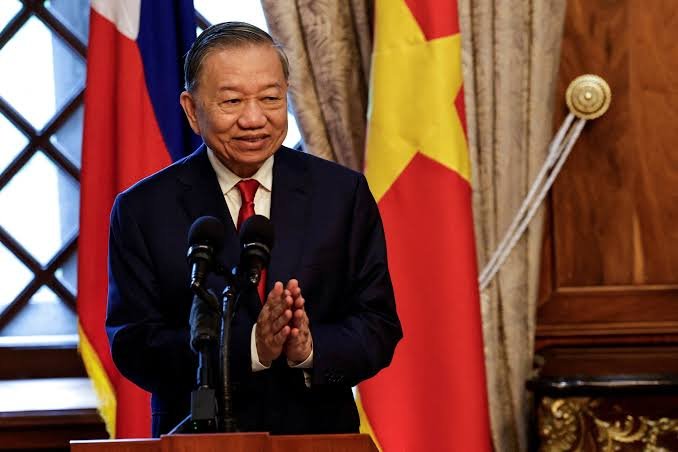
Ho Chi Minh City, October 29, 2026 – The Europe Today: Party General Secretary and State President To Lam has called on Ho Chi Minh City to strengthen economic forecasting, develop response scenarios for 2027 and pursue double-digit economic growth while maintaining a long-term focus on productivity, technological advancement, human resources and quality of life.
He made the remarks during a working session with the Standing Board of the Ho Chi Minh City Party Committee on Wednesday to review implementation of the Resolution of the 14th National Party Congress, strategic resolutions of the Politburo, the city’s socio-economic performance and progress towards its 2026 growth targets.
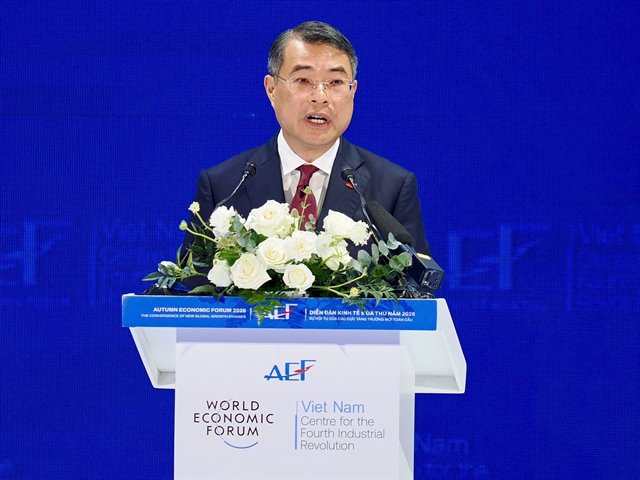
Le Quoc Phong, Permanent Deputy Secretary of the municipal Party Committee and a member of the Party Central Committee, reported that the city’s economy continued to accelerate, with gross regional domestic product (GRDP) growing by 9.06 per cent during the first nine months of 2026 and 9.86 per cent in the third quarter.
The city is targeting growth of 12.3 per cent in the fourth quarter and 10.2 per cent for the full year.
Ho Chi Minh City has also continued expanding social housing, creating employment opportunities and implementing vocational training, unemployment insurance and preferential credit policies to support livelihoods. Authorities have intensified efforts to address traffic congestion, flooding and environmental pollution, maintain public order and combat drug-related crime.
Strengthening economic resilience and investment
To Lam noted that rapid global changes, including unexpected developments in international markets, were affecting the city through declining orders and investment flows, as well as rising business costs. At the same time, artificial intelligence, automation and new environmental standards were transforming the foundations of economic competitiveness.
He called on the municipal Party Committee to strengthen local initiative, improve implementation capacity and make more effective use of powers granted under the Law on Urban Development to simplify administrative procedures and reduce costs for residents and businesses.
To achieve the 2026 economic targets and prepare for 2027, the city should concentrate resources on projects and markets capable of delivering tangible results during the remaining months of the year, he said.
Regarding public investment, To Lam stressed the need for close monitoring of project progress, construction material supplies and disbursements. Capital should be reallocated from delayed projects to those capable of delivering results.
He also called for completing administrative procedures, site clearance and funding arrangements for priority projects planned for 2027, ensuring that projects are fully prepared before capital is allocated.
The city was urged to maintain substantive dialogue with businesses, resolve operational bottlenecks and provide practical support for small and medium-sized enterprises (SMEs) and household businesses. Projects stalled by legal obstacles should receive timely attention, while those delayed by investors lacking the capacity to implement them should be addressed decisively.
On foreign direct investment, he emphasised that the city should focus not only on attracting capital but also on project implementation, workforce training, technology transfer and the development of domestic suppliers.
The proposed international financial centre should primarily help mobilise capital for Vietnam, particularly for infrastructure, production, innovation and SMEs.
Urban planning and transport infrastructure
To Lam called for reorganising the city’s development space, prioritising infrastructure connectivity and reviewing urban planning following the administrative merger.
He said the city should clearly define areas designated for services, finance, industry and logistics while removing overlapping or unsuitable planning components.
He also urged faster development of urban railways and their integration with bus services and pedestrian infrastructure. Transit-oriented development around railway stations should be promoted to improve accessibility and encourage more efficient urban growth.
Flood prevention, he said, should combine technical infrastructure with the protection of water-retention areas. Greater coordination among neighbouring localities was also needed in transport, environmental management and supply chains, supported by dedicated mechanisms for interregional cooperation.
Science, technology and workforce development
The Vietnamese leader stressed that science and technology should directly contribute to higher productivity and stronger business capabilities.
Universities, research institutes, businesses and experts should work together to address practical challenges in manufacturing, logistics, healthcare, finance and urban management. Research priorities should reflect the city’s needs and areas of competitive advantage.
SMEs should receive practical assistance in process improvement, quality management, energy efficiency, data utilisation and compliance with customer standards, enabling them to adopt and effectively operate new technologies.
He also called for workforce development programmes that anticipate future labour market requirements, with reskilling and upskilling initiatives tailored to business needs. Experts should be recruited and deployed according to their capabilities and contributions.
Affordable housing, healthcare and education
To Lam emphasised that economic development must be accompanied by improvements in living conditions and access to essential public services.
Affordable housing for workers and low-income earners should be prioritised, particularly rental accommodation connected to employment centres, public transport and essential services.
He called for stronger primary healthcare services and easier referrals to higher-level medical facilities.
The city must also ensure sufficient classrooms and teaching staff in rapidly growing residential areas. Every area with school-age children should have adequate educational facilities, and no child should be denied access to schooling because of insufficient capacity, he stressed.
Authorities were further urged to monitor and support workers at risk of losing their jobs, particularly older employees and those with limited skills, while paying special attention to young people who are not in employment, education or training.
To Lam also called for continued action to address traffic congestion, flooding, pollution and food safety concerns. Street-based economic activities, he said, should be recognised as an important source of livelihoods and managed through appropriate support and regulation.
Early preparations for Lunar New Year 2027
The city was instructed to begin preparations for the 2027 Lunar New Year well in advance, ensuring adequate support for workers, families receiving social assistance, low-income households, unemployed people and those facing unexpected hardship.
Authorities must ensure sufficient supplies, stable prices, food safety and public order so that residents can celebrate the holiday safely and comfortably.
Firm action against corruption and misconduct
To Lam called for firm action against corruption, wastefulness and misconduct, particularly in land management, investment, bidding, procurement and public asset management.
He stressed that individuals who abuse their positions for personal gain, harass businesses or evade responsibility in ways that delay projects must face strict accountability.
Following the meeting, the Standing Board of the Ho Chi Minh City Party Committee is expected to translate the directives into specific tasks, establish clear priorities for the remainder of 2026 and strengthen preparations for the city’s economic and social development agenda in 2027.