HCM City, April 3, 2026 – The Europe Today: Ho Chi Minh City is set to break ground this month on two major infrastructure projects valued at over VNĐ97 trillion (approximately $3.7 billion), aimed at strengthening connectivity to Long Thanh International Airport and enhancing investment prospects in southern Vietnam.
The projects — a new metro line and a key expressway — are scheduled to commence around the Reunification Day, marking a significant step in the city’s long-term urban transport strategy.
The 6-kilometre Bến Thành–Thủ Thiêm metro line will be developed under a public-private partnership model, linking the central business district with the rapidly developing Thu Thiem urban area, envisioned as a future financial hub across the Sài Gòn River.
Meanwhile, the 42-kilometre Hồ Tràm–Long Thành expressway will establish a direct transport corridor between the upcoming airport and key coastal tourism destinations, while also improving access to ports, industrial zones, and satellite cities.
Integrated transport vision
The new projects form part of a broader initiative to build an integrated urban transport network, with rail infrastructure at its core. Under a recently approved plan, Ho Chi Minh City aims to complete six metro and urban railway lines spanning a total of 187 kilometres by 2030.
The plan follows a National Assembly resolution designed to accelerate project approvals and decentralise urban rail development, enabling faster implementation of large-scale infrastructure.
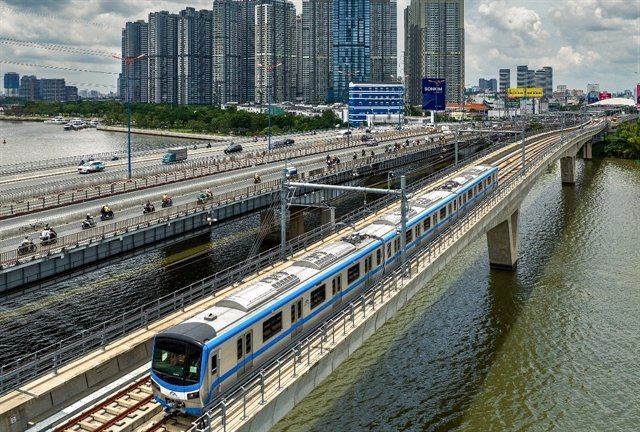
The city’s first metro line — the 19.7-kilometre Bến Thành–Suối Tiên route — became operational in late 2024 and currently serves over 55,000 passengers daily, reflecting growing demand for mass transit solutions.
Construction of Metro Line No. 2, connecting Bến Thành to Tham Lương, is expected to begin soon and will be the first project implemented under the new policy framework.
Future expansions include a rail link between Thủ Thiêm and Long Thành airport, an extension of the existing metro network to Bình Dương province, Metro Line No. 6 connecting Tân Sơn Nhất airport to Phú Hữu, and a route to Cần Giờ.
Urban rail is projected to account for 20–30 percent of total travel demand by 2030, rising to as much as 60 percent by 2045 as the network expands to approximately 700 kilometres.
Investment and economic impact
Improved transport connectivity — particularly links to Long Thành International Airport — is expected to stimulate real estate development and attract increased foreign investment, especially in industrial and logistics sectors tied to global supply chains.
Ho Chi Minh City recorded nearly $2.9 billion in foreign direct investment in the first quarter of 2026, highlighting sustained investor confidence despite global economic uncertainties.
Authorities plan to finance the projects through a combination of public investment and private capital, while promoting transit-oriented development to maximise land value along key transport corridors.