Hanoi, May 8, 2026 – The Europe Today: Hanoi is set to receive extensive new powers over finance, urban development and public administration under a landmark Capital Law approved by Vietnam’s 16th National Assembly on April 23, marking a major step toward accelerating the capital’s sustainable growth and governance reforms.
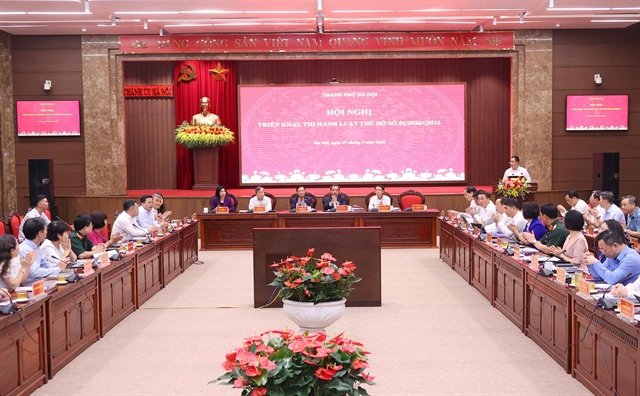
The new legislation, discussed during a high-level implementation conference on Thursday attended by National Assembly Vice Chairman Nguyễn Khắc Định, grants Hà Nội broader authority than other cities and provinces in Vietnam, enabling the capital to adopt policies tailored specifically to its development priorities.
Speaking at the conference, Deputy Minister of Justice Nguyễn Thị Thanh Tú described the law as a breakthrough in governance, strategic planning and urban development. She noted that the legislation provides the city with greater autonomy in administration and management while encouraging the adoption of innovative economic models suited to modern development needs.
Under the new framework, Hà Nội will be empowered to strengthen regional integration with neighbouring provinces and cities and expand planning regulations related to underground infrastructure and low-altitude airspace development. Officials said additional provisions governing higher-altitude development are expected in the future.
The law also introduces significant financial autonomy for the capital. Hà Nội will retain 100 percent of bonuses earned from exceeding annual budget targets and will be authorised to issue bonds, including green bonds and project-specific financial instruments. In addition, the city will be allowed to approve major investment projects that previously required clearance from the National Assembly or the Prime Minister.
Authorities said the legislation further expands opportunities for revenue generation by permitting selected public infrastructure facilities to be leased or franchised for reinvestment purposes.
To strengthen the public sector workforce, the law enables Hà Nội to offer competitive salaries, housing support and improved training opportunities to civil servants while also recruiting external experts to advise on complex development matters. Housing policy benefits will apply to both municipal and central government employees working in the capital.
Among the most notable provisions is the introduction of a transit-oriented development (TOD) framework alongside a controlled regulatory sandbox mechanism, allowing the city to test innovative governance and urban management models before broader implementation.
Chairman of the Hà Nội People’s Committee Vũ Đại Thắng said city authorities acted immediately after the law’s passage by issuing implementation directives and making enforcement a top political priority.
He stressed the importance of accountability and transparency throughout the implementation process, stating that responsibilities, timelines and deliverables must be clearly defined for every department and agency.
Vũ Đại Thắng warned that officials who delay implementation or avoid responsibility would face strict consequences, adding that the Capital Law should be viewed alongside Hà Nội’s 100-year master plan and the Politburo’s Resolution 02 as part of a unified framework for the capital’s long-term development.
Officials also highlighted the importance of regional coordination to ensure consistent implementation of inter-regional connectivity provisions. The city plans to launch a broad public awareness campaign using print, broadcast and digital media platforms, including infographics, short videos and podcasts, to familiarise residents and government officials with the new legislation.