Jakarta, April 18, 2026 – The Europe Today: Indonesia has reiterated its commitment to advancing the values of the Bandung Conference, emphasizing their continued relevance in strengthening solidarity among developing nations and addressing global conflicts.
Speaking during a press briefing on Thursday, Foreign Ministry Spokesperson Vahd Nabyl A. Mulachela stated that the Bandung Principles remain central to Indonesia’s diplomatic approach. He underscored that these values are upheld not merely in ceremonial observances but are actively reflected in Indonesia’s international missions and messaging.
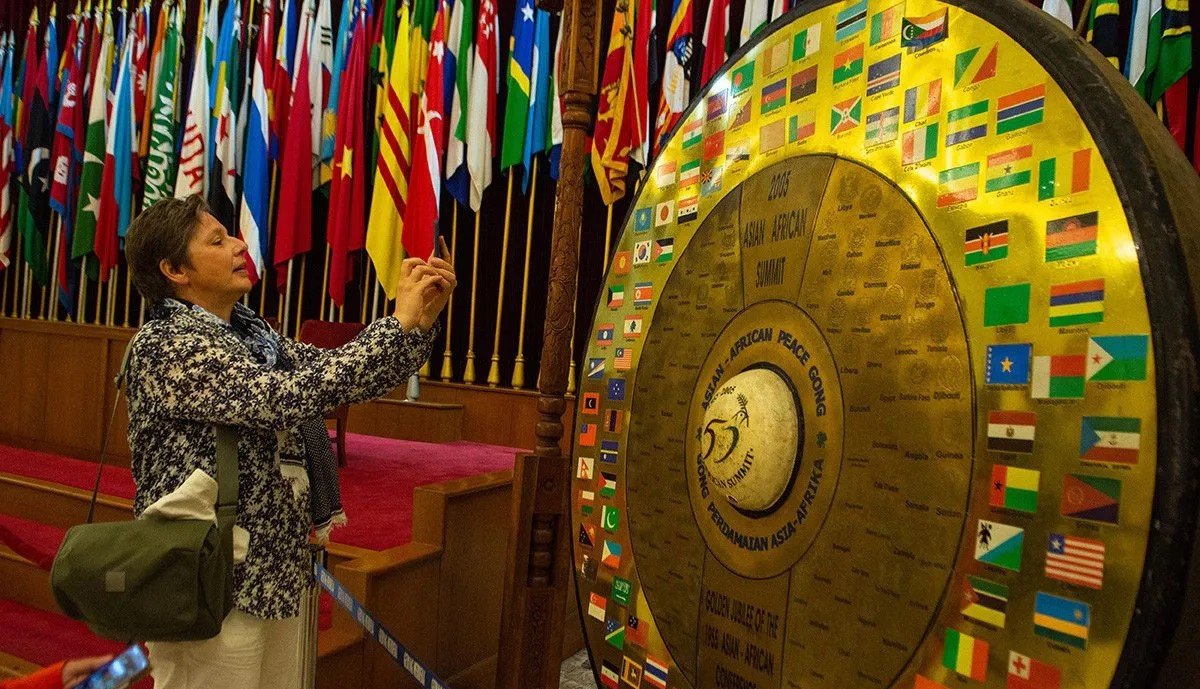
The remarks come as the developing world marks the 71st anniversary of the landmark conference, also known as the Asian-African Conference, held in Bandung, West Java, from April 18 to 24, 1955. The historic gathering laid the foundation for a unified stance against colonialism and promoted cooperation among newly independent nations.
Mulachela noted that Indonesia continues to prioritize the spirit of the Bandung Principles in various global forums, particularly in advocating for world peace amid ongoing international tensions. “We will not let go of this momentum since it is relevant to the challenges we are facing right now,” he said.
The Bandung Principles consist of ten fundamental tenets, including respect for human rights, sovereignty, and territorial integrity; non-interference in internal affairs; peaceful resolution of disputes; and the promotion of mutual cooperation and justice in international relations.
Although initially attended by only 29 countries, the conference’s principles later gained widespread global recognition, particularly among nations in Asia, Africa, and Latin America. The conference also played a pivotal role in the formation of the Non-Aligned Movement in 1961, spearheaded by countries including Indonesia, Egypt, Ghana, India, and Yugoslavia.
Indonesia’s continued advocacy of the Bandung Principles highlights its enduring commitment to multilateralism, equitable global governance, and peaceful coexistence in an increasingly complex geopolitical landscape.