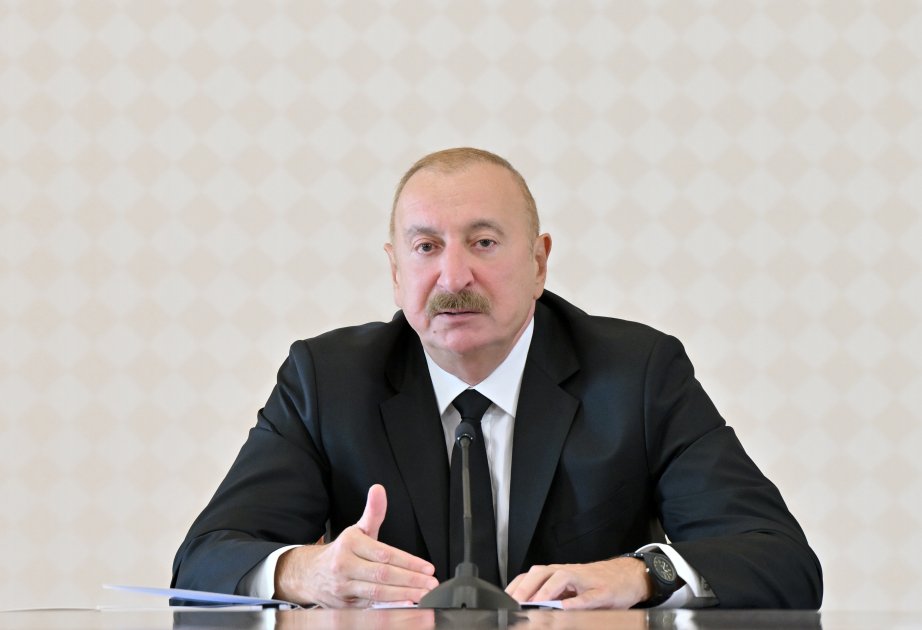
Turkic States Organisation becomes a key geopolitical organization in Eurasia. The recent informal summit of the Organisation of Turkic States in the ancient Kazakh city of Turkistan underlined the growing geopolitical relevance of the Turkic world, and of the entire Eurasian region, in general. The summit was not just a symbolic event; it was a powerful expression of the growing significance of the Organisation of Turkic States as a hub that connects the South Caucasus and Central Asia via transport connections, energy cooperation, digitalisation and joint regional policies. While the world order seems to be breaking apart and the traditional supply chain is under increasing pressure because of geopolitical tensions, regional organisations are increasingly becoming influential in international politics and economics. In this background, the OTS has transformed from a cultural-centric partnership to a multi-dimensional Eurasian platform, with an increasing strategic dimension. One of the key factors in this process has been the role played by the active presence of Azerbaijan under the leadership of President Ilham Aliyev.
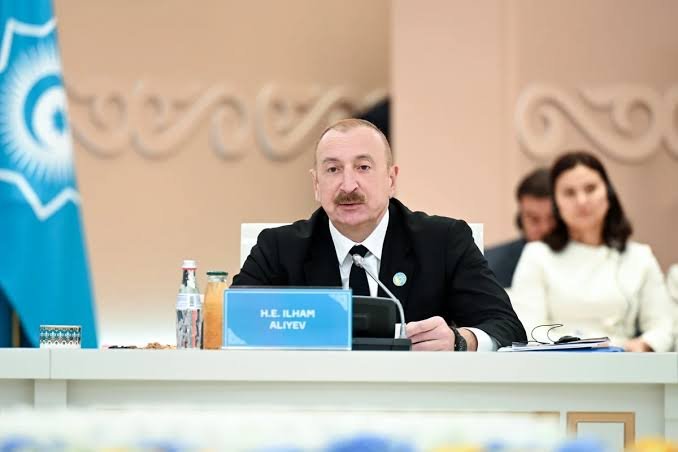
His recent visit to Kazakhstan was his eighth in five years, whereas the President of Kazakhstan Kassym-Jomart Tokayev has visited Azerbaijan six times in five years. The exchanges indicate the level of strategic cooperation between Baku and Astana, which four years ago they raised the bilateral relations to allied partnership level.
Turkistan’s symbolism also holds a special meaning. After the liberation of Azerbaijani territories in 2020, the city of Shusha signed its first sister-city agreement with Turkistan, thus reinforcing the narrative of shared historical identity and civilisational continuity among the Turkic peoples. But the OTS holds more than a historical or cultural importance today. In his repeated statements, President Ilham Aliyev has emphasized that the Turkic world should be one of the influential points of the geopolitical landscape of the 21st century. It will not be possible to achieve such a vision without political unity and the interconnection of transport, energy, digital and economic networks over the wider Eurasian region. This aspiration is increasingly becoming an international geopolitical and economic reality. The Middle Corridor, which runs from China and Central Asia to Europe via the Caspian Sea, the South Caucasus and Türkiye, is one of the most important transportation corridors in Eurasia today as global trade tensions change.The Middle Corridor is emerging as one of the most strategic corridors in Eurasia, running from China and Central Asia to Europe through the Caspian Sea, the South Caucasus and Türkiye.
Russia’s “West clash” and the Red Sea region’s instability have significantly brought up the geopolitical significance of the route.The corridor’s geopolitical value has been significantly elevated by the ongoing confrontation between Russia and the West, as well as by the growing need for diversified supply routes. Azerbaijan is situated in a pivotal place in this changing world. Baku has been investing heavily in transport and logistics infrastructure that would facilitate the connectivity between East and West for over 20 years. Strategic projects, including the Baku-Tbilisi-Kars railway and the Port of Baku, as well as the developments of the Caspian sea transport system are now turning into the core of the trade routes of the Eurasia continent. The proposed Zangazur Corridor might also further transform regional connectivity as it would provide uninterrupted transport links between Nakhchivan Autonomous Republic and the Nkhchivan Autonomous Republic from one side and the mainland Azerbaijan from the other side.
The corridor would enhance the Middle Corridor and the integration between the Turkic world to a greater extent if it is fully implemented. Meanwhile, the OTS has been increasingly focused on digitisation and technological sovereignty. The “Digital Silk Road” project, which connects Europe and Asia, is one of the organisation’s most strategic projects. In the context of this, the project of building the Trans-Caspian fibre-optic cable between Azerbaijan and Kazakhstan is expected to be completed in the near future. The project is about more than just telecom infrastructure. It is part of a broader geopolitical race for digital sovereignty, technological resilience, and data sovereignty over the flow of information in Eurasia. The security of trans-Caspian digital networks may significantly contribute to the strategic autonomy of the Turkic nations in an era in which geopolitical competition has increasingly shifted into cyberspace and digital infrastructure. Azerbaijan is one of the main players in this field. Digital sovereignty and the development of innovative economies, based on innovation, have been strategic national priorities. Baku has recently launched a series of initiatives with the creation of the Digital Development Council, the National Artificial Intelligence Centre and the Artificial Intelligence Academy, as well as the adoption of a national AI strategy, which reflects the city’s technological ambitions. Azerbaijan, for example, has already covered the entire territory with broadband internet – one of the highest rates in the region. Such digital infrastructure has become more and more seen not just as a financial instrument, but as an essential component of national resilience and geopolitical competitiveness. Another aspect of Turkic integration is also the collaboration of artificial intelligence. The OTS member states are increasingly mindful of ensuring the responsible and secure application of AI technologies and are working on measures to prevent AI being misused for destabilising or illegal purposes. It reflects the current awareness of how energy resources, transport routes, and technology and regulatory capability will become key to future geopolitical influence. The history of the Organisation of Turkic States is a testimony to the extent of the changes occurred in its development over the years. It is related to the Nakhchivan Agreement of 3 October 2009, signed by the leaders of Azerbaijan, Türkiye, Kazakhstan and Kyrgyzstan.
It was first formed as a Cooperation Council of Turkic-Speaking States, but grew slowly until it became the Organisation of Turkic States at its Istanbul Summit in 2021. Strategic bloc is not just a linguistic and cultural bloc anymore, it is growing into an energy bloc, a transport bloc, a security bloc, a digital transformation bloc, and an economic policy bloc. The informal summit mechanism is becoming more relevant as a part of this shift. The first informal meeting of OTS was initiated by Azerbaijan in Shusha in 2024, which was marked by growing political unity and coordination among the member states, including the Karabakh Declaration. The summit in Turkistan is the latest development. Significantly, the organisation’s goals are no longer limited to state diplomacy. There is an increased focus on humanitarian collaboration, educational exchange, media integration and creation of a joint information space across the Turkic world. These are designed to promote not only geopolitical integration but long-term cohesive society building as well.
International events to be held in Baku are likely to strengthen the geopolitical importance of Azerbaijan in this new configuration. The OTS hosted a high level urban development dialogue at the World Urban Forum and Turkic World Week marking the centenary of the First Turkology Congress will further cement Baku’s role as a diplomatic and intellectual centre of the Turkic world. Finally, the Organisation of Turkic States demonstrates structural changes that are happening all over Eurasia. The world is becoming more multipolar, energy security issues are growing, and energy supply chains are becoming more fragmented, and regional powers are looking for new tools of strategic coordination and economic resilience.
In the midst of shifting geopolitical dynamics, the Turkic world is trying to shift from a ‘community of shared pasts’ towards a ‘geopolitical community’ that can influence the formation of trade, connectivity, energy and digital infrastructure in Eurasia. The extent to which OTS can achieve this will rely on the level of institutional integration and the capacity of the member states to be able to remain strategically coherent in a world of growing competition. But one fact is becoming clearer day by day: the Turkic world is no longer on the fringes of the geopolitics of Eurasia but is increasingly, and in increasing measure, its heart.

President “The Gulf Observer Research Forum” and the Editor-In-Chief, https://thegulfobserver.com