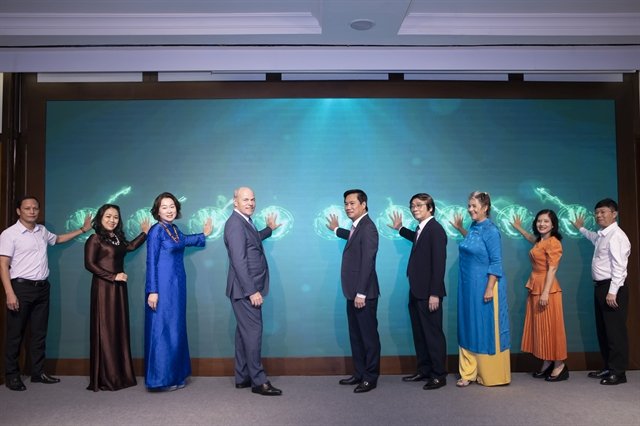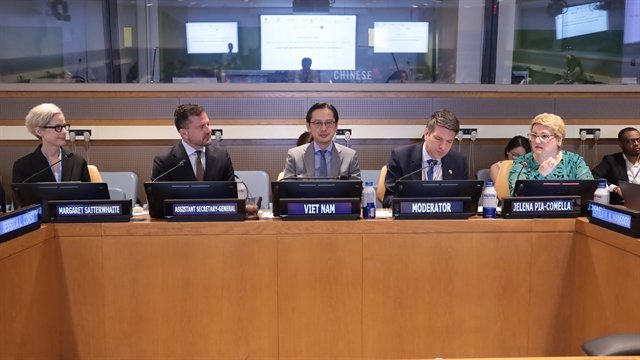
New York, June 14, 2026 — The Europe Today: The Permanent Mission of Việtnam to the United Nations recently hosted an international seminar focused on removing barriers to the equal and inclusive participation of women in international law.
The event was organised under the auspices of the permanent missions of Belgium, Colombia, Canada, Portugal, Mexico and Spain, in collaboration with the Working Group on Gender Parity for the International Court of Justice (ICJ) and the American Branch of the International Law Association (ABILA). It brought together delegates from more than 80 UN member states, along with legal experts, advisers, practitioners and advocates working on gender parity in international legal institutions.
In his opening remarks, Ambassador Đỗ Hùng Việt, Permanent Representative of Việt Nam to the UN, highlighted the central role of international law in maintaining international peace and security, advancing sustainable development, protecting human rights, governing oceans and seas, and strengthening the rule of law in international relations.
He emphasised that the full, equal and meaningful participation of women in these processes is not only a matter of fairness but also essential to ensuring that international legal bodies, mechanisms and processes remain representative, legitimate and effective.
Despite recent progress, Ambassador Đỗ Hùng Việt noted that women continue to be underrepresented in key international legal institutions, including the International Court of Justice (ICJ), the International Tribunal for the Law of the Sea (ITLOS) and the UN International Law Commission (ILC).
He called for sustained dialogue, greater awareness and coordinated practical measures from local to global levels to ensure women have equitable access to leadership roles and meaningful participation in international legal systems.
Discussions at the seminar focused on how existing frameworks, as well as nomination, campaigning and election procedures, continue to hinder women’s equal access to international legal bodies. Participants urged governments and international organisations to work collectively to expand opportunities, strengthen support networks, improve transparency in selection processes, empower female legal professionals and promote more inclusive working environments.
Experts and scholars shared perspectives aimed at amplifying women’s voices and increasing their influence in shaping, developing and implementing international law.
The hosting of the seminar reflected Việt Nam’s continued commitment to gender equality, the promotion of women’s role in global governance, and support for multilateralism, the rule of law and the international legal order.