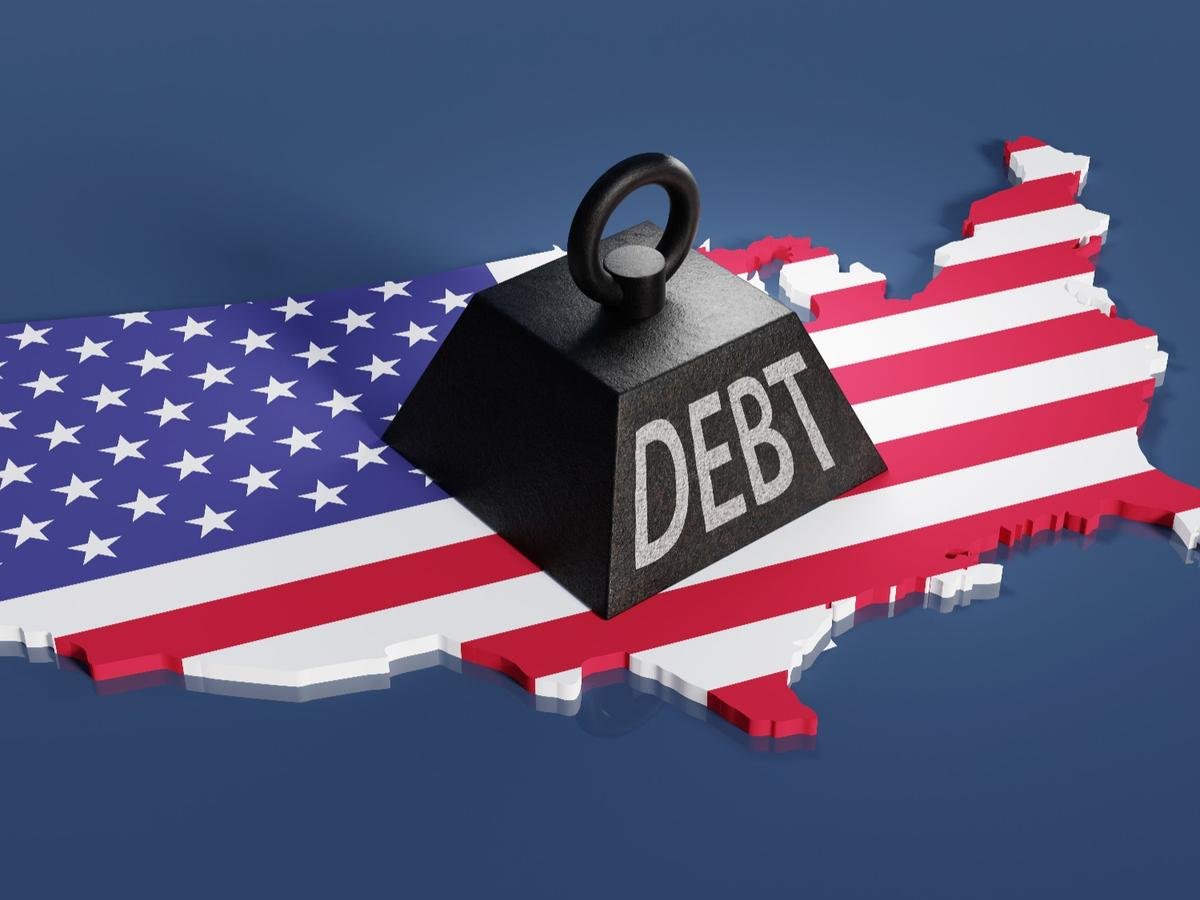
The United States has spent decades convincing the world that its debt is the safest place to store money. That confidence has given Washington an extraordinary privilege that it can borrow on a scale few countries could sustain, finance deficits in its own currency and rely on global demand for Treasury securities. Yet even this reservoir of confidence has limits. America is approaching a point where the central question is about how much more investors will demand to finance it.
The latest warning has come from the Treasury market. On Aug. 19, the US Treasury announced that it would at least double the maximum size of liquidity-support buybacks for longer-dated securities, from $2 billion to $4 billion per operation. Beginning Sept. 9, it will increase purchases in the 10-to-20-year and 20-to-30-year maturity sectors.
The announcement appears technical, but its timing is significant. Long-term borrowing costs remain elevated, trading conditions have weakened in parts of the market and investors are becoming more sensitive to the amount of debt Washington must sell. The Treasury is trying to make older securities easier to trade and prevent market pressure from becoming disorderly. That is sensible debt management. It is not deficit reduction.
A bond buyback can improve liquidity and smooth differences between older and newly issued securities. It cannot remove the fiscal conditions that produced the debt. The government must still finance its overall requirements through taxation or new borrowing. Washington is therefore reorganizing part of its debt burden while the burden itself continues to grow.
The scale of that growth is increasingly difficult to dismiss. The federal budget deficit reached an estimated $1.8 trillion during the first 10 months of fiscal year 2026, $169 billion higher than during the same period a year earlier. Based on information available through July, the Congressional Budget Office expects the full-year deficit to reach about $2.1 trillion.
These figures would be alarming during a recession. They are more significant in an economy operating close to capacity.
The United States is running emergency-sized deficits without facing a comparable economic emergency. The imbalance is increasingly structural, rooted in the relationship between federal revenue, entitlement commitments, defence spending, tax policy and the growing cost of servicing previous borrowing.
Federal debt is approaching $40 trillion, but the headline number tells only part of the story. The more immediate concern is the price Washington must now pay to carry it.
For years, low interest rates allowed the United States to accumulate debt without experiencing its full cost. That period has ended. Securities issued when borrowing was cheap are maturing and being replaced with debt carrying higher rates. Every refinancing operation locks in larger interest payments, even though the government receives no new infrastructure, public service or productive asset in return.
This is creating a fiscal chain reaction. Large deficits require more bond issuance. Greater supply forces the Treasury to compete harder for investors. Investors demand higher yields to compensate for inflation, policy uncertainty, and the growing volume of securities entering the market. Higher yields raise federal interest expenditure, adding to future deficits and borrowing.
America is beginning to borrow more because it borrowed so much before. The rise in long-term yields reflects several forces, including inflation expectations, economic resilience and the direction of Federal Reserve policy. Yet the fiscal component is becoming harder to ignore. Investors committing money for 20 or 30 years must judge whether future US governments will control deficits, preserve the dollar’s purchasing power and manage an expanding debt stock without placing political pressure on the central bank.
The Federal Reserve faces its own constraints. Inflation remains above its 2 percent objective. Minutes from its July meeting indicated that many officials believed further tightening could become necessary if inflation failed to decline. Lower interest rates would offer Washington fiscal relief, but premature easing could weaken inflation control. Higher rates might protect monetary credibility while increasing the government’s refinancing burden.
Fiscal policy is therefore narrowing the central bank’s room for manoeuvre. The Treasury needs cheaper money, while the Federal Reserve may require restrictive financial conditions. If this tension persists, markets could begin questioning whether monetary decisions are being guided solely by price stability or increasingly influenced by the government’s interest bill.
This is not merely an American concern. Treasury securities sit at the centre of the international financial system. They serve as reserve assets, collateral and benchmarks for pricing loans and bonds around the world. When their yields rise, global financing conditions tighten. Developing economies face higher borrowing costs, weaker currencies and capital outflows as investors move toward dollar assets offering stronger returns.
Countries that played no role in creating America’s fiscal imbalance can therefore end up paying part of its price.
The dollar is unlikely to lose its central position suddenly. The United States still possesses unmatched financial markets, strong institutions and considerable economic capacity. No immediate alternative can fully reproduce the liquidity and scale of the Treasury market. But reserve-currency decline rarely begins with dramatic abandonment. It starts at the margins.
Central banks gradually diversify their reserves. Governments expand local-currency settlement. Investors seek greater compensation for holding long-term US debt. Financial institutions reduce exposure where practical. Each adjustment may appear small, but together they show that confidence is becoming more conditional.
Washington still has time to change course. A credible strategy would combine revenue reform, disciplined expenditure and protection for investments that strengthen future productivity. It would distinguish between borrowing that creates economic capacity and borrowing that merely postpones difficult political choices. Most importantly, it would require bipartisan recognition that neither taxation nor spending can remain permanently exempt from scrutiny.
Treasury buybacks can keep the machinery of the bond market running smoothly. They cannot repair the engine of US public finance. America’s challenge is is finding the political courage to stop adding to it faster than the economy can safely carry.
The writer is Founder, Friends of BRI Forum and Advisor to Pakistan Research Centre, Hebei Normal University.