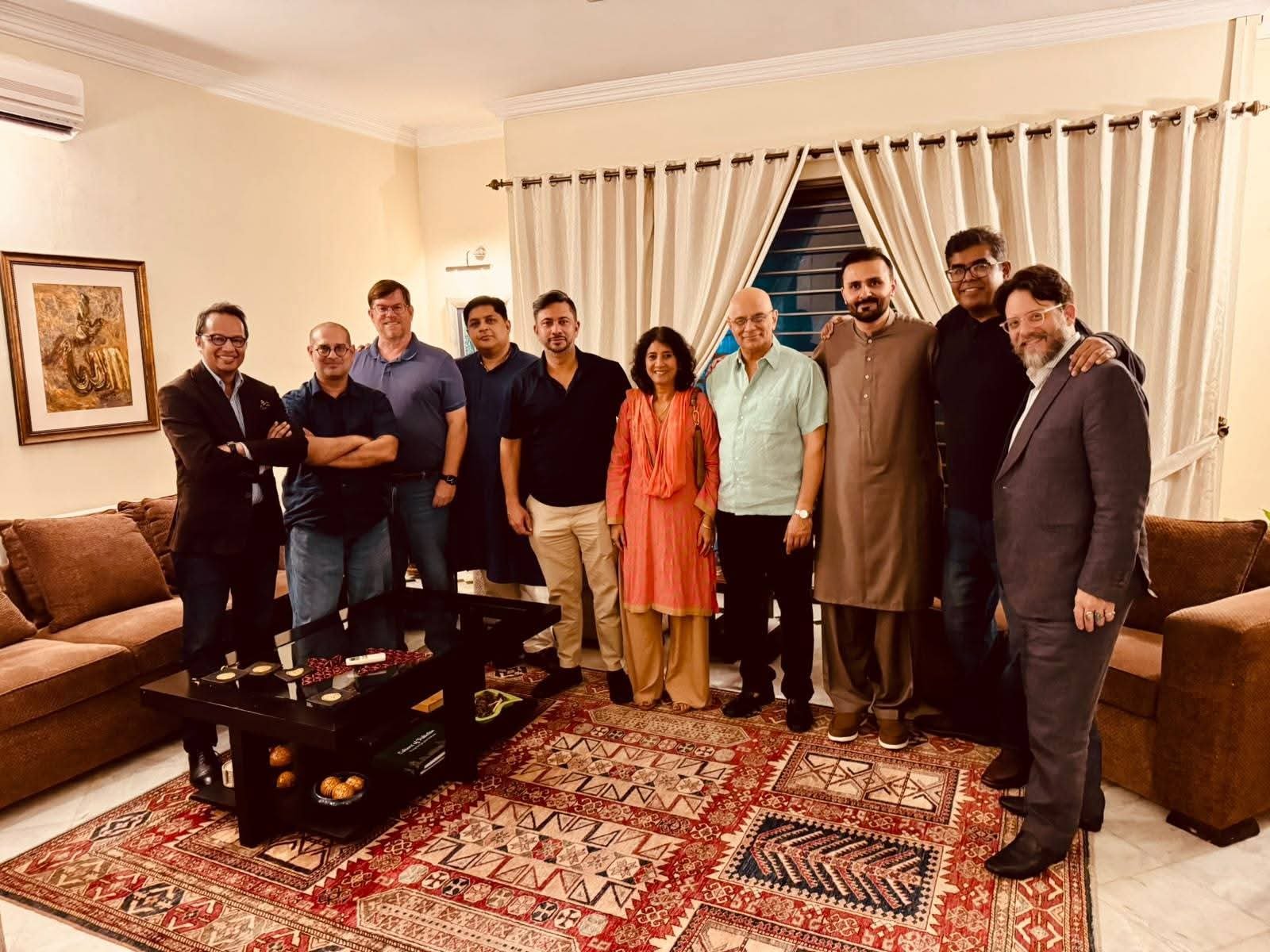
At my friend Imran Shauket’s home in Islamabad, a conversation with members of a visiting Bangladeshi delegation began with the usual introductions and then refused to stay small. It kept returning to one question: can a new generation of leaders build the connections that South Asia has so often failed to sustain?
We talked about technology, economic opportunity and the plain value of bringing people closer. Underneath ran a bigger idea. This region needs leaders who can look past inherited divisions and see what becomes possible when people, institutions and economies actually meet.
The raw material is there a young population, a growing technology sector, entrepreneurial talent, economies of every shape. Yet much of it stays out of reach because neighbours speak mostly through formal diplomatic channels. South Asian countries do differ, and goodwill won’t make those differences vanish. The question is whether the next generation can build something worthwhile anyway.
The meeting was part of the Bangladesh–Pakistan Leadership & Innovation Exchange, a four-day program in Pakistan. Six Bangladeshis from academia, media, development, information technology and manufacturing met Pakistani institutions and professionals to exchange ideas and test the ground for cooperation.
Their calendar included Tabadlab, Karandaaz, Globesight, the National Incubation Center Islamabad, the Pakistan Digital Authority, the Pakistan Software Export Board, NADRA and the Special Technology Zones Authority. The talks covered digital public infrastructure, citizen-focused services, entrepreneurship, innovation and institutional development.
That may sound like policy jargon, but it touches ordinary life how citizens reach services, how small firms grow, how young people find work, how a country readies itself for a digital economy.
Diplomacy matters, but it is one channel among many. Universities, businesses, technologists, researchers and civil society build links that outlast any official visit. Where those links are weak, opportunities sit untouched even when interests overlap. Pakistan and Bangladesh share a complex history, but their future need not be confined to its hardest chapters. A practical relationship can begin by asking where cooperation serves both
The next generation must think past the familiar borders of regional politics. That doesn’t mean forgetting grievances or abandoning national priorities. A country can guard its interests and still open doors for its citizens.
Picture young entrepreneurs finding partners across the region, universities running real exchanges, technologists sharing expertise, and journalists, researchers and development workers learning what their counterparts face. None of this settles a political dispute or replaces diplomacy. But it widens the base of engagement and makes it sturdier when the political weather turns.
For young people the stakes are concrete: education, jobs, markets, skills. Influence in this century will be measured less by national power than by the ability to create prosperity and develop people.
The argument reaches beyond Pakistan and Bangladesh. South Asia cannot realize its potential while its people, institutions and markets stay disconnected. Closer engagement could open up education, technology, trade, research and enterprise, and help people know their neighbours as more than headlines.
There is no single formula, and cooperation must respect each country’s priorities.
Connectivity doesn’t ask anyone to surrender national interest; it asks where working together advances it. A university exchange or a technology partnership looks small beside regional politics, yet such things build the trust that bigger cooperation needs.
The delegation also visited the Taxila Museum and the Gandhara heritage sites, and a luncheon hosted by Bangladesh’s High Commissioner to Pakistan added a diplomatic note. It let the visitors meet Pakistan beyond the meeting room.
South Asia has no shortage of declarations about friendship. The harder task is sustaining the effort once the meetings end. A delegation visits, institutions trade views, everyone goes home with new contacts. Without follow-up, even a good initiative becomes a one-off.
The institutions involved should name specific areas to continue. Universities, businesses and professional bodies can pursue exchanges where the benefit is clear, and progress should be judged by results: lasting ties, useful knowledge-sharing, new networks, projects that meet real needs. Not every meeting will end in an agreement. That calls for realistic expectations, not dismissal. The next generation will need patience as much as vision.
The evening at Imran Shauket’s home was one small part of a wider effort. It was no policy breakthrough and needn’t be called one. What it offered was a chance to exchange ideas and imagine what stronger connections might allow.
Around one table in Islamabad, a conversation began. Whether it grows is up to South Asia’s leaders and institutions.

The author is a Broadcast journalist, diplomacy specialist, and media & comms strategist, currently serving as the Output Head at HUM News.