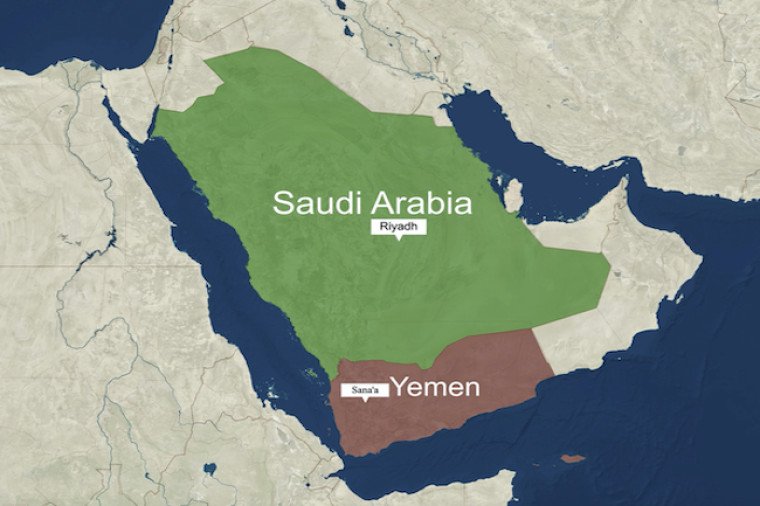
There comes a point when the persistence of a problem should make us question not only the solutions being tried, but also the way the problem itself has been understood. The Middle East may have reached that point. For decades, enormous diplomatic and military effort has gone into Palestine, Iran, Lebanon, Syria, Yemen and, at different times, Iraq and Libya. Some conflicts have subsided, others have returned in a different form, and occasionally there have been years when the region appeared to be moving towards greater stability. Yet peace has remained elusive. Perhaps we have been trying to solve separately problems which, over time, have become parts of the same problem.
There is a concept in peace studies which helps in understanding this. Johan Galtung distinguished between negative and positive peace. The first can exist when fighting has stopped, even though the grievances and insecurities which produced it remain. Positive peace requires something more enduring. Applied to the Middle East, the distinction raises an interesting possibility. Instead of waiting for Palestine, Iran, Yemen, Syria and the other disputes to be settled one by one, could the process also be approached from the other direction? Could a regional security arrangement be built gradually which begins to change the environment in which these conflicts arise? It would not solve everything at once. It might, however, make some of the problems easier to solve.
Iran is a good place to test the proposition. Tehran has lived for years with sanctions, American military power around it and an adversarial relationship with Israel. It has sought strategic depth through its own military capability and through political and armed allies elsewhere in the region. From Tehran this may appear a rational response to vulnerability. Seen from Riyadh, Abu Dhabi or other Arab capitals, it looks rather different. They see Iranian influence moving closer to them and seek greater protection from the United States. Iran then sees more American military power in its neighbourhood and feels still more threatened. There is an almost perverse circularity to it. Each side can explain its conduct in the language of security while helping to produce the insecurity to which the other responds.
This is why simply asking Iran and the Gulf states to improve their relations can only take us so far. A wider arrangement would have to address what both are afraid of. Iran cannot reasonably expect its neighbours to become comfortable with armed groups operating beyond Iranian borders as a permanent instrument of its security. Equally, Iran cannot be expected to dismantle every source of leverage while remaining exposed to attack, sanctions and isolation. There has to be a bargain in which restraint is exchanged for security rather than demanded from only one side.
The same principle becomes more difficult, but also more consequential, when Israel enters the equation. Israel has security concerns and any serious regional settlement has to recognise them. But there is an obvious contradiction in expecting permanent security for Israel while Palestinians remain without a sovereign state and Israeli military power continues to be used across the region. The Palestinian question has survived every attempt to subordinate it to something considered more urgent. The United Nations continues to regard two sovereign states based on the pre-1967 lines as the credible route to lasting peace and security for both peoples.
Perhaps the question should therefore be enlarged. What if Palestinian statehood and Israeli security were treated as parts of the same regional settlement rather than competing objectives? A viable Palestinian state within the broadly accepted 1967 framework, accompanied by recognition of Israel and credible guarantees for its security, would alter the politics of the region far beyond Palestine. Iran’s position would then become important. If Tehran were prepared to accept such a settlement and Israel’s existence within it, one of Israel’s stated reasons for viewing Iran as an existential adversary would be substantially altered. Israel, in turn, would have to accept that Palestinian sovereignty and security cannot remain contingent indefinitely upon its own judgement of when conditions are suitable.
A regional arrangement would also require a rather uncomfortable conversation among the Arab states themselves. Syria, Lebanon, Iraq, Yemen and Libya cannot continue to be treated as spaces in which stronger countries settle scores or acquire influence through local allies. Iran is frequently criticised for doing this, with considerable justification, but the principle cannot conveniently end there. Arab states and Türkiye have also intervened, directly or through local partners, when their interests appeared to require it. Smaller but wealthy states have at times pursued regional ambitions disproportionate to their size, while competition even among close partners has complicated already fragile conflicts. If sovereignty is to become one of the foundations of a new regional order, it will have to apply when respecting it is inconvenient as well.
None of this requires a grand conference at which every disagreement is miraculously settled. That would be fanciful. A regional order can develop incrementally, beginning with a few rules that countries gradually acquire an interest in preserving: borders are respected, weaker states are not used as proxy battlegrounds, disagreements do not automatically become military confrontations, and no country seeks its security by making permanent insecurity the condition of another.
There is, however, another layer which makes all of this more complicated. The Middle East sits in the middle of a much larger change in the distribution of global power. The United States remains deeply embedded in the security of the Gulf, while China has become indispensable to much of its trade and energy relationship. The dollar remains dominant in international finance, but BRICS countries are openly exploring greater use of national currencies and alternative payment mechanisms. It would be premature to announce the demise of the dollar, as some do rather too readily, but the direction of these efforts is unmistakable. Countries outside the traditional Western system want greater room for manoeuvre.
For the Middle East this presents both an opportunity and a danger. A region which has spent decades living with the consequences of outside rivalry could easily become an arena for another one, this time between Washington and Beijing. There is no compelling reason why it should. Saudi Arabia, the UAE and other regional states can retain security relations with the United States while trading extensively with China and maintaining useful relations with Europe, India and Russia. Strategic autonomy does not require equidistance from everyone. It requires sufficient independence not to inherit somebody else’s enemies.
This may eventually matter to the United States as well. Its presence in the region is tied to several interests, including the security of allies, Israel, Iran, energy flows, military access and an international economic system in which the dollar retains an exceptional position. China, meanwhile, needs Gulf energy and stable trade routes but has so far carried nothing comparable to the American security burden. The interests of the two powers are therefore competitive in some areas but not necessarily in all. Both have much to lose from a region permanently at war. A Middle East more capable of managing its own security need not be anti-American or pro-Chinese. It would simply be less dependent.
That brings us to a practical difficulty. Iran cannot presently be brought into a collective defence arrangement in which an attack on one member becomes an attack on all. Its confrontation with Israel and the United States makes such an obligation potentially perilous for countries which would have little control over the events that activated it. The Iran-Israel-American triangle therefore has to be made less dangerous before any truly inclusive collective security arrangement becomes conceivable.
Who should attempt that? Washington has negotiated with Tehran before, as have European powers, and other countries have periodically mediated. But if the consequences of failure are borne principally by the region, perhaps regional states themselves should assume a greater part of the diplomatic burden. Saudi Arabia, Türkiye, Pakistan, Qatar, Oman, Egypt and others have different relationships with the principal actors. Collectively they may possess more diplomatic space than any one of them has alone. The purpose would not initially be friendship between Iran and Israel, which is unrealistic, but a modus vivendi under which neither regards war as the only reliable means of protecting itself.
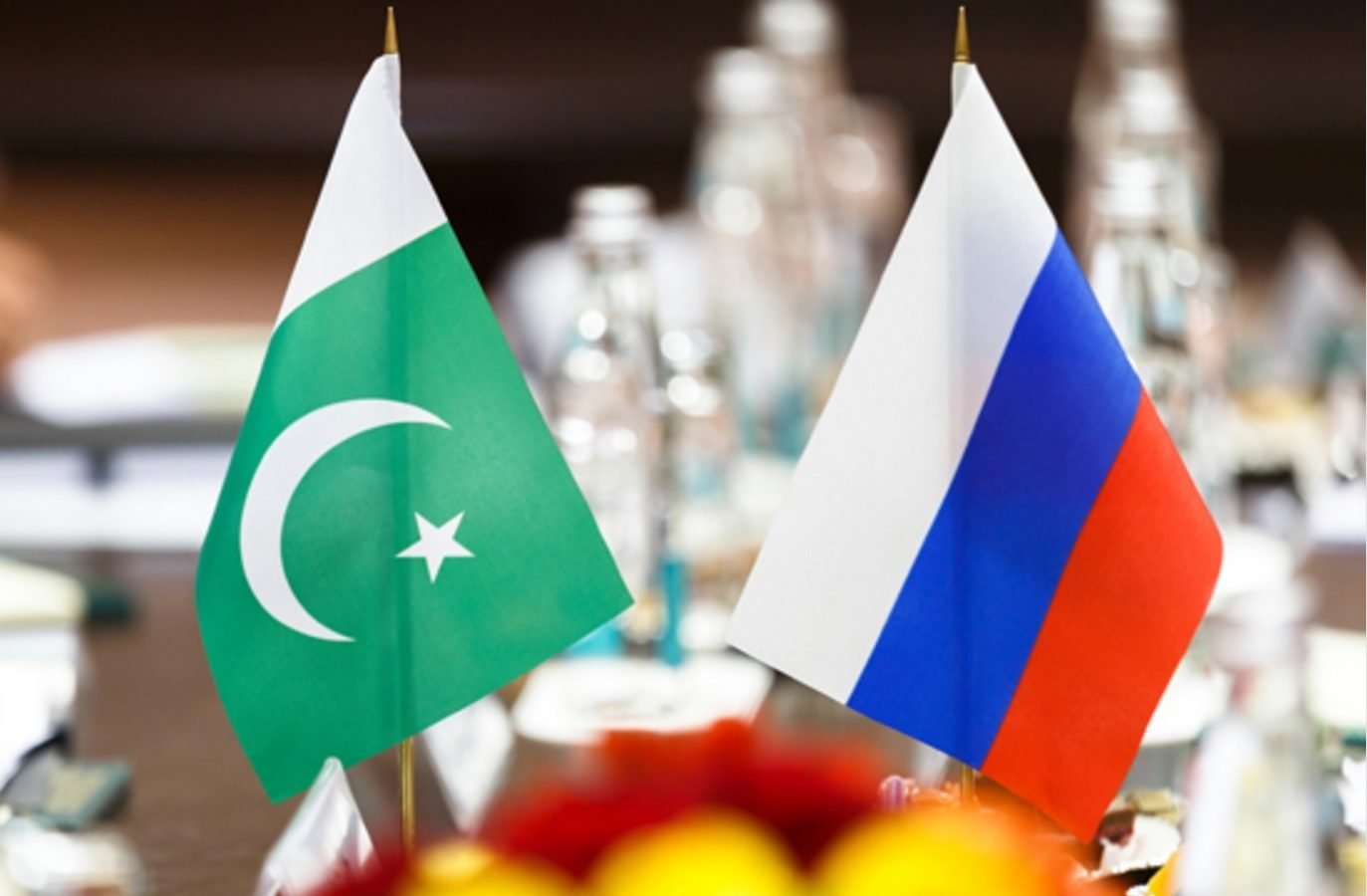
Only at this stage does the recently concluded Makkah Joint Defence Agreement between Saudi Arabia, Türkiye and Pakistan become interesting. The agreement states that an armed attack against one of the three will be considered an attack against all. It has already acquired a Strategic Political and Defence Committee, and the three countries have subsequently spoken of de-escalation, cooperative security and an inclusive and lasting peace.
It would be unwise to make extravagant claims for an agreement whose full working arrangements are still evolving. Nor does it follow that every regional country should be invited into it. Iran, for the reasons already discussed, would be particularly difficult to accommodate under its present collective-defence clause. The more interesting question is whether Makkah could eventually become one part of something larger. A core group prepared to undertake collective defence could coexist with a wider regional forum whose members were not obliged to fight for one another but were prepared to discuss security, restraint, sovereignty and conflict collectively.
It would be unrealistic to expect such an arrangement to take shape easily, given the history of the region and the depth of mistrust between some of its principal players. It may take years before even a modest degree of confidence develops between them. But then the question is not whether this approach is difficult. Almost every approach tried so far has been difficult, and we have very little peace to show for it.
Galtung’s distinction then acquires more than academic relevance. Stopping a war is indispensable when people are dying, but stopping the next war from being generated is a different undertaking. Positive peace, if it ever comes to the Middle East, will probably take years to evolve. Iran will need to feel secure without depending upon proxies, just as the Gulf states will have to become less dependent upon protection from distant powers. Israel’s security will have to be recognised, but so will the right of Palestinians to have a state of their own. And somewhere along the way, the region will have to learn to leave its weaker countries alone rather than repeatedly turning them into battlegrounds for the ambitions of others.
That may sound ambitious. But after decades spent trying variations of the existing approach, perhaps the more pertinent question is whether continuing without one is any less so.