Jakarta, February 4, 2026 — The Europe Today: Indonesia is accelerating the development of a national hydrogen ecosystem as part of its clean energy transition, aimed at supporting decarbonization, strengthening energy security, and promoting long-term industrial growth under President Prabowo Subianto’s Astacita program.
The Ministry of Energy and Mineral Resources said on Tuesday that the initiative is aligned with the National Hydrogen Strategy and the National Hydrogen and Ammonia Roadmap, which serve as key frameworks guiding hydrogen and ammonia development in the country.
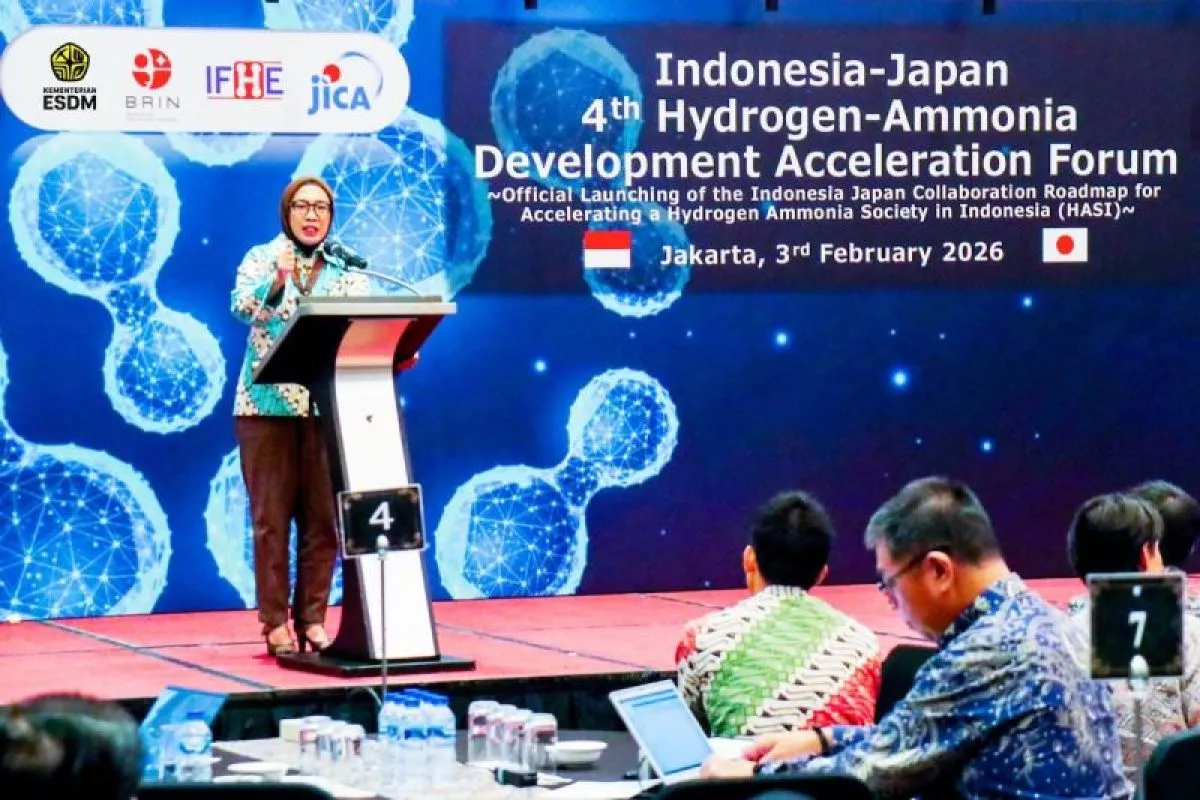
Director General of New, Renewable Energy and Energy Conservation Eniya Listiani Dewi said hydrogen development is vital for multiple sectors, including industry, transportation, power generation and export-oriented industries, while also enhancing national energy security.
“This year, which is my key performance indicator, green hydrogen must be available in the market at nearly 200 tons per year. We must achieve it, and we want to create more,” Eniya said at the 4th Indonesia–Japan Hydrogen Ammonia Development Acceleration Forum in Jakarta.
She explained that implementation will be carried out in stages to ensure regulatory readiness, infrastructure development, market demand growth and domestic capability building, while maintaining policy flexibility and regular evaluations. The plan includes an initiation phase from 2025 to 2034, followed by a development and integration phase from 2035 to 2045, and an acceleration and sustainability phase from 2045 to 2060.
Indonesia is also strengthening cooperation with Japan through the Japan International Cooperation Agency (JICA), combining Japanese technology, project experience and financing with Indonesia’s renewable energy potential and long-term demand outlook.
The Indonesia–Japan hydrogen partnership roadmap is expected to encourage industrial collaboration, supported by public financing and early-stage risk mitigation, to accelerate the development of financially viable hydrogen infrastructure.
JICA Senior Representative Akira Sato said government policies under President Prabowo emphasize energy and food self-sufficiency, investment growth, macroeconomic stability and inclusive economic development. He reaffirmed JICA’s commitment to supporting Indonesia’s energy transition, noting that the bilateral hydrogen–ammonia roadmap complements Indonesia’s national policies and provides practical frameworks for cooperation between the two countries.