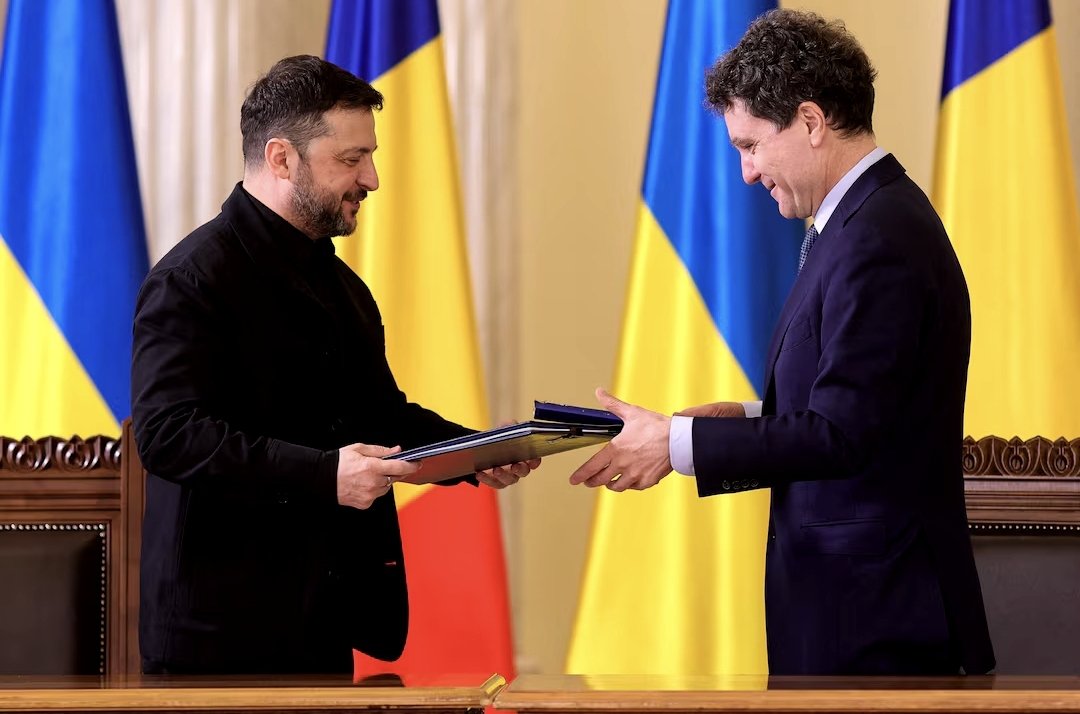
The signing of a strategic partnership between Romania and Ukraine in Bucharest on 12 March 2026 is an important move to increase stability in the region, integration of economies, and long-term cooperation in the Eastern Region. Through formalization of their association by the use of established political, security, and economic processes, both nations have shown a mutual interest in establishing a robust regional system that would respond to the potentials of the modern geopolitics and economic issues.
On the political front, the alliance reiterates the fact that Romania is overtly pro-Ukraine in terms of its sovereignty, territorial integrity, and the European dreams of the latter. Such alignment is not only an expression of solidarity of Romania with the neighboring country but also makes the country an essential strategic player on the eastern flank of NATO and the broader system of European security.
The creation of a high-rank strategic commission consisting of the two presidents, frequent consultations between government and defence officials mean that collaboration is no longer going to be an empty gesture of long-term integration of policies. The extension of defence-industry cooperation is one of the most promising sides of the agreement. The cooperation helps to increase the defence capabilities of the region by opening the door to collaborative production of defensive equipment in Romania, including the possible development of drone technologies with Ukrainian skills. This collaboration has the potential to complement the overall European goal of increasing strategic independence through local defence production and decreasing the use of external supply chains as well.
A common effort to enhance energy security and connectivity with European energy market and cooperation on Vertical Gas Corridor are reflected in planned electricity interconnection projects and collaboration. The rising position of Romania as a regional energy hub, in conjunction with Ukraine having a vast infrastructure and storage capacity, is a symbiotic opportunity that would allow both countries to be mutually beneficial in terms of energy reliability over time and being connected with the markets.
Not less significant are the programs that are supposed to enhance the infrastructure in the borders, facilitation of trade, and the connection of transport. The opening of additional crossing points, modernizing rail connections, and streamlining the customs process will contribute to the increase of the logistical efficiency and the further development of the economic relations between the two countries and the European market in general. These solutions are indicative of a realist interpretation of the fact that robust strategic alliances are based not solely on political agreements but also effective infrastructure and economic integration.
The maturity of the bilateral relationship has also been evidenced by the inclusion of the minority right protection. Speaking about sensitive historical matters and being determined to preserve cultural and linguistic identity of both countries, Romania and Ukraine have demonstrated their readiness to enhance trust and establish stable background of long-term collaboration.
On the whole, the Bucharest agreements represent the start of a new stage of Romania-Ukraine relations, which are organized in terms of strategic alignment, economic cooperation, and institutional coordination. Instead of responding to urgent crisis, both nations are actively developing a framework that will shape the political, economical and security environment of the Black Sea region in the years to come.
It is in this regard that the partnership is not only a diplomatic breakthrough, but also a prospective strategy that places Romania and Ukraine as major stakeholders in the workings of stability and cooperation in Eastern Europe.
Owner of “The Europe Today” and Patron-In-Chief/Owner of “The Gulf Observer”, Chairman “The Gulf Observer Research Forum”, Foreign Affairs Expert, Analyst, International Award Winning Author and Poet.